The detail on the Iranian delegation that surprised the American negotiators in the first round of negotiations in Pakistan

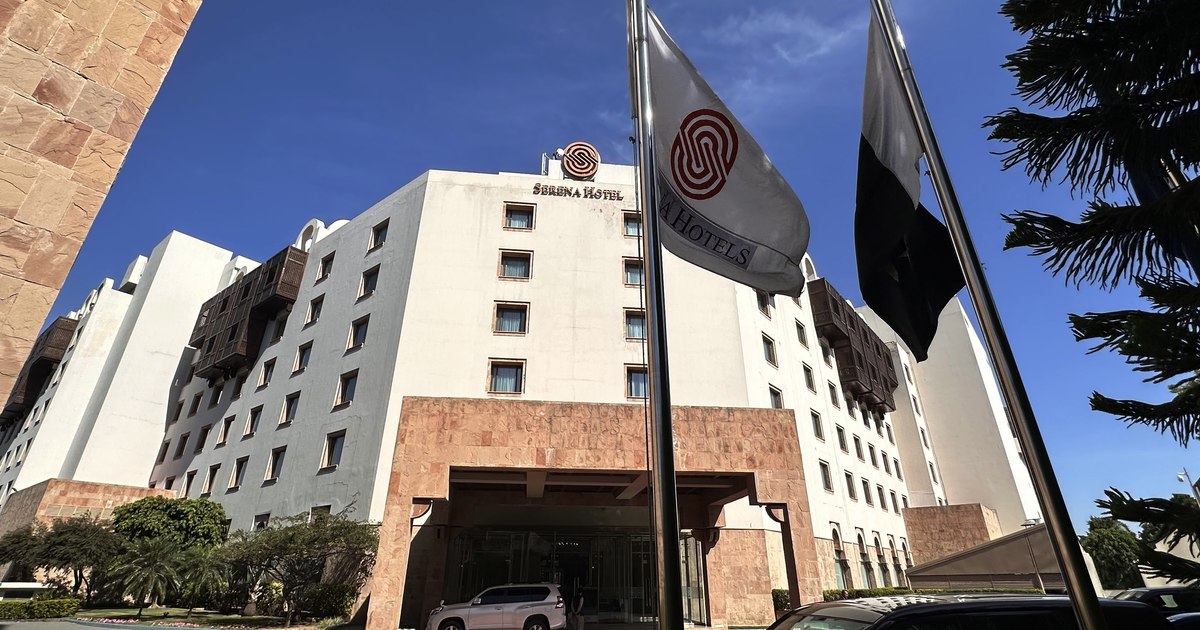
The arrival of the Iranian delegation in Islamabad for peace talks surprised even American officials. Disembarking from the Meraj Air charter flight, no less than 71 people – 69 men and two women, all dressed in black – walked onto the airport's runway before heading to the five-star Serena Hotel, reports The Telegraph.
The Serena Hotel in Pakistan hosted the US-Iran peace negotiations PHOTO EPA-EFE
The delegation included key names of the Iranian leadership: Mohammad Bagher Ghalibaf, the Speaker of the Parliament, Abbas Araghchi, the Minister of Foreign Affairs, Abdolnaser Hemmati, the Governor of the Central Bank, and Ali Akbar Ahmadian, the Secretary of the Defense Council, along with high-ranking diplomats, advisors of the Revolutionary Guards and journalists.
The meeting was the highest level of direct contact between Iran and the United States since the 1979 US embassy crisis in Tehran and was aimed at ending a conflict that has lasted more than a month. However, beyond the official objective, the trip also served a second, undeclared purpose.
According to a well-informed Iranian official quoted by The Telegraph, the meeting provided Tehran's leaders with a rare opportunity to meet in safety: “They had been looking for 40 days for an opportunity to meet without worry, coordinate things and discuss what to do with the country and future plans.” He added that “this trip to Pakistan helped a lot to manage things. Iran went there with the intention of peace, but the Americans inadvertently helped Iran coordinate in case war breaks out again.”
In this context, the success of the negotiations became secondary to the internal coordination facilitated by the meeting. “This trip had a positive impact on the management of the country”, the official also said, even suggesting that there may have been exchanges of messages with Supreme Leader Mojtaba Khamenei.
His situation remains uncertain. The 56-year-old leader has not appeared in public since his appointment after the death of his father, Ali Khamenei, and after he was reportedly injured in a US-Israeli airstrike. “Inside the system, the main question these days is where the new leader is and if he's even alive.”the official said.
The war and negotiations exposed a major vulnerability of Iran's theocratic system: its reliance on physical meetings for decision-making. The governing structure – from the supreme leader to the guardian council, parliament and military commanders – requires direct consultation, which is not possible given that US-Israeli bombings have targeted command centers and meetings of leaders.
Under these conditions, high-ranking officials could not meet safely in cities such as Tehran, Isfahan or Qom, for fear of new airstrikes.
The composition of the delegation has drawn divided opinion among analysts. Although in theory Foreign Minister Abbas Araghchi, the US's most experienced interlocutor on the nuclear issue, should have led the negotiations, the main role went to Ghalibaf, a former commander of the Revolutionary Guards, suggesting that the military remains the dominant factor in strategic decisions.
He is close to Khamenei, who protected him during several corruption scandals that should have ended his career. He answers to Khamenei and the Guardians of the Revolution, not to President Massoud Pezeshkian, who was not part of the delegation
Ahmadian's presence as Secretary of the Defense Council shows military priorities. on the other hand, the inclusion of Hemmati attests to the fact that the economic crisis required immediate attention.
Iranian analyst Ali Bigdeli criticized this structure, arguing that “the composition of the negotiating team did not have the necessary unity and experience for such sensitive negotiations” and that the discussions were affected by “the rush to enter into negotiations without the necessary preparation” .
Instead, expert Omid Memarian told The New York Times that the delegation conveys “a message of internal consensus in favor of negotiations and agreement at the highest levels of the regime”.
The negotiations lasted 21 hours before US Vice President JD Vance walked out of the talks, calling Iran's positions on uranium enrichment and the Strait of Hormuz unacceptable. Araghchi later claimed that the parties were “within steps” of a memorandum of understanding, but ran into “maximalism” American, while Ghalibaf accused Washington of failing to win Tehran's trust.
Suspicion remains in Iran that US services closely monitored the visit, including the arrivals and movements of the delegation, information that could become relevant if negotiations fail.
Both sides have indicated a willingness to resume talks, possibly as soon as this week, although Pakistani officials say no concrete date has been set
Meanwhile, Iran's leadership is going underground again – but this time, better coordinated, comments The Telegraph.