Hungary. Experts point out Viktor Orban's mistakes. This is how populists fall

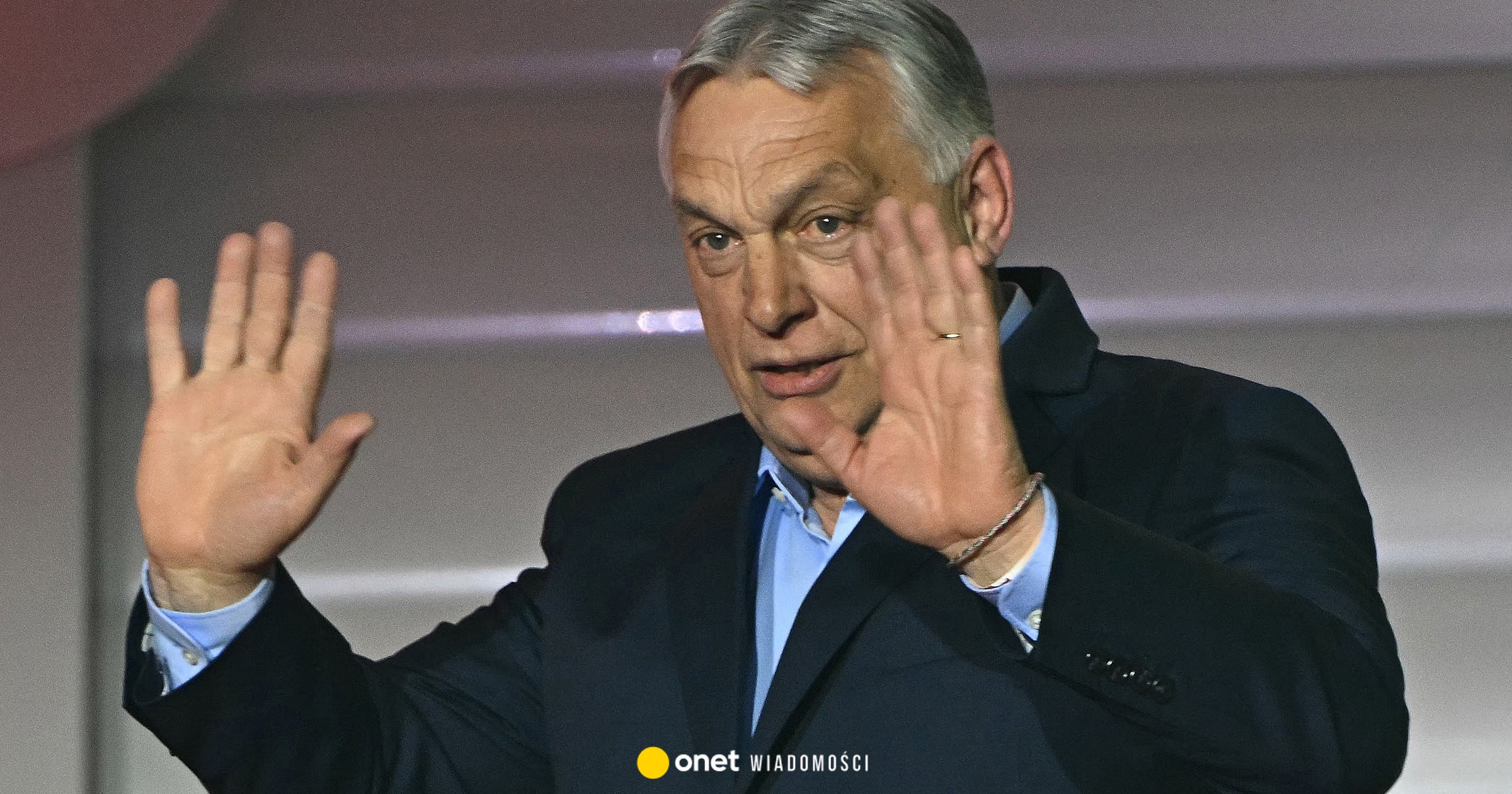
Even manipulation of electoral rules — or a 16-year-long state takeover — failed to save Hungarian Prime Minister Viktor Orban from a crushing defeat on Sunday.
Holding office has its advantages, especially when it is brazenly used to manipulate the system, but it can also become a drag. This is what happened with Orban in this election. Voters were restless and increasingly tired of the prime minister and his ruling Fidesz party, which they associated with cronyism and corruption, contributing to the collapse of the economy.
Orban, however, had no new response to the changing public mood.
He firmly stuck to the script he had used in the three previous elections. He presented himself as the only man capable of protecting Hungary's interests and conjured up external threats. In this campaign, Orban accused his rival of pushing the country towards war by allying with two of his perennial bogeymen: the EU and Ukrainian President Volodymyr Zelensky.
However, geopolitical scare no longer worked. There was more to this election.
Orban's mistakes
The great populist has lost touch with the people and failed to see that he is being undermined by the same mistakes that have weakened strong leaders around the world: rampant corruption and cronyism, a kleptocratic ruling class, and decaying infrastructure. All this strengthened Magyar's position and increased his chances.
“You could see and feel it at the election rallies, where there was palpable enthusiasm at the opposition rallies, but not at the government rallies,” Orban biographer Pal Daniel Renyi tells POLITICO.
It also meant that outside interference from the MAGA movement and European populists such as Marine Le Pen of France, Geert Wilders of the Netherlands and Matteo Salvini of Italy, who, like Vance, showed up in Budapest to campaign for Orban, was simply waste of time. As did support from Germany's Alice Weidel, co-chair of the far-right Alternative for Germany (AfD). In a video she told Hungarians: “Europe needs Viktor Orban.”
Yet global far-right figures have not held back in issuing increasingly grim and frantic warnings about what will happen to Hungary if voters have the audacity to vote for change and put an end to Orban's populism.
Magyar's advantage
But the big appeals and lectures fell on deaf ears with the Hungarian electorate, which had more local concerns about paying bills, finding a job and getting decent medical care.
“Foreign interference simply didn't matter,” explains Marton Tompos, an opposition MP from the centrist Momentum Movement, who abstained from running in these elections to allow Magyar's party to fight freely against Orban.
— Take Vance for example: he is completely unknown to the Hungarian publicso to think that his presence would make a difference was naive at best, Tompos tells POLITICO. Showing transatlantic loyalty would never change the balance of political power in Hungary, where dissatisfaction with the ruling Fidesz party stemmed from the internal rot of the country.
Perhaps the call from the American administration was not naive, but an act of desperation. Orban ran out of other ideas in the fight against Magyar, a Fidesz dissenter who, unlike his previous rivals, understood the system built by the prime minister and did not give up when it came to patriotism and the use of national symbols.
Magyar encouraged his supporters to bring national flags to election rallies. He sometimes wore traditional embroidered Hungarian shirts. He appeared as a spectator at football matches and, unlike Orban, avoided the VIP boxes, sitting among ordinary fans in the stands.
He was also concise on the issue of foreign interference, arguing that any meddling, whether from Washington, Brussels or Moscow, was undesirable: The Hungarians will make the decision themselves. It was a strong, patriotic line that made Orban look more like a puppet.
The key to victory
And no matter what, Magyar's campaign was focused on everyday matters. At the same time, he attacked Fidesz for corruption, pointing out how Orban's family, his business buddies and his inner circle were becoming richer and richer, while ordinary Hungarians were only getting richer.
What really worried voters — inflation, a bad economy and widespread corruption — remained at the heart of Magyar's campaign, notes Matyas Bodi, a sociologist associated with Eotvos Lorand University in Budapest. This strategy paid off, adds the expert who analyzed raw data from local polls conducted by independent companies throughout the election campaign.
“The reasons for Orban's defeat were the cost of living, lack of economic opportunities and lack of jobs,” he notes. Magyar's message about poor public services also resonated. — Magyar's key message was that the country simply wasn't working. And if you look at health care, transportation, the education system, for ordinary people the average experience is one of destruction and increasing dysfunction, Bodi says.
Peter Magyar during election night, Budapest, April 12, 2026.FERENC ISZA / AFP
Magyar's promises to build a modern, European Hungary appealed not only to young voters, but also to middle-aged menwho perform manual labor and constitute an important part of the traditional electoral base of Fidesz itself, as the expert emphasizes.
In fact, Magyar, 45, sounded very similar to Orbán in 2010, when he campaigned with similar fervor on economic issues and promised improving the lot of ordinary Hungarians – says Peter Molnar, a Hungarian scientist who was a Fidesz MP but resigned in 1994 due to a change in the party's direction.
Magyar did not fall into the trap
While Orban campaigned, warning about the risk of being drawn into the conflict in Ukraine and portraying his rival as a puppet of both Zelensky and the EU, Magyar remained unmoved, ignoring attempts at provocation.
— Magyar was there very disciplined – notes Molnar. “And every time Orban tried to throw him off guard, Magyar ignored the bait,” he adds. In a conversation with Molnar in February, Magyar said he realized he couldn't afford even one slip-up. “I try to avoid making mistakes,” he said.
However, throughout the campaign, Magyar remained brave and future-oriented. He didn't hesitate to lead intense campaigns in towns and villages traditionally supporting Fidesz — Orban's previous rivals never did this.
Magyar's attention to corruption was also telling, notes Timothy Ash of Britain's Chatham House. – People can accept kleptocracy as long as the economy is doing well, but ultimately, if the economy starts to collapse and citizens see all these guys filling their pockets, you can expect a reaction – explains the expert.
— Orban could still be re-elected as long as the Hungarian economy was strong and corruption remained hidden from the public, says Kim Lane Scheppele, a professor at Princeton University and an expert on elections in Hungary.
— But the economy has stagnated. Combined with numerous reports of Orbán's corruption – a palatial estate formally belonging to his father, the extraordinary wealth of his closest friends – public opinion has turned against him at a time when ordinary Hungarians are struggling to make ends meet, he says.
However, the expert also emphasizes that Orban seemed confused about what to do with Magyar, “a younger version of himself — a center-right anti-corruption activist.” “This is how Orban presented himself during the campaign that brought him to power in 2010,” explains Kim Lane Scheppele.
People who have been closely watching the Hungarian leader for years, such as Renyi, say that Orban sensed that he would lose from the beginning of the election campaign. This partly explains his sometimes reckless escalation of tensions with Brussels and Zelensky and his desperate provocation tactics. He just hoped that something would go his way.
— The way he spoke, the language he used, his gestures, his body language – it all seemed different to me, and I've been following him for 16 years. He seemed depressed. I think he knew that nothing lasts forever, Renyi concludes.