Bolojan explains the measures taken in the midst of the fuel crisis. “All countries will be affected, Romania cannot be an exception”

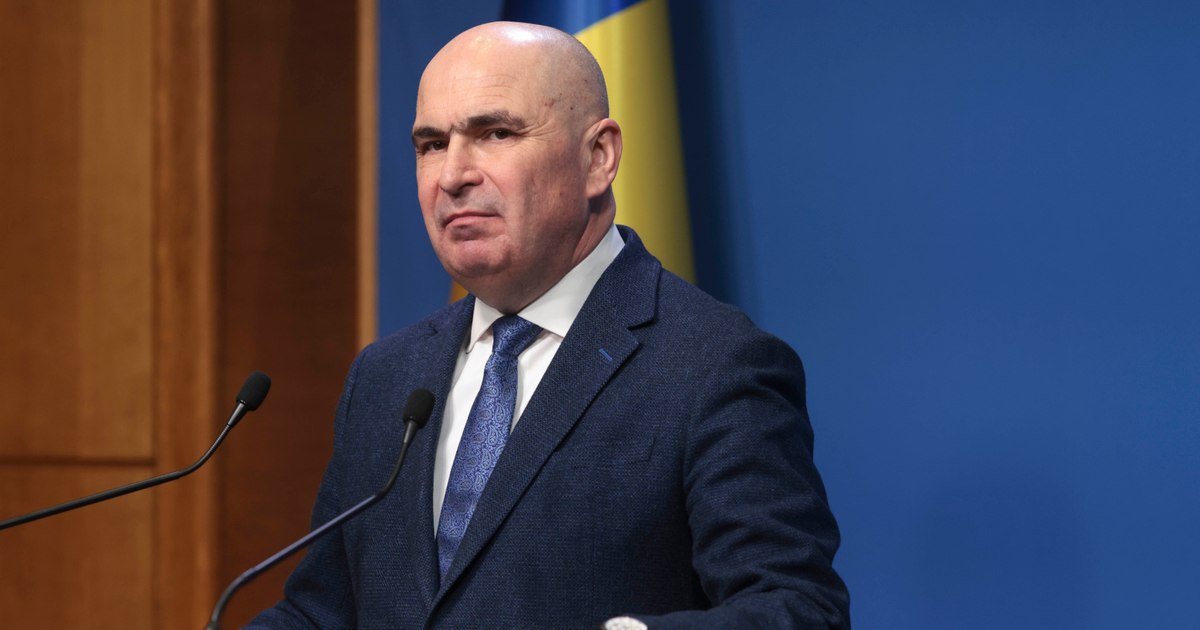
Prime Minister Ilie Bolojan explained, on Saturday evening, what measures the Government has taken to limit the costs caused by the fuel crisis, warning at the same time that “all countries in the global economy will be affected, and Romania cannot be an exception”.
Bolojan explained the measures regarding fuels PHOTO Inquam Photos / George Călin
The Prime Minister stated on Saturday that, one month after the start of the war in the Middle East, “the effects of blocking the transportation of crude oil and derived products to the countries of the world are felt by both citizens and governments”these effects manifesting in particular through “increasing fuel prices, agricultural fertilizers and higher interest rates”.
“If the conflict is prolonged, economic growth will be lower all over the world and inflation will rise globally”warned Ilie Bolojan in a post made on his Facebook page.
He added that, in this context, “all countries in the global economy will be affected, and Romania cannot be an exception”stating that these effects cannot be reversed, but only limited in terms of costs.
The measures taken by the Government
The Head of Government then briefly presented the measures adopted by the Executive in this situation.
“In March, for transporters, we increased, to almost a third, the excise tax that will be reimbursed to them this year. For the budget, it means an effort of over 600 million lei this year. From next week we will start payments for the diesel purchased in the last quarter of last year. We also took measures to expedite settlements. Supporting this sector has effects on the entire economy, the final price of any product being influenced by the cost of transportation”explained Ilie Bolojan.
As for farmers, the Prime Minister stated that the Government extended the refund of the excise duty of 2.7 lei/liter this year as well: “This means a budgetary effort of over 1.5 billion lei this year, of which over 500 million represent payments for the last months of last year”he explained.
“We limited the commercial addition in the coming months to the average level of last year, in the fuel sector, to avoid speculative price increases. This mainly meant a limiting effect of fuel price increases on the refining area. As a result, this week, for the products coming out of the refineries in the country, the price increase was limited or even the prices decreased. This was seen in the price at the stations, at some gas station networks”he also stated.
Why the excise duty reduction only applies to diesel
He also stated that on Friday, in the Government meeting, an emergency ordinance was approved by which the excise duty on standard diesel is reduced by 11%, i.e. by 30 money per liter.
From rationing to subsidies: what the world's governments are doing after the oil price boom
“That means a lower price at the pump from next week, from Tuesday. It's not a big discount, but it's what we can afford now. At a consumption of almost 700 million liters a month, that means a budgetary effort of about 200 million a month”informed Ilie Bolojan.
He also answered the question why only diesel was targeted by this measure, stating: “In Romania, diesel consumption represents more than 75% of the total fuel consumption, with gasoline accounting for less than 25%. In addition, diesel price increases were double those of gasoline. Also, the cost of diesel affects the price of transporting goods and passengers, the cost of operating machines and heavy machinery in construction and industry, prices in the economy in general, and, implicitly, the cost of living.”
According to him, the Executive overtaxed the exceptional profits of companies that exploit Romanian crude oil: “The amounts that will be collected will partially cover the excise tax reductions that we have granted. Those who profit, through higher oil prices, from the consequences of the war must make their contribution to reducing the burden on citizens. From this solidarity tax, according to Finance estimates, between 90 and 100 million lei would be collected monthly, depending on crude oil prices.”
“The purpose of these measures is to limit the effects of these price increases and keep things as stable as possible for people and the economy. We are acting within the limits of the possibilities we have, as a result of the very large budget deficits of the past years and the constraints of today”he also stated, at the same time claiming that: “The government is not benefiting from rising fuel prices. Quite the contrary.”
Additional receipts, returned in the form of excise duties
According to the prime minister, the additional tax revenues generated by the price increase are much lower than the cost of the crisis to public finances and, according to Finance estimates, “in one month, an additional 100 to 110 million lei would be collected from the increase in VAT revenues, at an average fuel price of 10-10.2 lei. This is because less than half of fuel sales are made to individuals, and more than half are made to companies that deduct the VAT.”
He also noted that all additional revenue is returned in the form of reduced excise duty: “Even if we add the income from the solidarity tax, we only cover a part of the budgetary costs of the support we give.”
“The oil price crisis has even higher indirect costs for the economy. The general increase in prices has the effect of reducing consumption, slowing down economic growth and affecting state revenues. In addition, there is an additional cost to the state as a result of the increase in interest rates; since the beginning of the crisis, interest rates on public debt have increased by up to 1 percentage point. If the period of instability is prolonged, interest costs can increase significantly, affecting the budget balance”concluded the prime minister.