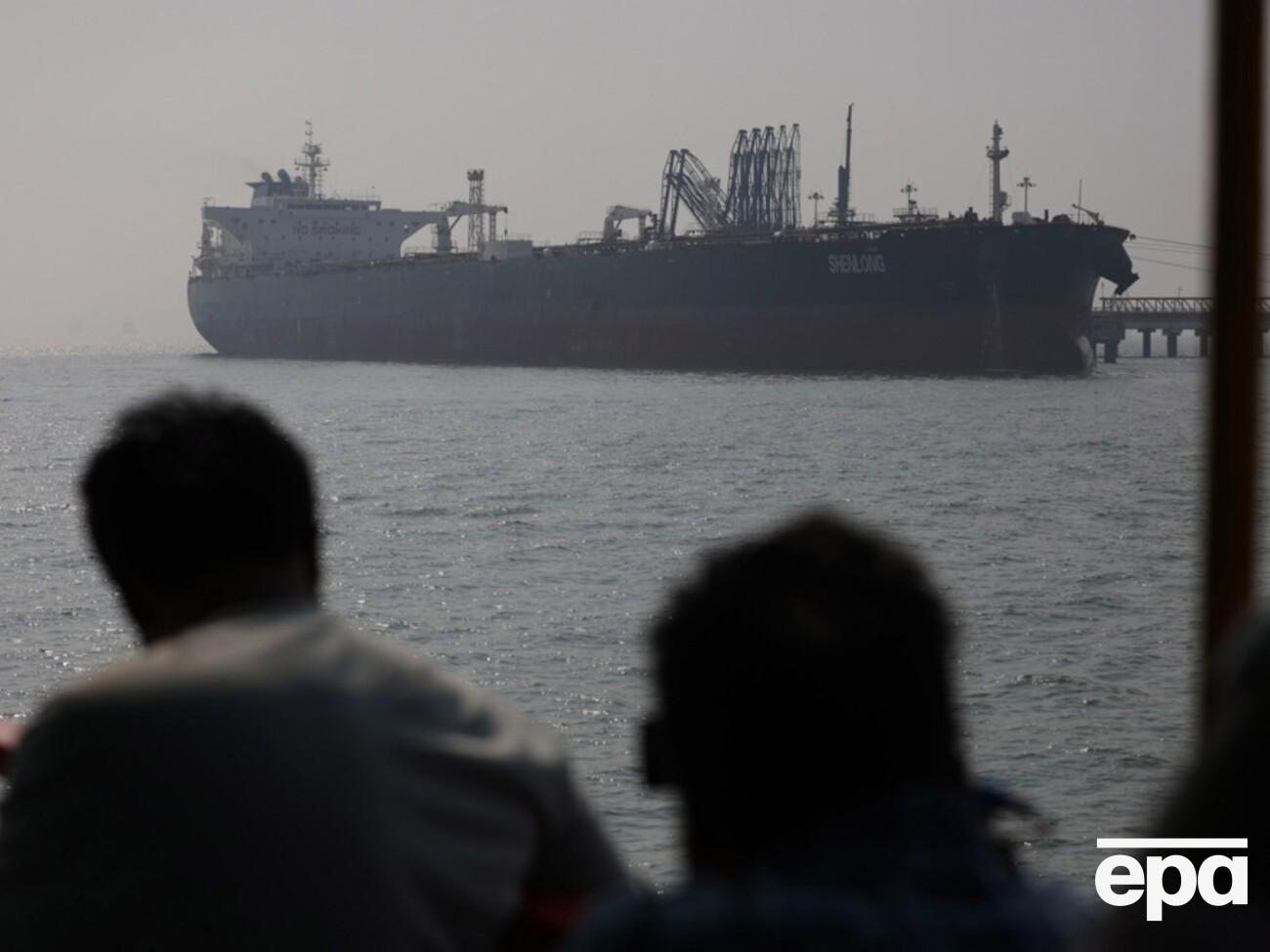
Against the backdrop of the war between the United States and Israel with Iran, shipping through the Strait of Hormuz, one of the most important routes for global oil trade, has practically stopped since March 1. According to The Economist, this is preventing about 15% of the world's oil supply from reaching buyers. All Gulf countries have cut production and lost significant export revenues, with the exception of Iran.
The media writes that despite the general drop in supplies in the region, Iranian tankers continue to pass through the strait, thanks to which the country has almost doubled its daily oil revenues compared to the period before the start of the American and Israeli strikes on February 28.
The publication notes that it is difficult to accurately estimate Iran's export volumes due to the hidden activities of tankers, interruptions in satellite monitoring and electronic interference in the region. At the same time, a source familiar with Iran's oil reporting told The Economist that the country exports 2.4-2.8 million barrels of oil and petroleum products per day, including 1.5-1.8 million barrels of crude oil. This matches or exceeds the previous year's levels and sales are at higher prices.
The material states that the Iranian oil production system has become more resistant to sanctions and military strikes. Most of the income, according to The Economist, is currently controlled by the Islamic Revolutionary Guard Corps (IRGC), and China plays an important role in ensuring financial flows. As a result, a significant portion of Iran's oil revenues are actually accumulated in Asia, out of range.
The Economist describes Iran's oil export system as being based on three main elements: sellers, logistics and the shadow financial system.
Sellers
The article writes that formally the state company National Iranian Oil Company (NIOC) is engaged in exports, but in practice oil is used as a source of liquidity for various government agencies – from ministries to law enforcement agencies and religious foundations that receive barrels for further sale.
The publication also writes that these flows are controlled by about 20 oligarchic groups with their own distribution networks, which “convert oil into cash.” According to media sources, among them are those associated with the family of the liquidated former Iranian Defense Minister Ali Shamkhani and the entourage of the son of the Supreme Leader Mojtaba Khamenei. Many participants in this system have ties to the IRGC.
The Economist reports that according to experts, it is the IRGC that provides a significant part of the growth in exports, controlling part of the oil fields and about a quarter of production.
Logistics
Iranian tankers, as The Economist notes, use complex camouflage schemes: they change routes, turn off transponders, transmit security codes, and sometimes pass through the strait under the escort of IRGC ships. Some ships also pay “for passage”.
Once in the Indian Ocean, oil is often transferred to other ships near Malaysia or Singapore to conceal its origin.
The main buyer, according to the publication, is China, which consumes more than 90% of Iranian oil through small independent refineries in Shandong province.
Shadow financial system
The Economist reports that payments for Iranian oil are made through a network of “trust accounts” in small banks in China or Hong Kong, with funds moving through a large number of front companies in different countries.
Some of the funds remain in China to purchase goods, while others are distributed through a global network of accounts. Some of the companies participating in these schemes carry out transactions with counterparties in India, Kazakhstan and Turkey.
The article notes that this system is coordinated by structures associated with the IRGC and the Iranian Ministry of Defense, which effectively function as informal banks with thousands of accounts.
The Economist concludes that despite sanctions and military strikes, this arrangement allows Iran's oil machinery to continue operating. Its complete stop is possible only in the event of large-scale attacks on the energy infrastructure, which, in turn, could lead to further escalation in the Persian Gulf region, the media noted.
Context
On March 14, US President Donald Trump called on China, France, Japan, South Korea, the UK and other countries to send their ships to create conditions of openness and security in the Strait of Hormuz.
On March 22, US President Donald Trump threatened to strike Iranian energy facilities if the Strait of Hormuz is not fully opened within 48 hours. After this, the country's representative at the UN maritime agency, Ali Mousavi, said that ships that are not related to “Iran's enemies” can pass through the strait, subject to the coordination of security measures with Tehran. He did not say what exact conditions he was talking about, however, as Lloyd's List reported, Iran began charging ships for “safe” transit through the Strait of Hormuz. At least one oil tanker operator has already agreed to pay about $2 million for this.
On March 30, Trump said Iran allegedly agreed with most of the points in his peace plan and had made a “gift” by allowing 20 Pakistan-flagged oil tankers to pass through the strait.
Trump also threatened that if the United States and Iran do not reach an agreement to end the war in the Middle East and open the Strait of Hormuz, the US military will destroy Iranian power plants, oil wells and Kharg Island.