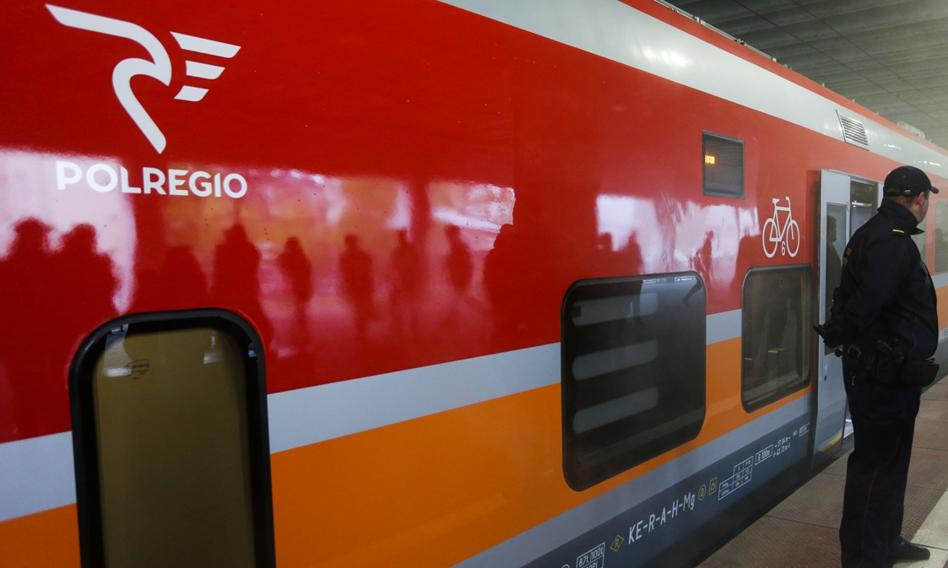
Polregio wants to acquire approximately 100 new trains by 2030, including through the so-called rolling stock pool – Andrzej Pawłowski, president of the company, told PAP. The carrier also intends to continue purchasing vehicles from the secondary market to ensure communication on non-electrified railway lines.
The president of Polregio, Andrzej Pawłowski, emphasized in an interview with PAP that one of the company's main goals is currently to acquire new rolling stock, because the average age of the carrier's trains is approximately 40 years; such vehicles constitute more than half of the units belonging to the Polregio carrier.
When asked how many new trains can be expected in the Polregio fleet in the coming years, he indicated that the company is targeting about a hundred new vehicles of various types.
– We would like to be ready with new trains for the market opening in 2030, then we will be able to compete better in public service tenders. Without new rolling stock, it will be much more difficult, he emphasized.
Pawłowski pointed out that new vehicles could be provided by Polish companies. – Polish manufacturers produce basically everything we need – hybrid vehicles, electric multiple units, rail buses. There are also units available that allow you to drive at a speed of 200 km per hour. However, whether we will be able to afford to buy brand new vehicles is not entirely up to us. Due to the regulations regarding the so-called reasonable profit Polregio has no legal possibility of generating a profit enabling it to independently purchase all the necessary rolling stock – he added.
He informed that the carrier is also looking for new forms of acquiring modern rolling stock, e.g. through the so-called rolling stock pools, i.e. renting trains from other companies. – I am convinced that the market would be interested in this possibility of sharing vehicles. With the development of rolling stock pools, interest from other companies may also be high, he said.
When asked about the possibility of obtaining funds for the purchase of new trains, the head of Polregio indicated that the easiest way would be to use EU funds. – However, we are aware that there will be less money from these funds, and the expenses – for example on the Central Communication Port and High-Speed Railways – will be higher. Therefore, we are talking about possible solutions with various financial institutions and with our owner, the Industrial Development Agency – he added.
He also noted that renting new trains may be “a little more expensive” than purchasing new trains.
– However, it does not require large one-off investment outlays and cyclical investment peaks when a large number of rolling stock enters the highest P4 and P5 maintenance cycles. We then have a fixed cost of acquiring rolling stock and much smaller fluctuations in the increase in the value of annual contracts, e.g. due to several vehicles reaching high levels of maintenance and the related costs – he pointed out.
The president of Polregio also said that the carrier plans to continue purchasing rolling stock from the secondary market this year. – Last year we bought 22 used vehicles, this year we are looking for more. We mainly target internal combustion vehicles, because a large part of our transport is carried out on non-electrified lines – he said, noting that in Poland approximately 40 percent railway lines do not have electric traction, and internal combustion vehicles cannot be financed from the EU.
– The trains we plan to buy are approximately twenty years old. They are much cheaper than new vehicles and at the same time in very good condition. We are also looking for electric vehicles – this would allow us to rejuvenate our fleet – explained Pawłowski.
The head of Polregio also pointed out that the company is currently in good liquidity condition, and the financial result for last year will certainly be higher than in 2024. In 2024, Polregio had PLN 2.2 million in profit. – A very large part of our expenses is the maintenance of rolling stock. To reduce them, we would like to expand our own technical resources and reduce the need to use external services. (…) This later brings very good results when we use these vehicles. The more “blood and sweat” we shed at the stage of supervising the repairs, the fewer problems we will have later in the operation itself – he emphasized.
The PAP interlocutor admitted that one of the problems is access to spare parts for trains, because some of them have to wait even more than a year. – That's why we plan to create a central warehouse this year so that the parts that have to wait the longest are immediately available. I think that Kruszewiec or Olsztyn could be a good base for such a warehouse – he added.
The head of Polregio recalled that in 2025 the company transported almost 103 million passengers, and 281,000 people travel on its trains every day. – We want to continue to grow, also by diversifying the company's activities, for example by repairing trains of other carriers on a commercial basis – he added.
Polregio is the largest passenger railway carrier in Poland; its market share is approximately 25 percent. The majority shareholder of the company is the Industrial Development Agency (50 percent plus one share), and the remaining shareholders are provincial governments. Every day, over 2,000 cars take to the tracks across the country. trains, and on weekends over 1,450 trains ordered by marshal offices.
Filip Ostrowski (PAP)
fos/mmu/