Oil executives have openly defied the US representative, who says the crisis is not that bad

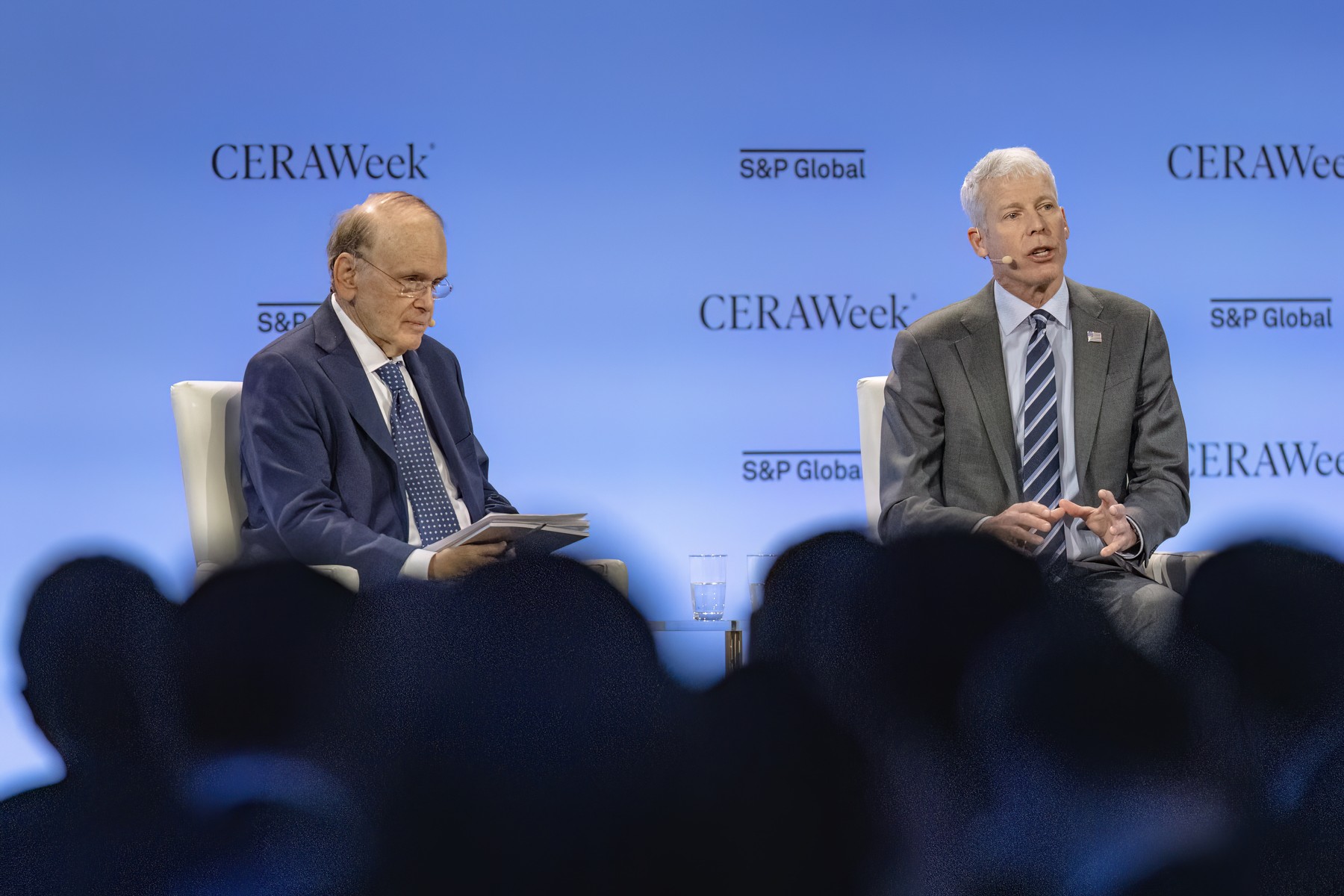
Some of the top oil executives and energy ministers gathered in Houston on Monday expressed growing concern about the long-term effects of the Middle East war on the global economy, as Chris Wright, the US Energy Secretary, tried to downplay the crisis.
The war has caused one of the biggest disruptions to energy supplies in history, after Iran closed the Strait of Hormuz, and its drone and missile attacks on Gulf states are causing long-term damage to manufacturing infrastructure in several countries.
Global benchmark Brent crude was still at $99 a barrel on Monday afternoon, even after a drop prompted by President Donald Trump's remarks that he is in talks with Iranian officials to end the conflict.
“The consequence is not just higher energy prices. Other supply chains will also be affected,” Patrick Pouyanné, CEO of TotalEnergies, told the annual CERAWeek conference in Houston, also mentioning disruptions to helium supplies from the Middle East. Helium is essential for semiconductors and medical equipment.
The US official tried to calm spirits at the big energy sector conference
US Energy Secretary Wright instead said that oil prices have not yet risen enough to affect demand.
Gasoline prices have risen more than 30 percent to their highest level since 2022, near $4 a gallon, since the start of the conflict. Wright also said the United States had no choice but to go to war with Iran.
“This is a conflict that we simply could not put off any longer,” said the member of President Trump's cabinet. He added that the administration has taken steps to calm energy markets, including through releases from the Strategic Petroleum Reserve and support for rerouting crude oil shipments to certain locations in China.
However, analysts at JP Morgan said on Monday that the production disruptions had “quickly translated into apparent shortages of crude and refined products across Asia”.
More than 10,000 participants from more than 80 countries gathered at the annual conference, marking the second time in five years that the event has taken place against the backdrop of major global disruption in the energy sector. The event was so crowded that some attendees did not even manage to enter the huge halls where the interventions of certain speakers took place.
The 2022 edition took place just weeks after the start of the Russian invasion of Ukraine, which also sent oil prices soaring.
Oil executives sounded the alarm after the US official's intervention
Shortly after Wright's intervention, Sultan Al Jaber, CEO of ADNOC, the UAE's state oil company, warned that rising oil prices were slowing economic growth globally.
“This increases the cost of living for those who can least afford it and slows down economic growth everywhere. From factories to farms to families around the world, the human cost is increasing by the day,” said Al Jaber.
Ben Marshall, president and CEO of trading company Vitol Americas, warned that the world would see a severe destruction of demand if oil reached $120 a barrel. Brent futures briefly rose to $119 a barrel in early March.
The war has virtually closed the Strait of Hormuz, used for the transit of a fifth of the world's oil and gas supplies, while key infrastructure in the Middle East, including QatarEnergy's huge liquefied natural gas plant, has been battered and will take years to repair.
“It's going to take time to get out of this situation,” Chevron CEO Mike Wirth said on the conference call Monday. He said that tensions in the energy market caused by the closure of the Strait of Hormuz are not yet fully reflected in oil futures prices.
The effort by members of the International Energy Agency to release a record 400 million barrels from strategic reserves was not enough to calm markets, said Takehiko Matsuo, Japan's vice minister for international affairs.
Japan, which depends on imports, contributed about 80 million barrels of oil to this release, the second largest contributor after the 172 million barrels provided by the United States.