China's strangely disappearing elite. There are more and more empty seats in the Great Hall of the People in Beijing

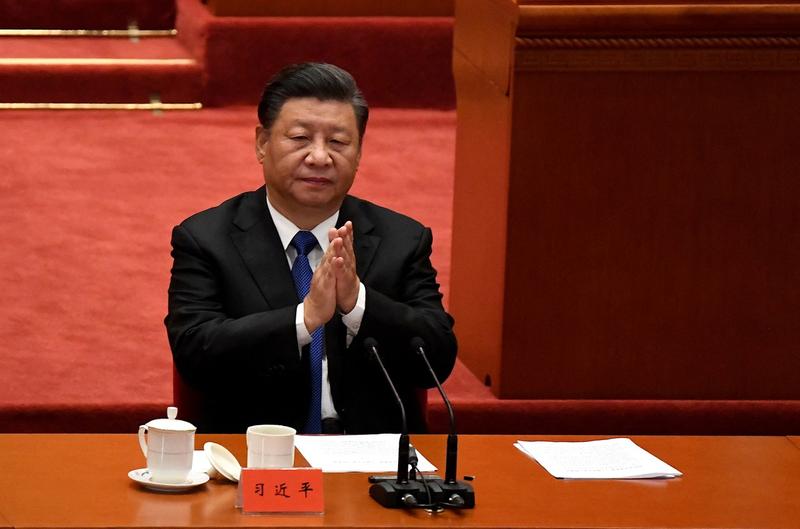
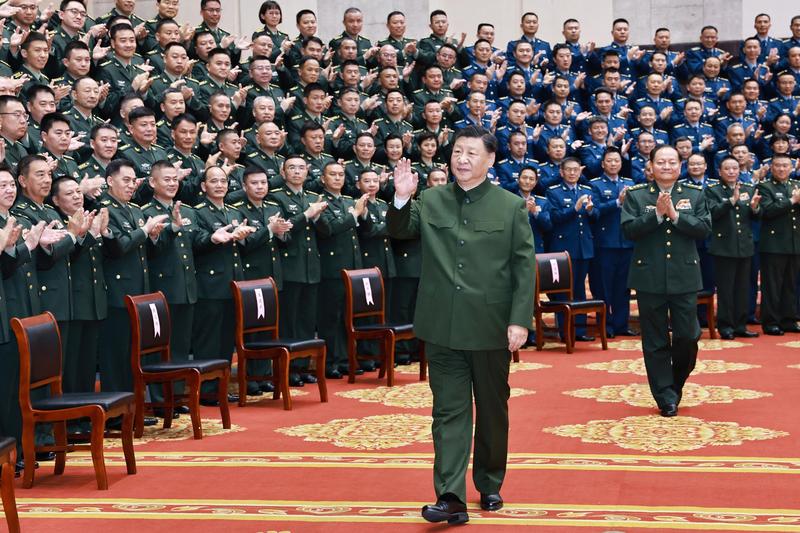
In the Great Hall of the People in Beijing, the choreography is usually impeccable. The red flags are perfectly aligned and the applause is synchronous, writes the Jerusalem Post. However, in recent years, this image has been shattered by a reality that is more like a thriller. The dominant feature of Beijing's political landscape is now empty seats.
From the unceremonious removal of a former president from his seat in front of television cameras, to the disappearance of foreign and defense ministers and the purge of high-ranking generals, China is undergoing a political upheaval that has left Western intelligence agencies and geopolitical analysts scrambling for answers. Is this a sign of a paranoid dictator losing control or an overconfident leader fine-tuning his gear for a conflict that will reshape the world order?
The tremors began publicly in October 2022 during the closing ceremony of the 20th National Congress of the Communist Party of China. In a scene that shocked the world, former Chinese leader Hu Jintao was physically removed from the hall as he sat next to Xi Jinping.
“An unceremonious departure for a former Chinese leader,” Zi Yang, a senior fellow at the S. Rajaratnam School of International Studies, told the magazine. “Basically, Hu was asked to go. It seems that Hu had no idea what was going on. To see a former leader executed in this way was, of course, quite shocking to many observers.” It was a visual statement: the old guard was gone. It had now become Xi's party.
But what followed was even more bizarre.
One morning in July 2023, Foreign Minister Qin Gang simply evaporated—he didn't make it to an Association of Southeast Asian Nations summit. “Health reasons” was the official explanation given by the Chinese Foreign Ministry.
A rising star in the CCP and a former ambassador to the United States, Qin “had been a favorite of Xi Jinping. It is said that Xi Jinping liked to drink on the plane with the Qin Gang, that they were very good friends,” explains Georgetown University Prof. Dennis Wilder, former senior director for East Asia at the National Security Council.
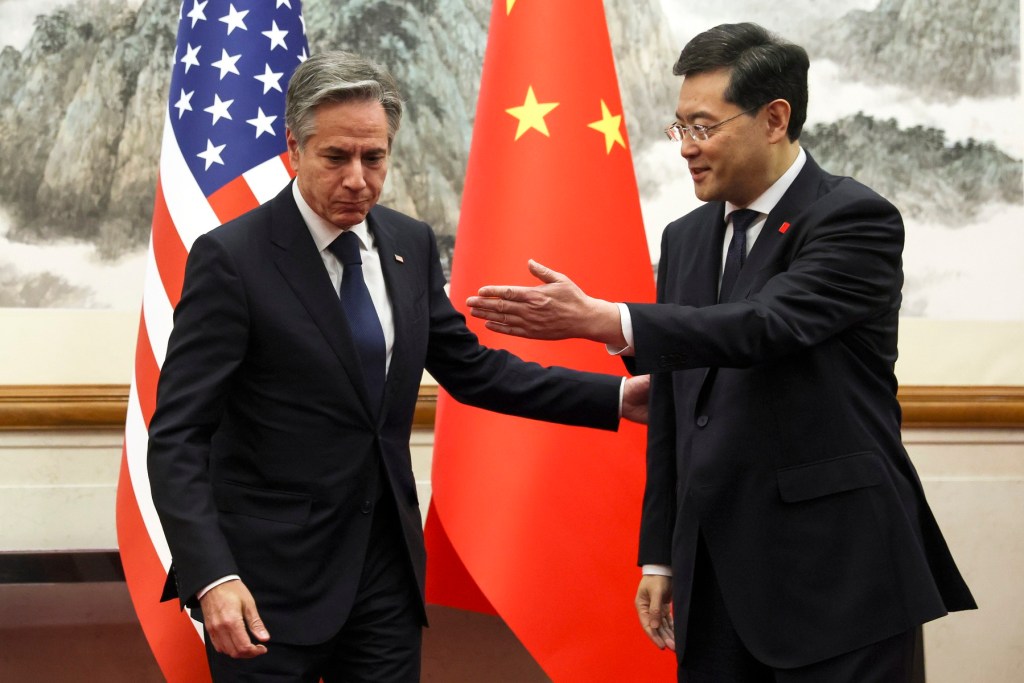
When asked about Qin's whereabouts, a Chinese Foreign Ministry spokeswoman, Mao Ning, offered a response that has become common: “Regarding your question, I have no information to provide.” A few weeks later, Qin was deposed.
“He seems to have started an affair with a female reporter with whom he may have had a child,” suggests Wilder.
But Qin wasn't the only one. Liu Jianchao, the man responsible for the party's international liaison work, also disappeared from the public eye that same year. The pattern was clear: proximity to the leader offered no protection.
If the diplomatic purges were mysterious, the turmoil in the People's Liberation Army was alarming
The very people tasked with modernizing China's military and preparing it for a possible invasion of Taiwan are being removed at an astonishing rate.
“Never in Chinese military history—except perhaps Chairman Mao—have we seen anything so unusual as these purges,” notes Wilder.
The purge reached the very top of the military hierarchy. General Zhang Youxia, vice chairman of the Central Military Commission and virtually the second most powerful man in the military, came under scrutiny and was dismissed last month.
“The investigation and decisive resolution of Zhang Youxia's case is a major achievement in the party and the military's fight against corruption,” said Jiang Bin, a spokesman for China's Ministry of National Defense, using the party's preferred euphemism for political dismissal.
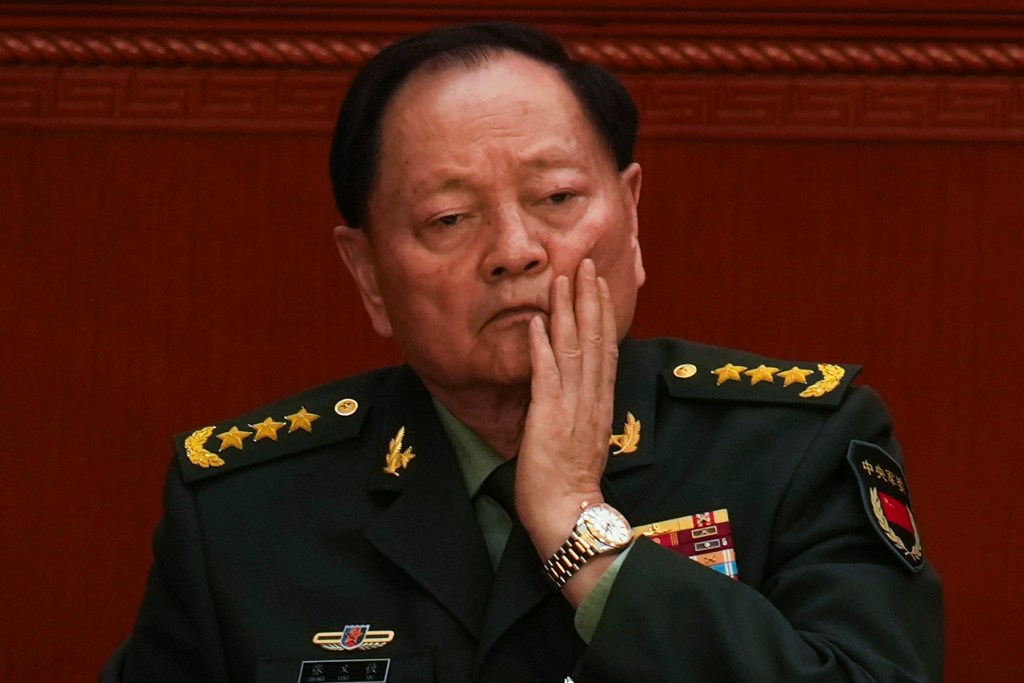
“They didn't use the word 'purge'; they used the phrase 'under investigation'. But this is basically the first step towards purging. Usually, no one is found innocent in these investigations,” says Zi Yang.
Chaos had engulfed the entire Ministry of Defense. Li Shangfu, who became the shortest-serving defense minister in Chinese history, was dismissed amid corruption allegations. His successor, Navy veteran Dong Jun, reportedly faced a similar investigation.
Brigadier General (Ret.) Assaf Orion, a senior fellow at the Institute for National Security Studies and director of the Diane & Guilford Glazer Israel-China Policy Center, sees this as a systemic purge of the officer corps.
“We are talking here about a purge – or elimination – of the entire group … of Chinese military chiefs, who were all Xi Jinping-era appointees,” Orion explains.
According to Orion, the official line always points to “corruption, disciplinary violations and violations of party laws,” but the subtext is power dynamics. The defendants are often accused of creating “cliches or networks of influence” that can be seen as a threat to Xi's rule.
The Wall Street Journal reported even more damaging allegations, suggesting that some generals, including Zhang Youxia, were suspected of leaking secrets related to China's nuclear program to the United States.
While Wilder believes these leaks could be a “cover for what's really going on” — a raw political battle — the implication is clear: Xi feels he can't trust the people who control his nuclear arsenal.
“There seems to be quite a lot of infighting between the elites,” says Zi Yang. “And Xi doesn't seem to trust anyone at that level.”
Why is Xi Jinping dismantling the very leadership structure he has built for a decade?
Ian Johnson, a Pulitzer Prize-winning journalist and renowned China scholar, offers a counterintuitive perspective. In an interview, Johnson argued that these moves may stem not from fear of Xi, but from arrogance.
“I think he's fundamentally insecure about the people he surrounds himself with,” Johnson says. “He's probably doing this not so much out of paranoia as perhaps out of extreme self-confidence.”
According to Johnson, Xi feels he has such absolute control that he can afford to treat the military leadership as interchangeable parts.
“He feels he can get exactly the people he wants running the military. It could be like adjusting the leadership,” Johnson explains.
While it's easy to “build a scenario where he's paranoid, schizophrenic,” Johnson argues that Xi is acting out of a belief that he's in “complete control.”
This opinion contrasts with the assessment of other analysts who see the purges as a sign of fragility. “When some of these generals start building their own factions by promoting their own subordinates, it alarms Xi,” says Zi Yang. “Xi is very afraid of his subordinates becoming too powerful.”
Orion emphasizes the scale of the campaign: “In total, during his years in office, approximately 200,000 people were purged.
This shows that even those closest to him cannot be trusted, and therefore purges them.” For the international community – and especially for US allies such as Israel, which closely monitor global stability – the burning question is how this affects a potential invasion of Taiwan.
In Taiwan, senior officials say 2027 is a year to watch. This aligns with US intelligence assessments that Xi has ordered the military to be ready for action by that date. But does a clean army fight better?
A clean command structure is a compliant one. However, Orion warns of the operational costs: “When an army goes through a change of senior officers, it is not the height of stability needed to launch such a high-risk operation.”
In essence, Xi could buy political loyalty at the price of military competence.
Johnson, however, rejects the idea that the purges signal imminent war. He remains skeptical of “next year's invasion” theories derived from reading political intelligence.
“I still assume the leadership in Beijing is rational,” argues Johnson. “And if I assume it's rational, then it wouldn't make sense to invade right away because time is on Beijing's side militarily.”
Johnson points out that while the United States is distracted by conflicts in Ukraine and the Middle East, China is methodically building aircraft carriers and expanding its arsenal. He also notes that the domestic political situation in Taiwan — where the pro-independence leadership is unpopular — could eventually shift in Beijing's favor without a shot being fired.
“It makes sense to wait and see how things play out, in the meantime building up the military and not imposing a hasty invasion,” Johnson concludes. “I don't think the purges are directly related to any kind of impending military adventure.”
Whether driven by paranoia or confidence, Xi Jinping has fundamentally altered the DNA of the Chinese Communist Party. By abolishing term limits and refusing to groom a successor, he centralized power to a degree not seen since Mao Zedong.
“I think it all boils down to President Xi's desire to remain leader for life in China,” says Wilder. “He hasn't given any indication of who a successor might be because he doesn't want one. A successor would mean becoming a cripple.”
This isolation creates a paradox. The system seems stable because there are no rivals. “It has no clear heir and no real rivals within the system,” Johnson observes.
But this superficial stability masks a deep, existential risk to the regime.
“If one day he dies – as all humans do – or becomes incapacitated, there will be no clear successor,” warns Johnson. “And I think that's the problem China is going to face in the next five years.”
For now, the empty seats in the Great Hall of the People serve as a silent warning to the Chinese elite. The applause may still be loud, but everyone knows that in Xi Jinping's China, the distance between the inner circle and a prison cell has never been shorter.
In the opaque world of Beijing politics, the only certainty is that the next purge is only a matter of time.