How much more expensive food on the shelf will go up and from when. “Products will be priced differently”

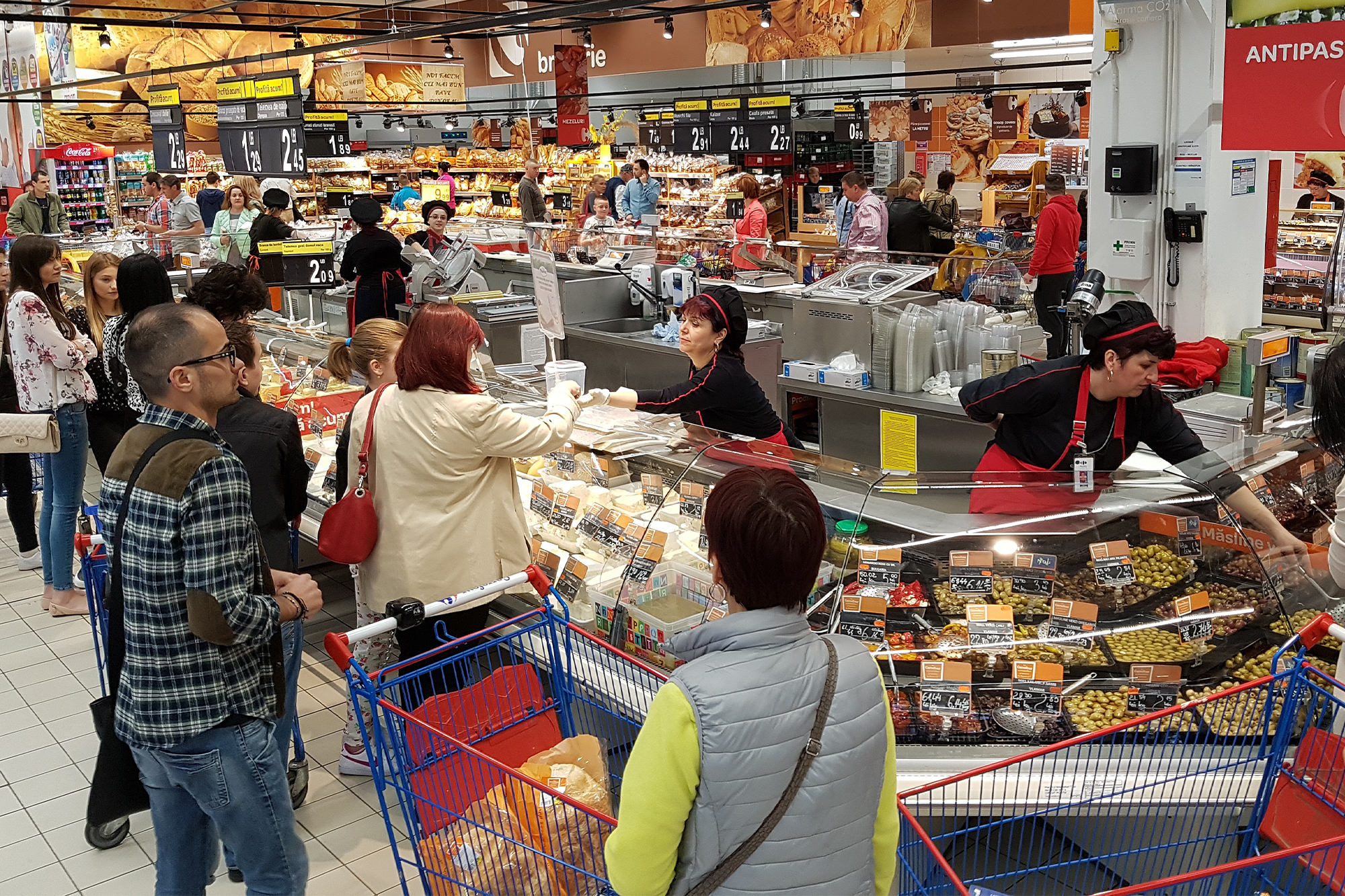
The prices of some foods, especially bread and bakery products, dairy products and sausages, could increase by up to 8-10% by the end of the year, against the backdrop of high energy and transport costs, said on Friday, Feliciu Paraschiv, vice president of the National Association of Small and Medium-sized Traders in Romania (ANCMMR).
Chigher price residuals for products that have a higher energy component
The Vice-President of the National Association of Small and Medium-Sized Traders in Romania explained that in the coming period we will see higher price increases for products that have a higher energy component. For example, bread and bakery products.
According to Paraschiv, if in past years the main problems were related to supply chains and logistics costs, now the main problem is energy. It is the main pressure factor.
“In the coming period we expect to have higher increases on products that have a higher energy component. For example, bread and bakery products have high energy costs because they are baked in electric or gas ovens, they are transported and they have high volume and low price, which makes the transport factor per unit high.
The products will be priced differently. Bread and bakery products, probably by the end of the year, we will have an 8% increase. In the same way, we will have in the dairy industry, in salamis, also somewhere up to 8%, maybe 10%”, said Feliciu Paraschiv, owner of the Paco Supermarkets chain of stores and the vice-president of the National Association of Small and Medium-sized Traders in Romania.
His statement came in response to a HotNews question during the Commerce and Communication Freedom Coalition's “What We Learn from Crises. The Economy Moves from Tariff to Energy Disorder.”
According to the ANCMMR vice-president, in the first half of the year consumption will continue to be low, and wages will be under pressure, they will have a negative purchasing power.
He believes that the current context can also determine positive adjustments in the economy. Paraschiv gave the example of poultry meat, where Romanian exports will increase in 2025 by 50% in volume and 77% in value: “It's a fabulous growth. We, as a country, could become a pole for supplying Europe with poultry meat, as Poland is for apples, if we know how to manage the situation.”
Four scenarios for the government in the face of expensive oil
The price increases will come not only as a result of the high inflation in Romania, but especially as a result of the increase in oil prices, i.e. the increase in fuel, which is transferred to the cost of transport and agricultural production.
The best solution the state has at hand to ease people's financial strain would be to introduce a temporary fuel price cap mechanism that would share the cost of the shock between the state, companies and consumers, Laurian Lungu, co-founder of the think tank Consilium Policy Advisors Group (CPAG), said at the same debate.
“Right now, basically, that cost is absorbed almost entirely by consumers,” he explained.
Lungu published an analysis, presenting four scenarios that the Government has in the face of expensive oil:
- The state does not intervene.
- The state grants selective support.
- It intervenes by reducing excise duties.
- A temporary price cap.
“I also did some calculations related to the budgetary cost of such a measure. Of course, there is a mechanism there. It depends at what price you start applying the mechanism, at what price of oil, it depends on what percentage states bear these costs. Finally, there are more things to discuss, but this is the principle, that this cost will be shared between the three actors and, as I said, at an oil price of, say, 85 dollars per barrel, this cost to the state would be somewhere equivalent to 0.2% of GDP if the shock were to last a year and the price of oil would remain at 100 dollars per barrel. The advantage is that the economy does not come into your way so much, because you have a certain protection for everything that means the market and you manage to protect your income in the budget and, moreover, you do not have such a big shock on inflation”, explained Laurian Lungu.
If inflation rises again, if inflationary expectations increase, then interest rates will also increase and implicitly country risk will increase. “It will increase our borrowing costs and so on,” says the CPAG co-founder.