Sergei Shelin is a Russian socio-economic analyst.
The financial situation of Russians is deteriorating. These changes should not be reduced solely to increased inequality in access to goods. But inequality is actually increasing.
Income 10 percent The income of the richest people in Russia is currently 15.8 times higher than the income of the top 10 percent. the poorest. At least this is the official data. The inequality rate is now even higher than in pre-war 2021 (15.2).
Yet in the first year of the war, in 2022, it dropped to 13.8! The regime then tried to show that the invasion of Ukraine did not prevent it from supposedly caring for the poor.
So let's start this analysis with the situation of the poorest. Be warned that the numbers used here are inaccurate. Most of them come from Rosstat reports [Federalna Służba Statystyki Państwowej]. They are useful and related in their own way, but they embellish reality and hide a lot. The official method of determining the “poverty line” (subsistence minimum) is particularly convenient for manipulation because it is based on Rosstat's inflation estimates, which are always lower.
With this in mind: let's not take at face value reports of the continuing decline in poverty levels – supposedly from 11%. in 2021 to 6.7 percent in 2025. Let us agree, however, that the number of truly poor people in war-torn Russia is not actually growing. If it was growing, it would be visible at first glance. As for the remaining nine-tenths of Russians, it's theirs the average standard of living has been declining recently.
Justified pessimism
This can be seen in the level of consumption. It is true that state statistics claim that trade turnover at constant prices has increased by several percent over the last year. However, this is most likely a bluff. Because the same statistics inform that purchases of cars, TVs, refrigerators, washing machines and furniture have significantly decreased during this time.
In the reports, only purchases of clothing and food increased. We will ignore clothing, but there could be no more food in Russia. If only because imports are decreasing rather than increasing, and own agricultural production on the charts of the same Rosstat, after eliminating seasonality, has remained at the same level for many years now.
The housing situation is not improving either. In 2025, it was built (if, again, we believe the embellished official data) by as much as 0.4%. more than in the previous year. In any case, we are now facing a reduction in construction due to a reduction in the granting of preferential mortgage loans, and especially loans for the purchase or construction of private houses.
Already at the beginning of 2026, the number of completed apartments will drop significantly.
It is not surprising that the average Russian, judging by regular surveys, he assesses his financial situation more pessimistically than before. As much as 26 percent respondents claim that their financial situation has deteriorated over the last few months, and only 9 percent — that she has improved. This is worse than in 2023–2025.
People with higher education are the most pessimistic (32% vs. 8%). Even young people are concerned (15% compared to 17%), usually very optimistic and satisfied with their income.
Graduates and people with the latest specializations actually have more reasons to worry than others.
The article continues below the video
New Russian realities
Technically speaking, unemployment is currently at its lowest level since 1991 – 2.2%. labor force, as follows from the methodology of the International Labor Organization. Before the war, the result was twice as high. However, the statistics mask the again growing hidden and semi-unemployment.
The actual ones are currently underway layoffs — in civilian state sector institutions (due to the accelerating budget crisis) and in the IT sector (due to the implementation of artificial intelligence, declining orders and Putin's growing obsession with the Internet). In the first years of the war, the regime sought the favor of IT specialists. And his current efforts to adapt anything that looks advanced to suit his obsessions bewilder those who believed him then.
At the other social extreme, among retirees, the standard of living is gradually falling simply because indexation has not kept pace with inflation. In 2025, approximately 12 trillion rubles (PLN 529 billion at the current exchange rate) were paid in the form of insurance and social pensions – this is less than 6%. GDP.
Let us remember this modest number and note that state statistics deny the deterioration of pensioners' living conditions, but nevertheless agree that in real terms pensions remain stagnant throughout the war. However, real wages increased by 24 percent during the four years of the war.
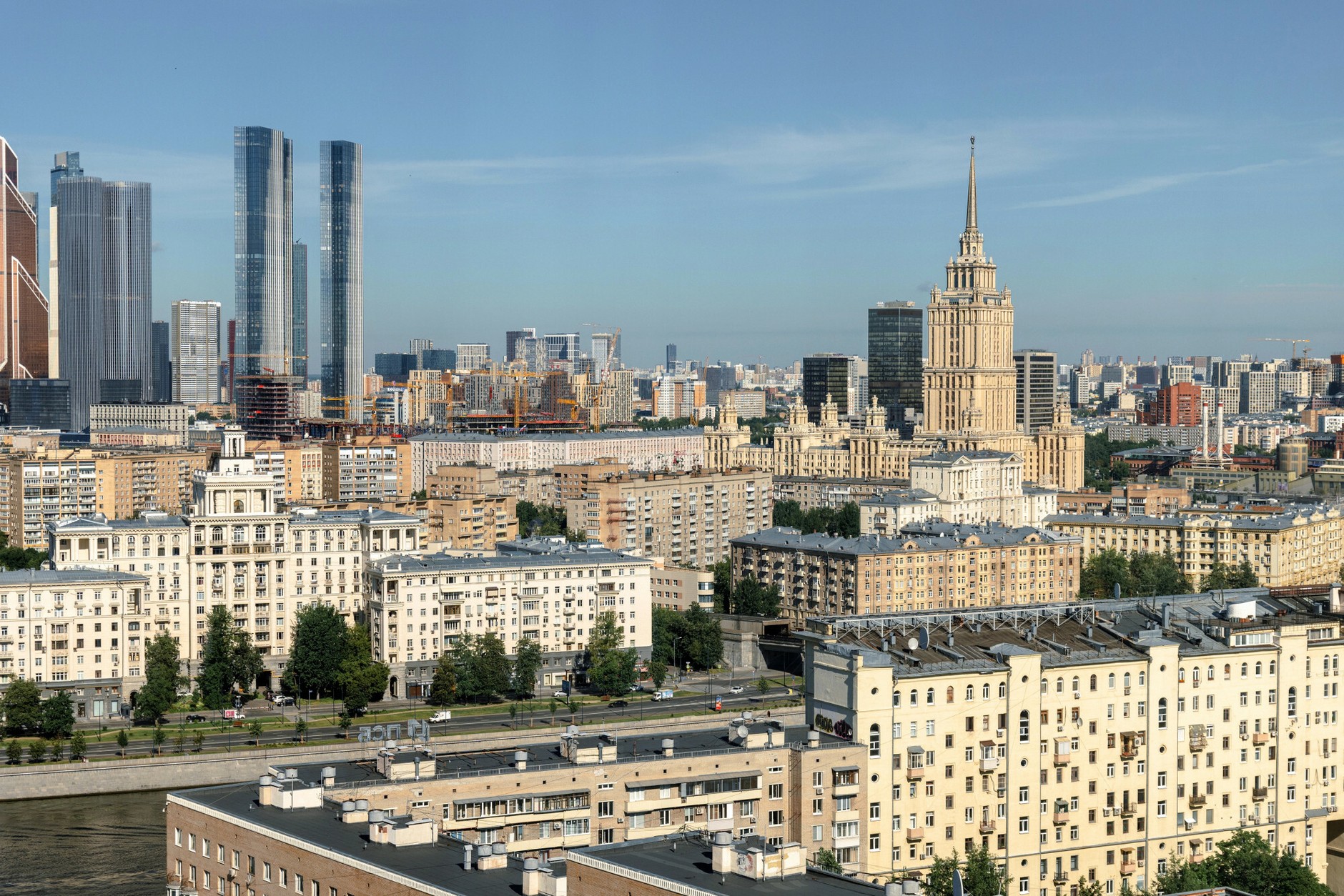
Moscow, July 10, 2024Deposit/East News / East News
Disturbing profits
In virtually all sectors, even civilian, wages are growing faster than inflation. Or at least they were growing until recently. Those who are associated with military production, and even more so those who fight, seem to the main beneficiaries of the material benefits resulting from the invasion of Ukraine.
The income of those who enlisted in the army, as well as the income of their families in the event of their death, is many times higher than in peacetime. According to rough estimates, the authorities spent 5 trillion rubles (PLN 220 billion) on them in 2025. This amount includes payments for signing contracts, pay and funeral benefits.
Another category of war beneficiaries is less conspicuous. Moreover, not everyone is employed in the war economy. In 2025 bank depositors received 9.5 trillion rubles (PLN 419 billion) of interest income. This is twice as much as the income of soldiers and their families and is comparable to the money that the regime managed to collect for 40 million Russian pensioners.
The sheer size of interest income should not be surprising. This is due to the very high interest rates during the war and the huge sums of money that are put aside in banks because there is nothing to spend it on in the current circumstances. However, it is worth knowing that the number of main holders of this money is quite small.
More than three-quarters of the funds in the accounts belong to just 5 percent. depositors. They receive the largest share of interest income. And the rising rates of material inequality with which we began this article reflect their wealth, which is growing like a weed.
However, even these people have reasons to worry about their wealth brought by the war. At last their savings are managed by state-linked banks and, through them, by the authorities. And they themselves were transformed by the regime into something like holders of a state war loan. Which, as a result, can bring them huge profits, or even lead to ruin.
And it all depends on how the war goes and what comes to Putin's mind.
Most Russians aren't that worried about the war itself. But almost everyone, both at the top and at the bottom, has reason to worry about their material future. These concerns will grow. The only question remains whether they will be able to transform them into pressure on the regime.
I’m Ashley Davis as an editor, I’m committed to upholding the highest standards of integrity and accuracy in every piece we publish. My work is driven by curiosity, a passion for truth, and a belief that journalism plays a crucial role in shaping public discourse. I strive to tell stories that not only inform but also inspire action and conversation.