The attack by Israel and the US on Iran has been going on for three weeks. Since the beginning of this war, which is becoming longer than its originators probably expected, the main economic impact has been a sharp increase in oil prices, which have permanently stayed around $100. per barrel compared to approximately $60-65. before the attack. This means a rapid increase in fuel prices, which we can already observe at gas stations, but also raises concerns about this effect spilling over to other consumer goods and services.
This would result in an acceleration of inflation, and the unrest in this regard has already triggered the reaction of financial markets, which expect interest rate increases. But that's not all. It turns out that the sudden increase in gas prices resulting from the war may also have consequences for electricity prices. On the European TTF exchange, short-term gas contracts temporarily jumped to EUR 71 per MWh, and have recently been consistently above EUR 60, which means an increase of 75%. compared to prices before the attack.
Thermal coal prices also went up in March. In the ARA ports (Antwerp-Rotterdam-Amsterdam), the price per tonne increased to as much as $145. from approximately $115. before the attack. This also translates into an increase in the price of this raw material in Poland.
Such more expensive energy carriers may increase electricity prices
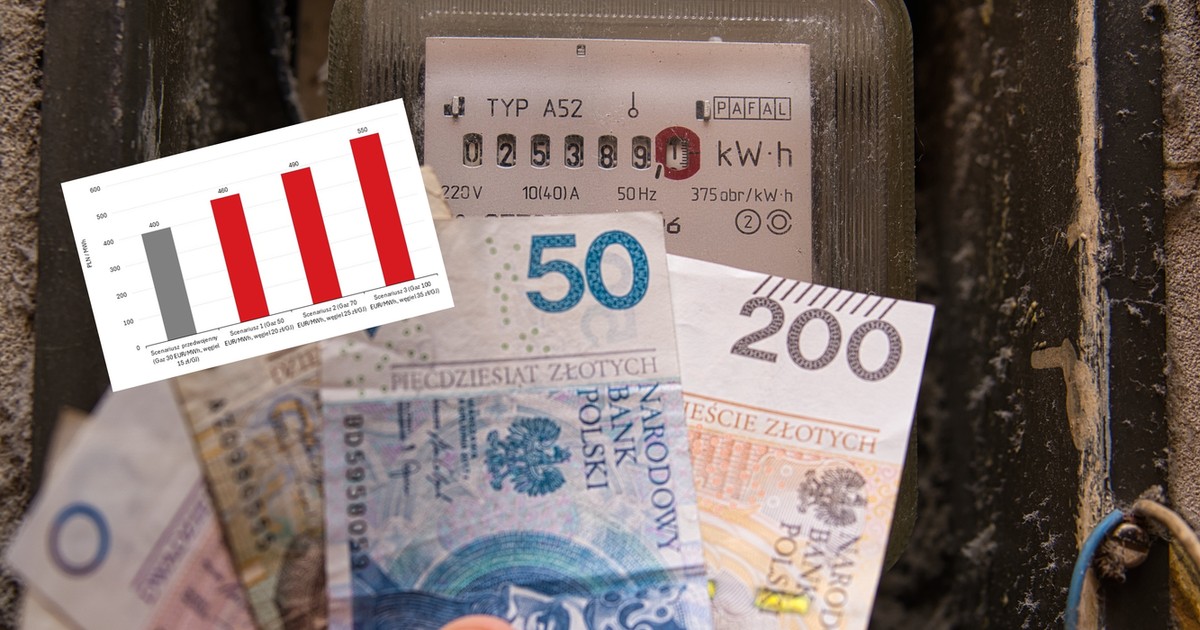
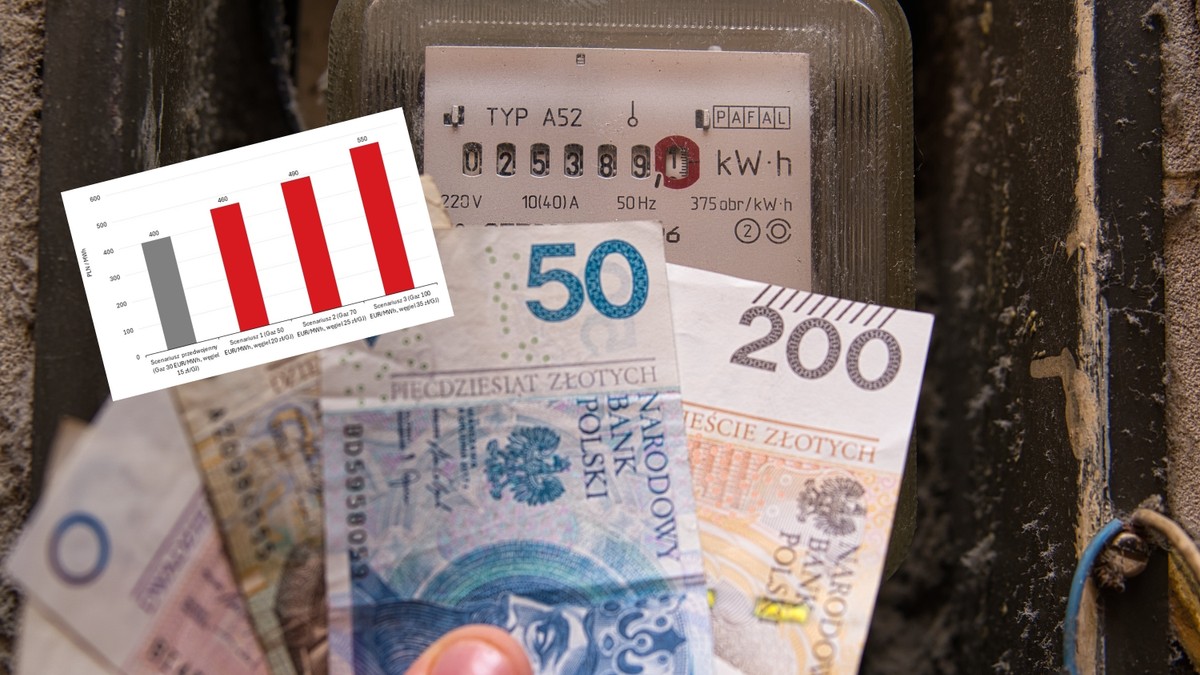
“The war with Iran means not only a rapid increase in oil prices, but also higher gas and coal prices may result in higher electricity prices. According to our estimates, with the gas price of EUR 70/MWh and the coal price of PLN 25/GJ, the wholesale price of electricity may increase by 23%, to PLN 490/MWh,” wrote analysts from the Bank Pekao Brokerage House on the X website.
These calculations are based on spot wholesale prices of electricity in Poland recorded before the US attack on Iran, which amounted to approximately PLN 400/MWh (gas then cost EUR 30/MWh and coal PLN 15/GJ).
See also: The most expensive electricity is no longer in Poland. How did the attack on Iran change the market in Europe?
Analysts have prepared several scenarios. In the first, most mild phase, the wholesale price of electricity would increase by 15%, to PLN 460/MWh. This is assuming that gas prices would be around EUR 50/MWh and coal prices would be PLN 20/GJ). Second scenario is the 23% increase in electricity prices described in the quoted entry on the The third, most pessimistic scenario assumes an increase in energy prices by 38%, to PLN 550/MWh. It is based on the price of gas around EUR 100/MWH and coal PLN 35/GJ).
Will electricity bills go up immediately?
The increase in energy prices in recent weeks and possible further increases do not mean that households will automatically pay higher electricity bills. There is a tariff mechanism that guarantees a fixed energy sales price for the whole year. For 2026, the President of the Energy Regulatory Office approved tariffs for households for 2026 at an average level of PLN 495.16/MWh (net), i.e. 1%. less than the previous year's frozen rate.
This is the price of active energy alone, to which distribution costs and other fees must be added. The price of the energy itself – the above-mentioned PLN 495.16 – is approximately 50-60 percent. actual bill. The remaining part is distribution fees (the cost of energy transport, for 2026 there was an increase by 9.4%, i.e. approximately PLN 28/MWh), capacity, cogeneration and renewable energy fees, and taxes (VAT and excise duty). Only increased prices for a long time and an increase in future contracts may result in the Energy Regulatory Office approving a higher tariff for 2027.
However, wholesale electricity prices are of great importance to companies because they do not benefit from tariff protection. Enterprises from e.g. heavy and energy-intensive industries are particularly vulnerable. This may affect their competitiveness and financial results, and they may try to pass on the higher cost of energy to end users, which has a pro-inflationary effect. Companies can hedge themselves by using futures contracts, which guarantee a specific electricity price at a given time. However, in some time – if the situation does not normalize – their prices will include higher prices that are already visible on the spot market.