As the moderate right increasingly collaborates with the far right in the European Parliament, EU politics could be headed for a significant shift.
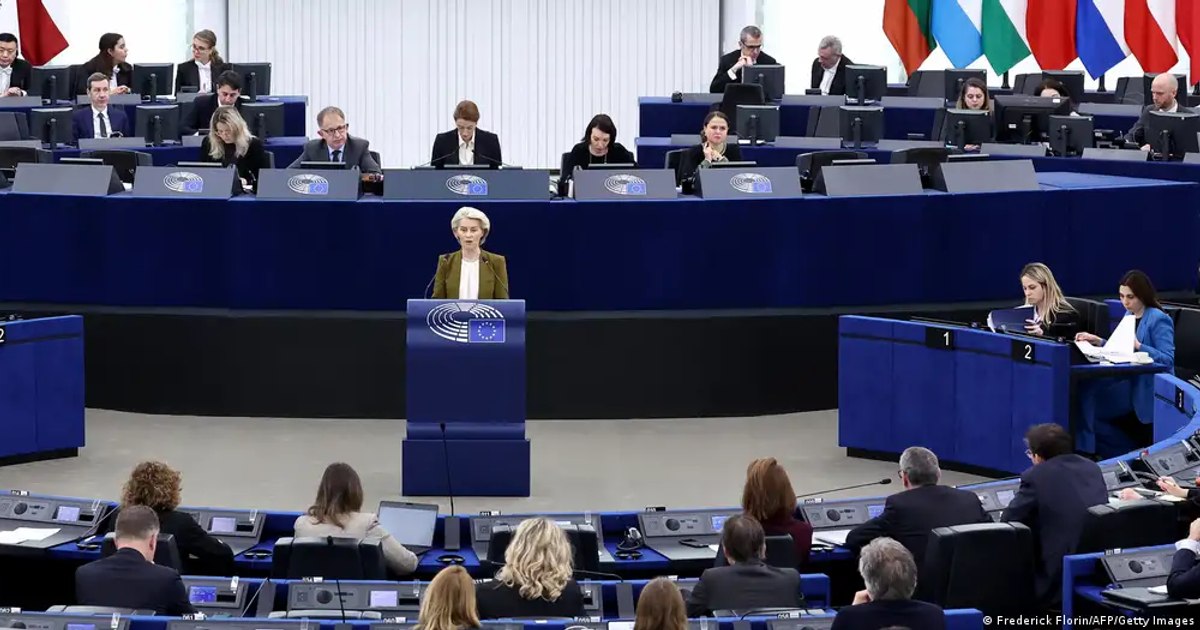
There are signs that the European Parliament has moved to the right
In German politics, the rule is simple: no cooperation with the far right. The “Brandmauer” – the wall of protection against the partially considered far-right populist party AfD – is treated as a democratic red line, at least at the national level.
But a larger and more troubling question is emerging in Brussels and Strasbourg: Does the European moderate right still believe in isolating the far right, or is it increasingly relying on it to secure majorities and pass legislation when convenient?
The question has become even more pressing after reports that MEPs from the European People's Party (EPP), the dominant force on Europe's moderate right, coordinated actions with far-right groups ahead of key votes on migration, including proposals for so-called “return hubs”, deportation centers outside the EU.
The significance of these accounts lies not only in the fact that the extreme right voted alongside the moderate right, but in the possibility of prior contacts, agreements on wording and efforts to build a common majority. The real story may go beyond a single controversial vote.
It all depends on a larger aspect: whether the EPP forms a new habit of governing – collaborating with the pro-European center when it can and turning to the far right when it is useful.

Nicolai von Ondarza on the strategic cooperation between the moderate right and the extreme right
A larger change
Nicolai von Ondarza, an expert on EU institutions at the German Institute for International and Security Affairs (SWP), claims that this is not just an isolated case. He says this signals a structural change in the way Parliament operates. “The EU is moving towards something like a minority government in the European Parliament,” he told DW. In his view, the EPP is increasingly choosing between two possible majorities: the traditional pro-European coalition with the Socialists and Liberals and, in an increasing number of cases, a majority with parties to its right.
This does not mean that Parliament has completely realigned. Ondarza points out that more than 80% of the decisions are still adopted by the mainstream pro-European majority. But, he says, the important change is that the radical right alternative is no longer taboo. “It's still an exception, but an exception that's happening more and more often.”
Sophia Russack, researcher at CEPS, a think-tank in Brussels, goes even further. She states that the latest reports only confirm what many in Parliament already suspected. “This is the new normal,” she told DW in an interview.
Russack highlights a significant discrepancy between media reactions in Germany and those in the rest of Europe. In his interpretation, the outrage in Germany says a lot about a country where the protective wall still has political force, in contrast to the atmosphere in other parts of Europe, where cooperation with the far right is no longer so shocking.

Sophia Russack, researcher in the Institutions department of the think tank CEPS in Brussels
Just a coincidence?
For both analysts, there is a key distinction between accidental overlap and active cooperation. The EPP has long defended itself by saying that it cannot prevent far-right parties from voting as it does. But Ondarza says there is growing evidence that something more deliberate is going on behind the scenes, including coordinated wording and an effort to build majorities.
Russack emphasizes this complicity. “You can't stop them from voting the same way as you,” she said. “But of course you can draft amendments in a way that supports you.”
This matters because it changes the political meaning of the alliance. In the European Parliament there is no strict government-opposition division, as in many national parliaments. Majorities are often built case by case. But if legislation is drafted with far-right support in mind, or if parliamentary actors negotiate in advance with these parties, then the relationship is no longer accidental. It becomes strategic.
Will the right's reputation suffer?
This strategy could strengthen the EPP in the short term, as it allows it to choose its legislative partners from both the left and the right. Ondarza says the European elections in 2024 have clearly changed the parliamentary arithmetic and given the moderate right more room to manoeuvre. But he also warns that this flexibility comes at a price.
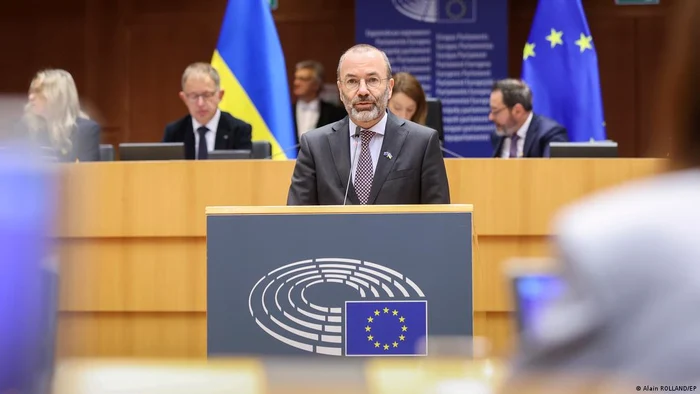
EPP leader Manfred Weber defended his party's position
A first risk is practical: the more the EPP moves to the right, the less likely the socialists and liberals will be willing to cooperate on the many files where they are still needed. The result could be a more unstable and unpredictable European Union.
The second risk is political: if the moderate right increasingly legitimizes the far right as a partner, it could end up strengthening forces that aim not only to influence policies, but to reshape the political character of the EU. The deeper threat, he argues, is that anti-liberal and anti-pluralist actors would gain more power to redefine what Europe stands for.
He also sounded a warning already voiced by several member states: mainstream conservatives may think they are keeping the far right under control by drawing on its support, but in reality they could be strengthening a rival that could one day overtake them. Put bluntly: Tories risk marginalizing themselves.
Growing legitimacy
Russack makes a similar argument, starting from the institutional logic of Parliament. The far right has long had mandates, speaking time and visibility in Brussels and Strasbourg. What is changing now, she argues, is that it can increasingly influence outcomes, which increases its legitimacy. “It's one thing to be elected to Parliament. It's another to influence decisions.”
She gives the example of migration, where positions and formulations that once seemed politically inconceivable have been adopted by the moderate right. But the problem goes beyond the issue of migration. Once the radical right becomes a source of long-term support for the moderate right, it gains bargaining power, both experts agree. Such an evolution allows it to influence the language, priorities and boundaries of European policies.
Tessa Clara Walther – DW