Italian and Maltese authorities have issued urgent warnings to mariners to avoid an unmanned Russian oil tanker that has been drifting for days between Italy and Malta amid fears of a possible environmental disaster in the Mediterranean, CNN reports.
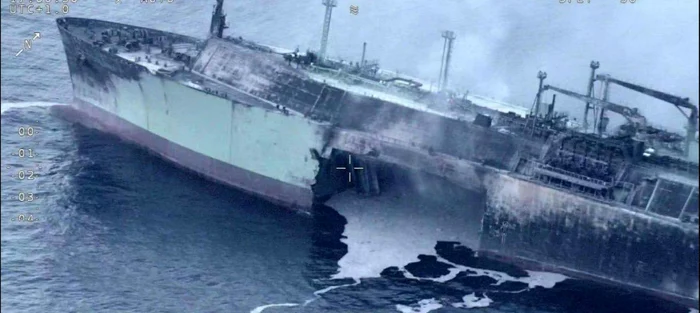
PHOTO X
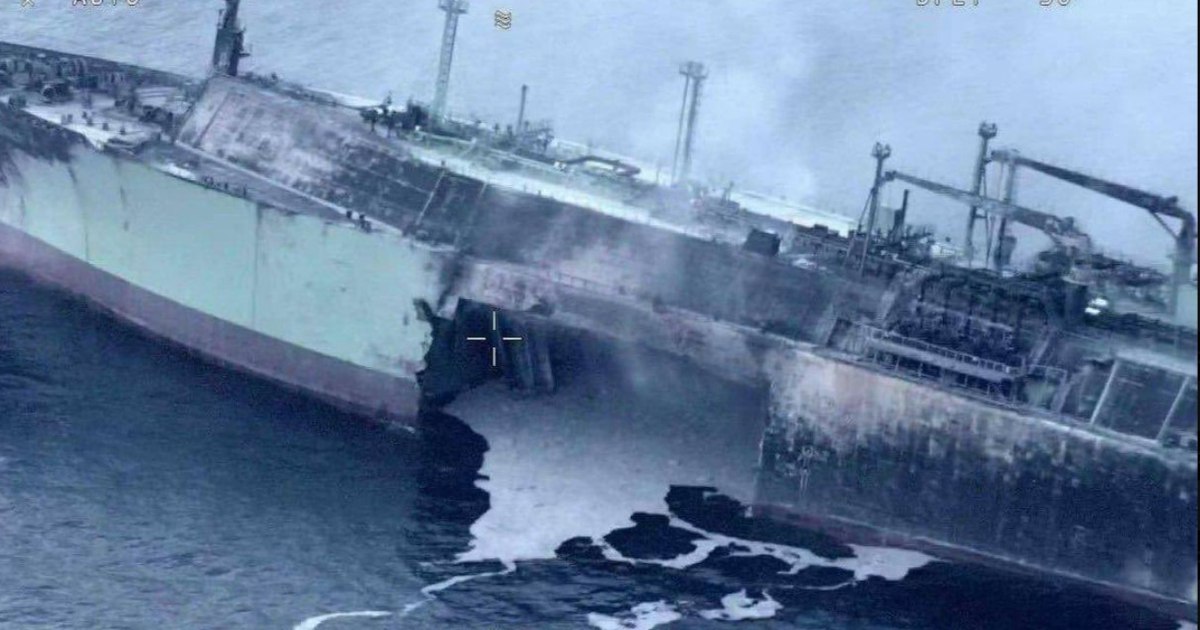
The Russian-flagged Arctic Metagaz was caught blackened and smoking after it was reportedly targeted by a drone strike, according to surveillance footage. The footage shows the 277-metre-long tanker leaning on its side, with a huge crack on the port side and a black film on the surface of the water.
According to Italian authorities, the tanker is carrying around 900 tons of diesel and more than 60,000 tons of liquefied natural gas, increasing the risk of disaster in the event of a spill.
Arctic Metagaz is believed to be part of Moscow's so-called “ghost fleet,” a network of old vessels that clandestinely transport Russian oil despite international sanctions imposed after Russia's invasion of Ukraine in 2022. According to the Vessel Finder website, the vessel left Murmansk, Russia, bound for Egypt.
On the morning of March 3, Russia's Foreign Ministry said the vessel was attacked by maritime and aerial drones in neutral waters of the Mediterranean Sea, about 168 nautical miles southeast of Malta. Following the fire that broke out on board the ship, the crew of 30 sailors, some with burns, abandoned the vessel. They were rescued by the Libyan Coast Guard and taken to Benghazi with the support of the Russian embassy in Libya. Russian authorities condemned the incident as an “act of terrorism”, while the Transport Ministry attributed the attack to Ukrainian naval drones. Ukraine has not made any public statement.
Russian Foreign Ministry spokeswoman Maria Zakharova described the incident as a “flagrant violation of international law” with potentially serious consequences. She also criticized the lack of reaction of EU member states, recalling that the attack took place close to European waters.
“Remarkably, the attack took place near the shores of an EU member state, and so far none of the European countries have condemned the incident,” Zaharova said.
Although the attack took place in international waters, Italian authorities are increasingly concerned that winds and currents could push the dangerous vessel close to Italian territory. In an emergency meeting on Friday, Prime Minister Giorgia Meloni met with the ministers of defense, foreign affairs, energy, maritime affairs and civil protection to review the situation. Officials described the tanker's situation as a “gas-filled time bomb”, concluding that it could not be brought safely to an Italian port.
Italian and Maltese authorities sent tugboats and anti-pollution equipment for monitoring and intervention. On Sunday, the tanker was approximately 20 nautical miles from the island of Linosa, part of the Pelagie archipelago. Responsibility for rescuing the vessel remains with the Russian owner, LLC SMP Techmanagement, but no direct contact with it has been confirmed. Maltese authorities have hired a specialist maritime salvage team to decide whether the vessel can be towed into port or should be sunk offshore.
Environmental organizations warned of the risks to the environment in case of spills. The World Wide Fund for Nature (WWF) has listed the Arctic Metagaz cargo as “extremely hazardous”, warning of the risks of fires, lethal cryogenic clouds and widespread and long-lasting water and air pollution. The organization highlighted the ecological importance of the region, which is home to almost all protected marine species in the Mediterranean and is a migratory corridor for bluefin tuna and swordfish. WWF warned that an incident could have irreversible ecological and economic impacts on the Pelagie Islands, where fishing and tourism are the main sources of income.
“The area is of exceptional ecological value, with fragile deep-sea ecosystems and one of the highest biodiversity in the Mediterranean basin,” the organization said.
After the attack, the Libyan port authority initially reported that the tanker had sunk, causing confusion among maritime agencies. The vessel was later located by Maltese authorities, who alerted Italy and established a five-nautical-mile safety zone around the tanker.
Prime Minister Meloni said the Italian government is in constant contact with Malta, stressing the importance of monitoring the vessel and preventing a possible environmental disaster.