The American press accuses France of massively importing Russian gas. Analyst: “You can't accuse anyone of hypocrisy”


France is accused of hypocrisy in the Washington Post, the newspaper of tycoon Jeff Bezos, because it is the largest importer of liquefied gas and the third largest buyer of Russian energy in Europe. Security analyst Ștefan Popescu explains why this situation has been reached.
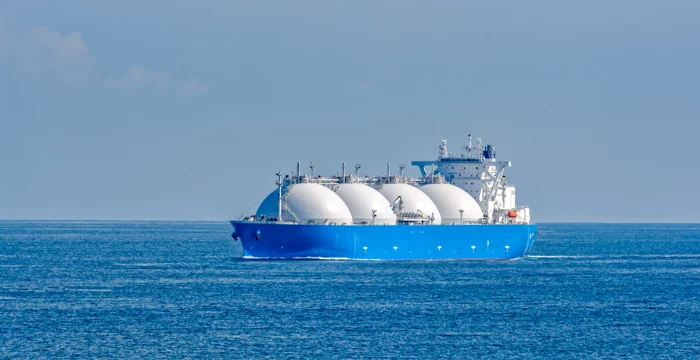
Vessels carrying liquefied natural gas are in high demand. PHOTO: Shutterstock
“France, Germany and Belgium see the mote in Trump's eye, but fail to see the log in their own eye” it is stated in an opinion article signed by the Editorial Board of the Washington Post, one of the most read newspapers in the USA, owned by the businessman Jeff Bezos.
In the article that basically presents the point of view of the newspaper, the European countries are accused of hypocrisy in relation to the public position towards the war in Ukraine compared to their concrete actions.
The Washington Post quotes a warning from President Emmanuel Macron, which according to Der Spiegel, was given in a telephone conversation with Volodymyr Zelenskiy and German Chancellor Friedrich Merz:
“There is a possibility that the US will betray Ukraine on territory, without clarity on security guarantees.”
The editorial board of the publication criticizes the French president: “How does Macron explain, for example, the fact that France is the third largest buyer of Russian energy in Europe? This is not the period before 2022 or 2014, when Russian President Vladimir Putin launched the illegal invasions of Ukraine. This is August.”
US journalists also claim that the EU is only now preparing to approve a bloc-wide ban on Russian gas imports – starting in 2027. Meanwhile, European countries turned to India for energy supplies, ignoring the inconvenient truth that Russian crude was flowing through many of its refineries. In the first three quarters of 2024, imports from these refineries increased by 20%.
The editorial's conclusion is: “(European-no) leaders express their “unwavering commitment and solidarity with Ukraine. In theory. In practice, the continent often fails to agree, let alone act, to make the choices and sacrifices necessary to help its neighbor.”
Ștefan Popescu: “You can't accuse anyone of hypocrisy”
However, security analyst Ștefan Popescu rejects the idea of a double standard, explaining that the continent's energy situation is infinitely more complex than it seems.
“You can't accuse anyone of hypocrisy”says Popescu firmly. “Energy circuits were formed over decades. To replace quantities of gas, you have to make investments in production, in perimeters, put them in development. This cannot be done overnight, in a year or two.”
According to several analyzes – including from the French economic press – France has become the largest importer of Russian LNG in the European Union from 2024.
The analysis explains why France has reached this position: it has five well-equipped LNG terminals on the Atlantic and Mediterranean coasts, which allow it to receive large volumes of liquefied gas. Logistics networks then enable regasification and transport to other European markets.
There is no clear official figure on what percentage of this volume of gas is used by France and how much is redirected to other European markets.
The French terminals serve both domestic consumption and regasification and forwarding to other countries — for example Germany, Belgium or other EU states that need gas but do not have their own LNG capacity.
Infrastructure, Europe's great vulnerability
Popescu details what many analysts call the continent's “energy legacy”: an infrastructure built over decades that is difficult to change quickly.
“You have to think about the infrastructure that takes your gas to the destination market: liquefaction terminals, the LNG carrier that carries the liquefied natural gas (LNG). There is a very large cap on LNG transportation.“
He recalls that only China and South Korea are still building such ships, their order books being “full”. Qatar, he says, has ordered “over 100 methane tankers, which are not built overnight.”
Europe is not doing better either. “It takes 2–3 years to build an import, regasification terminal. Then the interconnections between European countries have to be built — and they are not satisfactory.“
Until at least 2027, the EU decided not to ban the import of Russian gas into Europe.
Liquefied gas, a little stable market, a lot of competition
Another aspect neglected in the public debate is cost. Popescu emphasizes that the LNG market is structurally more expensive than pipeline imports.
“Any LNG coming in, either from Russia or the US, is a higher-priced market. It's a much less stable market, where Asian terminals are competing with European ones.”
For this reason, suddenly stopping imports would be a reckless act: “You can't stop an import by pushing a button, because you have to think about the systemic impact on the whole economy.”
Popescu warns that European rearmament ambitions risk remaining mere statements if the energy problem is not resolved:
“A rearmament program requires an energy-hungry industry. Without a serious energy strategy and without competitive prices, no one will invest in new production lines.”
Moreover, he draws attention to a historical precedent:
“Think of the Soviet Union: an economically unsustainable, subsidy-based armament that led to its collapse.”
France: paradox only on the surface
Although perceived as a nuclear giant, France remains a major consumer of natural gas. “France has the largest natural gas distribution network in Europe, 200,000 kilometers. It imports gas for industry, for domestic consumption, for public transport.”
At the same time, it is “one of Europe's most virtuous countries in terms of carbon dioxide emissions”, unlike Germany, which “produces on coal”.
For Popescu, any rapid energy transition risks destabilizing European societies. The example of France is eloquent:
“Look at the yellow vests. Reduced purchasing power by increasing energy bills was the trigger. Energy prices have the biggest social impact.” A
“If I cut the crack from under my feet, I won't be able to support anything”
An aggressive cost increase could “systemically blow up a country”, is the analyst's opinion.
He also draws attention to a less discussed hypocrisy: the re-export of petroleum products obtained from Russian oil. “Russian petroleum products, transformed in India into diesel, also reach the North American market.”
In short: global energy chains are so interconnected that sanctions create diversions, not bottlenecks.
Analyst Ștefan Popescu's message is one of caution: Europe cannot act impulsively. Ukraine's energy independence, rearmament, sanctions and reconstruction are interdependent and extremely costly.
“We have to think about the impact. If I cut my leg off, I won't be able to support anything.”
A harsh but necessary lesson: in a world where economic reality trumps political rhetoric, Europe must calculate its every step with lucidity.