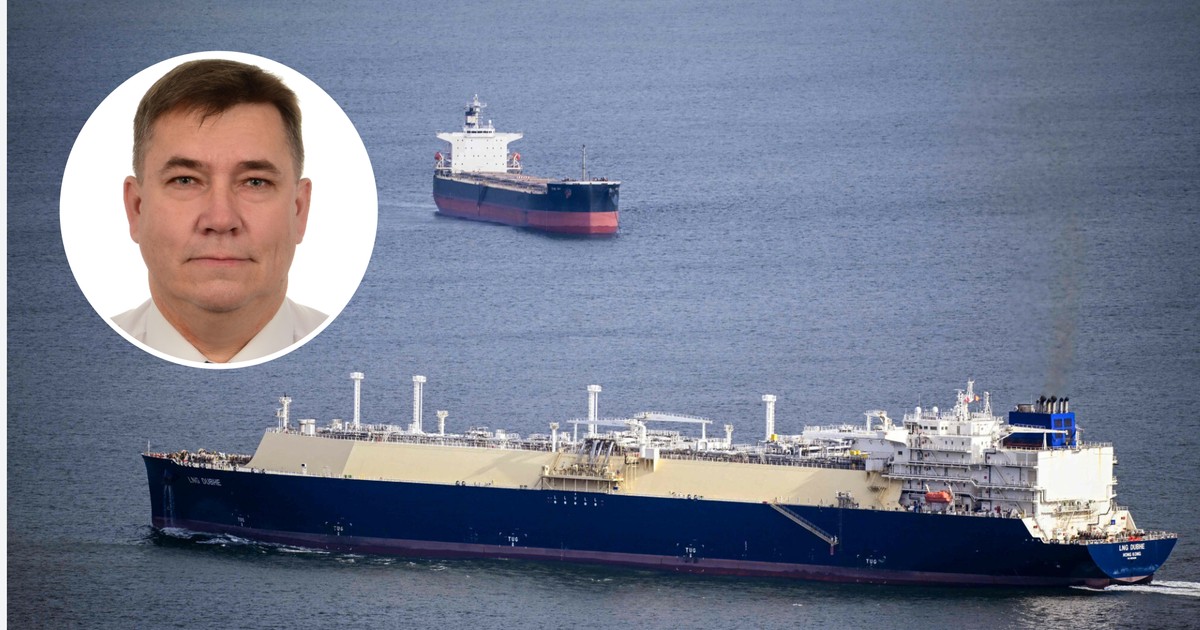
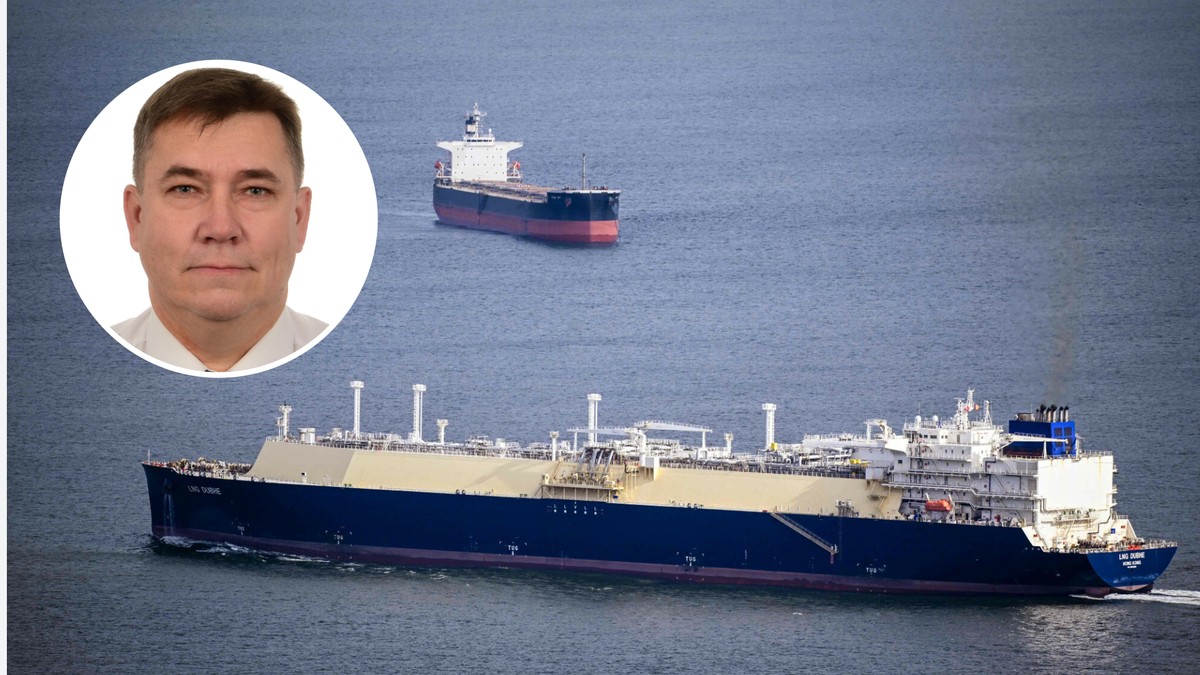
Grzegorz Rutkowski is a professor at the Maritime University of Gdynia, specializing in navigation and maritime safety, a large-scale shipping captain and a seagoing pilot. He is also a sailor with 27 years of maritime experience, sailing on tankers, also through the Strait of Hormuz.
— I traveled frequently to the Persian Gulf region and passed through the Strait of Hormuz many times. This is a very specific region, called chokepointi.e. the bottleneck. It concerns primarily the transmission of energy raw materials. 20 million barrels of oil flow through the strait every day, which is as much as 20 percent. global demand – he says in an interview with Business Insider Polska.
The expert notes that according to official information, the Strait of Hormuz is approximately 54 km wide, but this is only a theory. — However, the approach fairway itself, designated for ships, is much narrower, because there are many coral reefs, islets and shallows. If we put the ship in the middle of the strait, it turns out that the distance between the islands from one shore to the other is not 50 km, but much less – he emphasizes.
Rutkowski points out that it is difficult to determine how many individuals are currently trapped in the region. — The Vessel Traffic Marine website shows a lot of ships gathered in the Persian Gulf area: near Kuwait, Iraq, Saudi Arabia, of course before entering the strait. You can see several hundred units there, but I think there are actually many more, because for safety reasons – in accordance with the ship protection plan – many shipowners in the war zone allow or even recommend that captains turn off the AIS (Automatic Identification System) transmitters for automatic ship identification. Vessels with the AIS transmitter turned off will therefore not be visible. Even if the ship is physically there, we cannot locate it in the AIS system, and it will only be visible on radar or satellite images, he explains.
Read also: The Strait of Hormuz in the spotlight. The US is preparing an escort of tankers
Poles stuck in the Strait of Hormuz. Estimates
About 20,000 people are stuck on ships in the Strait of Hormuz region. sailors, including Poles. The captain estimates that there may be as many as several hundred of them there, including cadets from Polish maritime schools.
— Every year, our Maritime University in Gdynia sends over a hundred navigators, several dozen mechanics, electricians and sailors for maritime training in the merchant fleet. Many shipowners servicing tankers and gas carriers operating in this area employ many Polish officers and sailors. I personally know several Polish captains working on gas carriers transporting LNG from Qatar to Europe and crude oil from the Persian Gulf to the Asian market. In the world of seafarers, we rarely have a situation in which a ship's crew consists of a crew of one or two nationalities. Usually it is a compilation of multinational crews with different cultures, customs, religions and national traditions. I usually had from 4 to 11 different nationalities on the ships I commanded, he explains.
He adds: – We must be aware that in the Strait of Hormuz region there are not only ships, but also offshore installations: drilling rigs, production platforms, floating storage facilities used in the oil and gas industry to extract, process or store oil at sea. These installations are also staffed by Poles.
The rest of the article is below the video
The biggest problem for seafarers: limited contact
Even though vessels in the Strait of Hormuz region are blocked, life continues almost as normal. — A ship usually has supplies for several months (one to three months). The captain can also order deliveries locally. Water is not a problem – most ships have an osmosis, or filtration, system. Fuel – usually a supply for three to six months – Rutkowski calculates.
The biggest problem is communication with the world and lack of contact with loved ones – especially in areas at risk of war or maritime piracy. — Every day on ships we have access to satellite telephony, Starlink or Inmarsat systems, and access to local or global Internet networks. However, in conflict areas they are often blocked. The Internet is then expensive and limited, he explains.
— The captain also has access to the GMDSS (Global Maritime Distress and Safety System) satellite and radio communication systems. In the event of a threat, there are also SSAS (Ship Security Alert System) ship protection systems in place to silently notify the shipowner and the flag state, he enumerates.
The biggest threat in the Strait of Hormuz: mines
I ask the captain what is currently the greatest threat to ships and sailors themselves. – Mines. If the ship hits them, it will explode. Mines are a simple pressure tool – even small fishing boats can carry them, he says.
He explains: – Surface units, helicopters, the navy can protect the ship from being fired by drones, missiles or something from land. But what is under the water is unknown. This is a huge area. If someone mines an area, the mines are a real threat.
Rutkowski notes that not only classic mines are used, the so-called contacts. — There are mines activated remotely, e.g. by hydroacoustics, electromagnetic field, vibration or other signal, e.g. radio, he adds.
The expert points out that terrorists, extremists, local branches of fundamentalists, the so-called water wolves who commit suicide attacks. — There will always be a group of people who will want to sacrifice their lives because they believe that they are acting in good faith, although not necessarily in accordance with the actual message of their religion (e.g. supporters of Hamas, Hezbollah, Houthis, Al-Qaeda supported by Iran) – he says.
Read also: Blockade of the Strait of Hormuz. Iran is to make an exception for ships from one country
Action citadel. This is how ships protect themselves from attacks
To protect themselves against them, large companies (ship owners) ask for their ships to be escorted by navy ships or hire private security companies that may have weapons for protection.
— The crew feels more safe then. We also have electronic security – ships have radars, radio devices, binoculars, sometimes also night vision devices, early warning drones, and early ship identification systems. I can't talk about everything here, but the crew is generally protected, he emphasizes.
He adds: – Even in the case of pirate aggression against the ship, the crew usually locks themselves in the so-called citadel – cuts itself off from the attackers and waits for help from outside. In the citadel he has access to food and drink, satellite telephony, etc.
Captain: we must fulfill our mission
Rutkowski emphasizes that on every ship – even in war zones – the captain is always in charge and the final decision rests with him. — He is responsible for the safety of the crew and the safety of the ship. However, whenever we enter an area of pirate activity or war, the crew must express their opinion. If someone has objections or does not want to participate in such a cruise, they can refuse – and the shipowner is then obliged to send such a person home. He simply can't put her at risk, he explains. However, he emphasizes that most seafarers agree to work in dangerous regions for additional pay.
– This is our job. We realize that we must fulfill our mission. Someone has to get the goods from point A to point B so that the world doesn't stop. I sailed on tankers, i.e. I carried crude oil and petroleum products. We know that oil is needed – for example to supply ambulances, police, army, everything for the state to function – he explains.
On the other hand, there are also benefits. Sailors earn much more when sailing in dangerous regions. – For them, it is certainly a very profitable and profitable business – adds the sailor.
A few days ago, US President Donald Trump appealed to tanker captains to freely pass through the Strait of Hormuz and “show some courage.” I ask the captain if he would decide to sail the ship through the Strait of Hormuz today.
– I think in the naval escort, yes – calmly. Someone has to do it. However, I know not everyone would do this. I realize that, but you also have to be reasonable. No one will sail out alone, he replies. He emphasizes that such a decision must always come from the ship's owner and be consulted with the ship's captain, its crew and the ship's and cargo's insurer.
Rutkowski emphasizes that before a decision is made to consent to the passage of a convoy of ships, the so-called testers. — Local navy units are “released” to check the situation – search for mines and clear the water area – he explains.
When will the lockdown end? Polish captain's forecast
When does the captain think the Strait of Hormuz will be reopened? — I think we're talking about weeks here. If Iran had greater military capabilities, even more drones, it would have already used them. Besides, if they destroy the infrastructure, what then? Will they be left with nothing? For them, business and staying local are probably more important, he says.
He emphasizes, however, that the situation will be different if religious fanatics and terrorists enter the game, or if the conflict spreads to other countries in a given region. — Then it will be difficult to control it and then we will be talking not about weeks, but about months. It has always been a hot and geopolitically uninteresting region, he says. He points out that, comparing this to the situation in Ukraine attacked by powerful Russia, many experts believed that Ukraine would fall after a few days, and the war has been going on there for over four years. – So let's hope that the situation in the Persian Gulf will end soon and this conflict will not spread to other countries in the region – he adds.
Interestingly, the captain points out that currently – despite the blockade, major restrictions and military actions – shelling or destroying other tankers – Currently, some tankers, e.g. Chinese ships, pass through the Strait of Hormuz. — On Tuesday and Wednesday, I saw several ships with Chinese crew moving normally on the AIS Marine Traffic radars, he notes.
How is this possible? The Strait of Hormuz lies in the territorial waters between Iran to the north and the exclave of Oman — Muhafazat Musandam, to be precise. Between this exclave and the main Oman to the south, there is a piece of land belonging to the United Arab Emirates. There is a right of free transit through the Strait of Hormuz.
Cross-strait traffic and abused law
— Traffic in the Strait of Hormuz is based on standard regulations included in the UN Convention on the Law of the Sea. The designated waterway is six nautical miles (approximately 10 km) wide and is divided into three lanes of two nautical miles each. The two extreme ones are intended for navigation in opposite directions, while the middle one is used to separate traffic. Ships crossing the strait move through the territorial sea of Iran and Oman under the right of transit passage. Under international law, the transit passage cannot be suspended for the navigation of neutral countries (commercial and war), even in the event of a war in which a country located on the strait participates – explains the expert.
— Ships from various countries – neutral, but also involved in the conflict – have the right to transit freely. It's a bit overused because there has been a conflict between Iran, the United States and Israel for decades. In addition, there are religious conflicts, and there are many fundamentalist organizations. This right of free movement is not always respected – it is even enforced by Iran. A few days ago, Iran announced that countries that expel ambassadors from the United States or Israel will receive a guarantee of free movement, which is contrary to international procedures – but it is what it is – summarizes Captain Rutkowski.
Author: Natalia Szewczak, journalist and editorial secretary of Business Insider Polska. Contact: [email protected]