The United States' war against Iran has strayed from the original plan in the first hours after hostilities began, a CNN analysis shows. As it stands, the Trump administration has to deal with issues it didn't initially consider.
Spurred by news that Ali Khamenei would meet with Iran's other top leaders on February 28, Israel and the United States stepped up preparations for an attack in the hope of eliminating Iran's entire leadership in one fell swoop.
The hope was that second-line leaders in Tehran would fill the power vacuum and be more accommodating to the US. But the intelligence after the first airstrikes showed a new problem: all the candidates for the expected leadership of Iran had also been eliminated, along with Khamenei.
“Soon we won't know anyone”
“Most of the people we had in mind are dead, and now we have another group. They may be dead, too, based on reports. I think we're going to have a third wave. Soon, we won't know anybody,” Donald Trump admitted days later.
Several sources close to the Trump administration stated that it was a surprise and Iran's solid response, despite the elimination of the most important leaders: targets hit in several countries in the Middle East, the blockade of the Strait of Hormuz that caused a global energy crisis that Washington is now trying to slow down.
Karoline Leavitt, the press secretary of the White House, claims, however, that Trump was informed about the high chances of such a development, Leavitt denying that the administration does not have a clear plan related to the outcome of hostilities.
CNN's sources say several officials warned the president of the unpredictable consequences of a conflict in the Middle East, but the president remained confident of a clear, quick success.
The assassination of General Qassem Soleimani in Trump's first term and last summer's bombing of Iran's nuclear facilities, to which were added the large-scale protests of December-January, gave the impression that the regime in Tehran is weakened, on the verge of collapse. The feeling of confidence was also amplified by the success of the raid that captured Nicolas Maduro.
Reduced role of a key institution
Another official claims that the role of the National Security Council (NSC) has been a minor one in the planning of operations, following a reduction in its size over the past year.
“The NSC usually did the final synthesis before going into the main meetings for approvals. Without a real collaborative process between agencies, coordinated by the NSC, the planning falls apart,” the US official claims.
Again, Leavitt disputes the claim that the war planning process was weakened. “The president does not need layers and layers of bureaucrats handing him papers to make foreign policy decisions. He is a president who leads based on facts and information provided by his top team,” Trump's spokeswoman said.
But since the first days, despite the success of the military operations, it became obvious that the regime in Tehran will not lay down its arms, and Iranians no longer take the risk of taking to the streets against the ayatollahs.
Iran's attacks against Arab countries not involved in the conflict have destroyed the sense of security that has so far attracted Westerners to countries such as the United Arab Emirates, Qatar, Bahrain and Saudi Arabia, and there has been frustration in these countries that the US has not paid enough attention to the warnings it has issued about the possible catastrophic results of confrontation with Iran.
It's the biggest “I told you so” in the history of “I told you so”
Majed Al-Ansari, spokesman for the Ministry of Foreign Affairs of Qatar
“Iran will not want to end the war when we want”
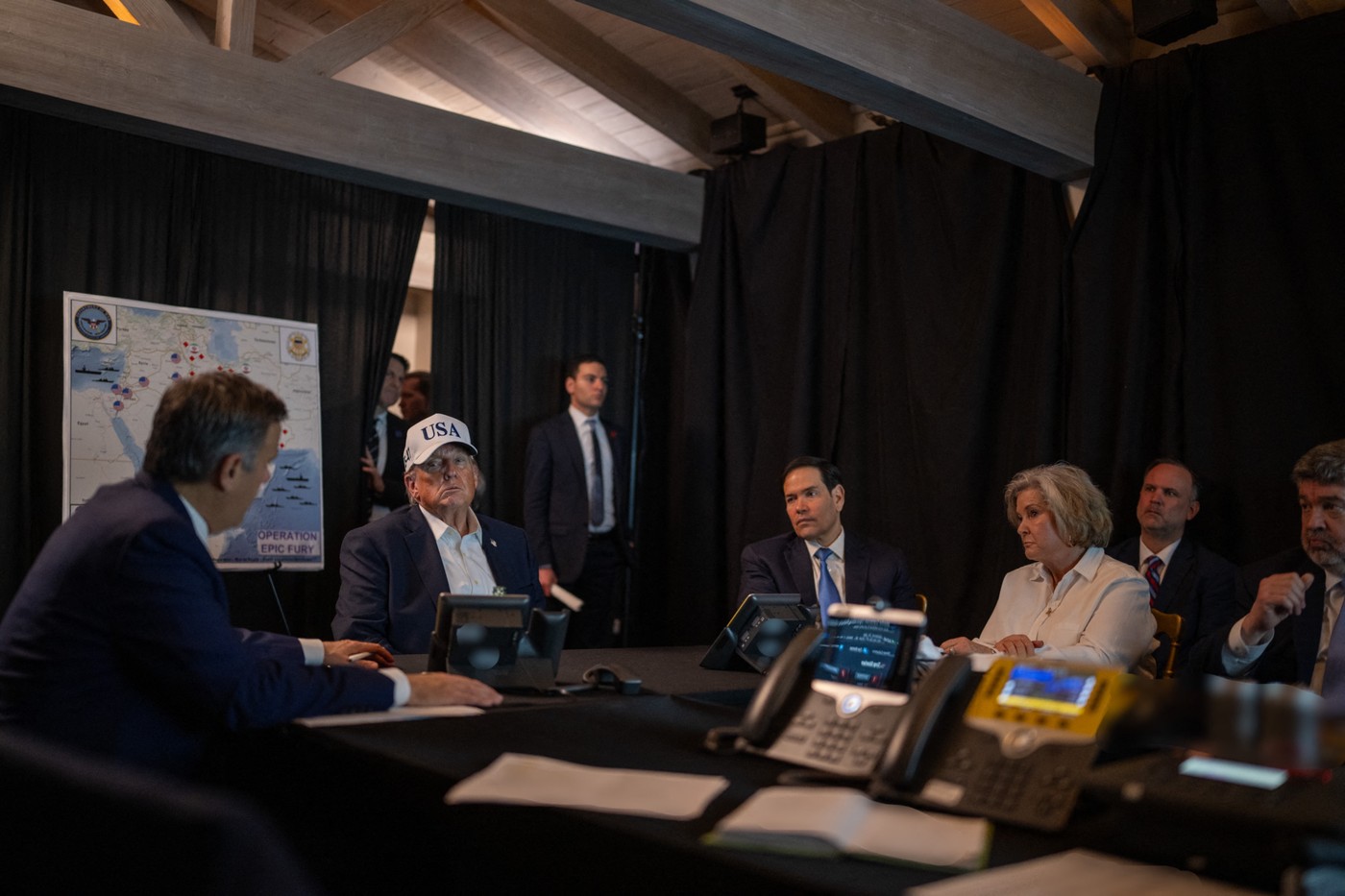
Concern has also gripped the US Congress, including Republicans. Four days after the war began, Secretary of State Marco Rubio, accompanied by Pentagon officials, met with several members of Congress. Rubio testified that he could not provide a timetable for the operation, although just hours earlier Trump had said it would take 4-5 weeks. Rubio's hesitations caused irritation even among Republicans in attendance.
“I was alarmed not only by the lack of clarity, but also by the lack of any idea of what success means, and the growing concern that I have is that Iran is not going to want to end the war when we want,” said Democrat Richard Blumenthal, a member of the Senate Defense Committee.
Fears have also been heightened by Trump's refusal to rule out sending ground troops to Iran. “We have not won enough. We are moving forward more determined than ever to achieve the total victory that will end this old danger once and for all,” Trump told House Republicans gathered in Florida earlier this week.
The blockade of the Strait of Hormuz, unanticipated
But until total victory, the US must manage the closure of the Strait of Hormuz, which has disrupted the world oil market. People close to the deliberations before the outbreak of hostilities said that US officials had estimated that Iran would not block the strait because it would even harm Tehran's interests. They were wrong.
Now Western governments are trying to find solutions to temper oil price increases. Initially, the US ruled out putting oil from the strategic reserves on the market, but now it is pressuring the allies to coordinately put 400,000,000 barrels on the market, a sign that the situation is deteriorating, especially since the US military still cannot ensure the transit of oil tankers through Hormuz, even citing that the strait is not safe enough even for its vessels, let alone for heavy oil tankers.
The lack of a clear prospect of an end to the war openly worries the governments of other countries, including German Chancellor Friedrich Merz. In addition, rising gas prices worry Republicans as they prepare for the midterm elections.
A new Vietnam for the US?
The possibility of a long war, with an uncertain outcome, is also evoked by experts consulted by The Guardian. Historian Robert Pape warned of the high risk of conflict escalation.
By attacking the Persian Gulf countries and blocking the Strait of Hormuz, Iran has demonstrated that it can amplify the costs of war for Washington beyond what its military capabilities would allow. The Iranian strikes “are designed to create rifts between the US and the Gulf states by creating rifts within these states,” Pape said.
The Iranian strikes are forcing the people of the Gulf to ask: “Why are we paying the price for a war that appears to have been provoked by Israel's expansionist policies?”
Robert Pape, American historian
For Jack Watling of the Royal United Services Institute, the current conflict is related to the fears of the Trump circle about the risk of a war with China in the near future. For this reason, it is desired to weaken in advance China's potential allies – Russia, Venezuela or Iran.
Robert D. Kaplan, an expert on international relations, evokes the “slippery slope of escalation,” even in the event of the collapse of the ayatollah regime.
“If a civil war or something similar breaks out in Iran, the Trump administration may feel compelled to send special forces or advisers to support one camp. And from there the risks of escalation increase. The Vietnam War took years to evolve into a mid-level war. The situation in Iran may follow a similar trajectory,” Kaplan wrote in Foreign Affairs.