“A spiral of lies has been created around SAFE.” The expert sharply criticizes Karol Nawrocki's veto. Indicates specific consequences

Bartosz Oleszko-Pyka: What does President Karol Nawrocki gain from all this confusion?
Bartłomiej Kucharski: If the government obtained funds from the SAFE program, it would have a great tool to implement the election campaign before the 2027 elections. Now the situation will become much more complicated.
First of all, develop new procedures. But there is little time left – for one reason.
The agreements should be concluded within the next few months. So far, we have signed one package of contracts for the supply of the San air defense system.
Could the military not receive all the equipment planned to be acquired under SAFE as a result of the president's veto?
There is such a risk. It is not yet certain whether the government will be able to develop an effective mechanism to bypass the veto. The original solution offered a low interest rate, a 10-year repayment grace period and a very extended repayment period of this loan – 45 years. It was a low-impact financial solution.
Does President Nawrocki's veto involve higher costs for Poland?
We are talking about an amount of over PLN 300 billion, over a 50-year period, but these are significant funds which, even despite the growing GDP, at least for now, may affect the ability to handle other tasks. This may happen unless Minister Domański, who is an absolutely key figure here, develops a non-statutory mechanism – because I think that an agreement with the president cannot be counted on at the moment.
However, the government faces a problem created by the very nature of the SAFE program.
What do you mean?
In its previous form, the mechanism provided for the possibility of deducting VAT from orders.
When purchasing equipment for the army, the Ministry of Defense, using funds from the SAFE fund, could deduct VAT, unlike purchases financed from other sources. This tax is 23%. It is therefore relatively easy to calculate how much this will reduce the amount allocated strictly for shopping. It is not yet certain whether this can be avoided, but there is certainly a risk of this type.
Under SAFE, Poland submitted 139 projects. Let's assume some were rejected, but over 100 projects would remain for the military. Nearly a quarter may remain unrealized or realized to a lesser extent.
Could the president's veto affect the possibility of placing further orders, for example from the United States or South Korea?
Absolutely. As far as I know, there are very few free funds left for purchases until 2028 without an additional financing mechanism, such as SAFE. We are talking about only a few billion zlotys. This is due to the fact that in previous years, from 2022, numerous contracts worth several hundred billion zlotys were signed.
Due to the fact that the agreements have been signed, the concluded contracts must be repaid over time, also from the Ministry of National Defense budget. Inevitably, funds have already been blocked, including: for technical modernization Polish army.
“The development of Polish infrastructure will be hindered”
The government has the ability to bypass the veto.
This will be possible to some extent through the mechanism created by Law and Justice, i.e. the Armed Forces Support Fund.
The SAFE program was to finance additional projects, not only railway, but also road, improving the mobility of troops.
The Ministry of Infrastructure submitted projects worth PLN 9.2 billion. This money simply won't be there. Either we will find funds for this part of the modernization projects, taking them away from other investments planned for implementation at the same time, or we will have to abandon them, or possibly delay their implementation. Inevitably, the development of Polish infrastructure, which was planned to be financed by the SAFE loan, will be hampered to some extent.
How will the president's veto affect the Polish arms industry?
It may have a negative impact if the government fails to propose an effective financial alternative. Under SAFE, Poland has time to sign contracts with Polish industry only until May 30. Later, another joint purchasing mechanism will come into force, which will require the inclusion of partners from other countries in each project, so we may necessarily lose some funds at this point.
Purchasing as part of joint production, instead of exclusively Polish weapons, poses a risk of fewer orders in the national defense system.
“There was already such a time in Poland”
How do you assess the government's information policy regarding the SAFE program?
Government politicians have often said that we will “get” the money. It was a mistake. From the very beginning it was necessary to talk only about credit. SAFE is not some form of non-repayable subsidy.
I also believe that they waited too long to reveal the list of programs that were to be implemented. These plans should be presented in a more specific way, clearly indicating that we plan, for example, to purchase four Regina Divisional Fire Modules with Krab howitzers, equip three battalions with Borsuk combat vehicles, etc.
To some extent, the government has given the narrative space to groups suggesting that we intend to allocate the funds to strengthening the German arms industry, which is absolutely untrue. Just yesterday, former Deputy Minister of State Assets Zbigniew Gryglas suggested that the program would be implemented in the German arms industry. Meanwhile, there is not a single German company on the list of Polska Grupa Zbrojeniowa's partners. As a result, a spiral of lies was created around the SAFE program.
The participation of Polish companies in the SAFE program was to be significant. Will a possible reduction in the scale of the order worsen financial conditions so much that other countries will no longer be interested in Polish weapons and will refrain from purchasing them?
Unofficially, there was talk of very large amounts of money related to many weapons and equipment models. The star was to be the Polish Piorun portable anti-aircraft missile system.
The larger the order, the more favorable conditions. If Poland joined the SAFE program orders, the unit price of the equipment would decrease. In short, we are talking about the benefits of order scale.
Poland was to order a large batch of Pioruns under a joint contract. If the order value decreases by, for example, one third, the terms and conditions will deteriorate accordingly. This may translate into difficulties in allocating investment funds for the development of the production line.
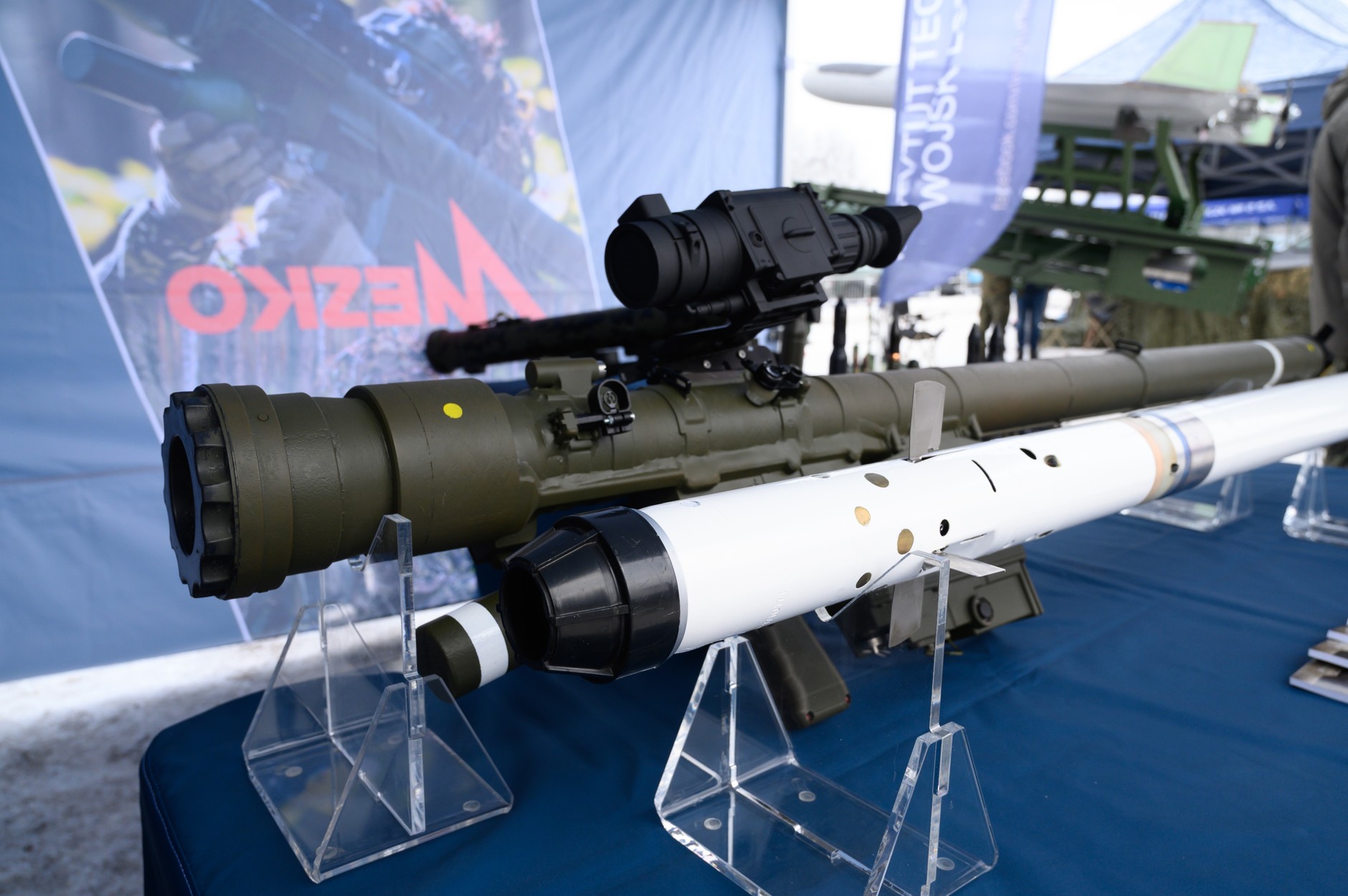
Piorun portable anti-aircraft missile systemAleksander Kalka/NurPhoto via Getty Images / Contributor / Getty Images
Finally, I have one more comment regarding the government's policy, namely the fluid definition of what a Polish company is. I am not convinced that every company that has a production line in Poland should be considered a Polish company.
Let us remember that about a decade ago, PiS was criticized for recognizing subsidiaries of foreign companies as Polish companies. At that moment the roles were reversed. The current opposition has forgotten its position. The current rulers forgot about theirs and changed places.
You wrote: “There was already a time in Poland when, at the ambassador's request, someone shouted 'liberum veto!' when submitting laws strengthening the armed forces, which were insufficient to face the challenges of the time.” Why do you think this is an apt historical analogy?
It's about the 18th century. I can mention a few ideas in the so-called Saxon era, when the concept of numerical development and improvement of the quality of the armed forces of the then Polish-Lithuanian Commonwealth was proposed. They were blocked due to short-term political benefits for the political camp. We are currently dealing with a similar situation.
Who benefits from the current confusion?
Of course, the Russian Federation. No one benefits from these sterile and truly unnecessary disputes from the point of view of the Polish raison d'état except the Kremlin and possibly other entities that are interested in worsening the security situation in Poland.