X-ray of abandoned bunkers in Europe: Why Brussels cannot intervene and what role does Romania have in the emergency reserve

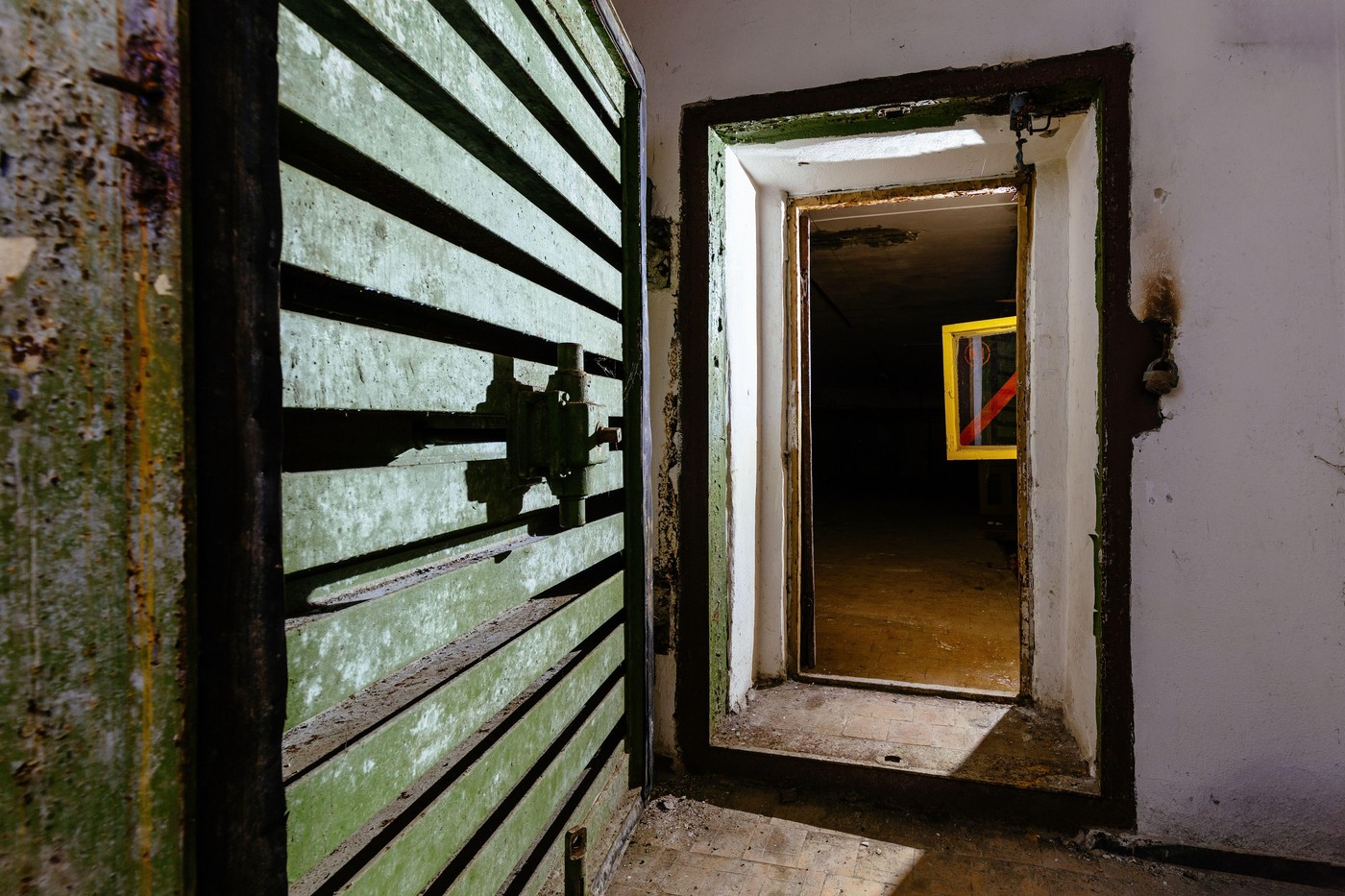
A recent drone strike in Cyprus exposed the state of disrepair of civilian shelters in Europe, with many found unusable. The incident confirms a major vulnerability: Brussels does not have the power to force states to invest in bunkers, according to EuroNews.com.
Emergency inspections triggered by an Iranian attack on RAF Akrotiri in March amid tensions in the Middle East found around 200 of Cyprus' 2,500 civilian shelters unusable.
Inspectors identified locked garages, underground spaces used for storage and locations in the SafeCY app (the official platform for locating civil protection points) that could not be found in the field.
Civil engineering teams from the Ministry of the Interior began checks on March 1, followed by instructions to clear the premises. The situation in Cyprus highlights the critical degradation of infrastructure from the Cold War period at the continental level, notes the quoted source.
EU limits
Brussels' direct authority in this area is limited by Article 196 of the Treaty on the Functioning of the European Union, which states that responsibility for civil protection rests with each member state.
Thus, the EU cannot impose the construction of shelters, the financing of bunkers or mandatory technical requirements, and it cannot intervene without the unanimous consent of all states to change the treaty.
The EU only manages the Civil Protection Mechanism (UCPM), which allows assistance to be coordinated when national capacity is exceeded.
The EU's rescEU pool, a pool of temporary shelters that can be set up, can be mobilized in response. But rescEU shelters are modular units, prefabricated tents and camps. These are displacement infrastructure, not blast-proof civil defense bunkers.
Where does Brussels' money go?
For the period 2021-2027, the European Union has allocated more than EUR 196 million for temporary shelter stocks. These resources are managed by six member states: Sweden, Poland, Croatia, Slovenia, Spain and Romania.
- Sweden it has the largest reserve (€40.4 million), capable of accommodating 36,000 people in winterized facilities equipped with toilets and showers.
- Poland is building six mobile “container cities” that can be assembled in 10-14 days at a cost of €35.5 million.
- Romania and the other four states hold additional stockpiles that can be called upon through the Civil Protection Mechanism (UCPM).
Although the EU covers up to 100% of transport and logistics costs, these resources are intended for displacement scenarios (floods, earthquakes or migration) and not for sheltering civilians “on the spot” during an attack. To date, Cyprus has not submitted any application to host such a reserve of its own.
Major differences between Member States
Differences in civilian shelter coverage are large. Finland operates 50,500 shelters covering 85% of its population of 5.5 million through dual-use basements and networked public buildings.
Nordic countries and Baltic states such as Estonia and Latvia are building new shelters in schools and hospitals.
In contrast, Germany has fewer than 600 functioning bunkers, covering about 0.5% of the population. The federal government has announced investments of €30 billion to create capacity for 1 million people by 2030, a program in its initial phase.
The Netherlands has almost no functioning shelters, and France, Italy and Spain have minimal coverage, with plans focused on natural disasters, not military threats.
The lesson of Ukraine
The most significant test of the EU's ability to provide emergency shelter came after Russia's invasion of Ukraine in 2022. Through the Civil Protection Mechanism, the EU delivered more than 140,000 tonnes of aid. However, support focused on prefabricated housing units for 30,000 people, tents and beds.
The operation confirmed that the EU can mobilize resources quickly, but also its limits: strengthened air defense shelters in Ukraine were funded at the national level. The EU offered aid to displaced people, not protection to those sheltering in place.
Without an amendment to the Treaties, Brussels cannot impose binding standards. The only levers remain the Preventive Fund of the UCPM (€1.26 billion) for audits and risk assessments, or the use of cohesion funds after a crisis.
Europe is currently reassessing civil defense after decades of decline, from the massive investment announced by Berlin to Cyprus' efforts to rebuild its grid. However, EU resources remain focused on post-crisis intervention, with permanent shelter infrastructure still the sole responsibility of national governments.