
When looking for housing or work, millions of people in Germany face discrimination. A government study reveals the scale of the phenomenon and explains why so few oppose it.
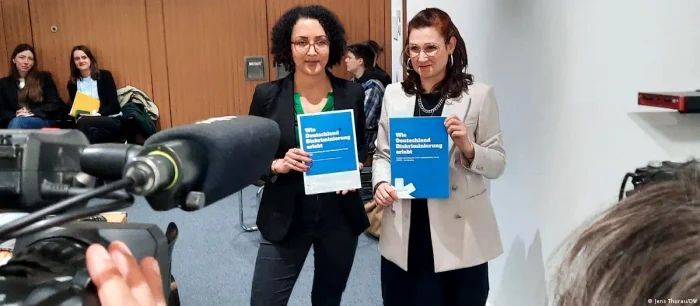
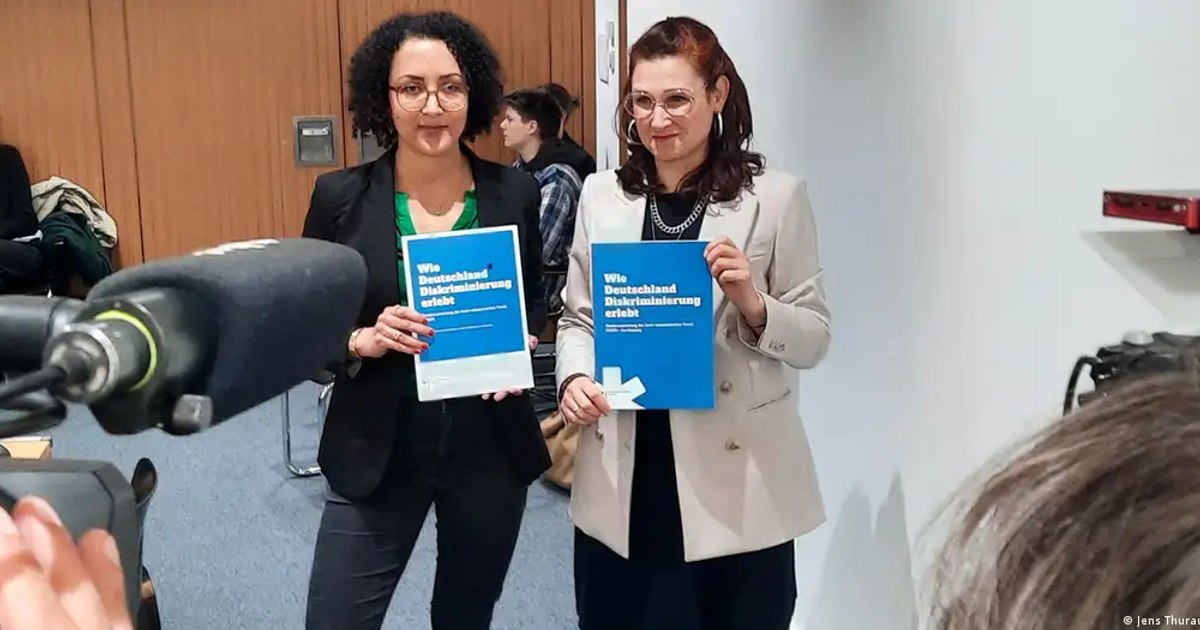
Ferda Ataman (right), responsible for combating discrimination, with Samera Bartsch, co-author
Almost every eighth resident of Germany was, in 2022, at least once the victim of discrimination. This is the conclusion of the study “How Germany perceives discrimination”, presented in Berlin by the federal government's head for combating discrimination, Ferda Ataman. In other words, nine million people in Germany know from direct experience what it means to be disadvantaged because of visible features.
“One like you stole here”
Figures, however telling, cannot fully reproduce the experience of those affected. Sometimes a single incident tells more than a statistic. Ferda Ataman reported, in a press conference in Berlin, the case of Sarah, a black woman who turned to her for help. “While she was shopping in a supermarket, an employee approached her and, without warning, searched her baby's stroller. The employee did not ask her permission, she did not take into account the child in the stroller. However, there was no concrete reason for this gesture. When Sarah asked what was happening, the employee justified herself by saying: “I'm sorry, but someone like you came here not long ago to steal.”
“Discrimination is not an exception”
Numerous similar cases can be found in the study carried out by the German Center for Research on Integration and Migration. The researchers analyzed data from the 2022 Large Representative Socio-Economic Panel, a survey of various aspects of social life in which approximately 30,000 people participated.
The conclusion is, no matter how we look at it, discouraging. Ferda Ataman summarizes: “Discrimination is not an isolated incident in Germany, but a mass phenomenon. Injustice does not occur on the fringes of society, but in its very heart, i.e. at the workplace, in schools, when looking for a home, in shops.”. Just like what happened to Sarah in the supermarket.
Half of the victims do not react
Although discrimination on the basis of most personal characteristics is prohibited by the general law on equal treatment in society (AGG), which has been in force for two decades, this legal framework does little to help those affected. According to the study, more than half of those who suffered such injustice took no action.

Ferda Ataman, representative of the federal government for combating discrimination
However, around 30 percent directly confronted the person responsible for the discrimination, but only three percent took legal action.
Among the latter is Humaira Waseem, a German-born teacher and mother of two. In an attempt to find a home, she turned to a real estate agent, who, however, refused her request. When he tried again using a different name, he immediately received a viewing invitation. Waseem decided to sue the agent and won the case. The Federal Court of Justice in Karlsruhe determined that he is entitled to compensation of 3000 euros, based on the AGG.
This case shows how concrete the consequences of discrimination can be, for example when a person's name becomes an almost insurmountable obstacle to finding housing. Ferda Ataman points out: “Discrimination has negative effects on participation in the labor market, social life, people's health and well-being, but also on trust in the cohesion of society and the sense of belonging in Germany”.
The main reasons are origin and racial prejudice
The study also reveals what victims think about the reasons for discrimination. The largest group (42 percent) is made up of people who feel disadvantaged because of their background or racial prejudice. Then, nearly 24 percent say they are treated unfairly because of their gender, the majority of whom are women.
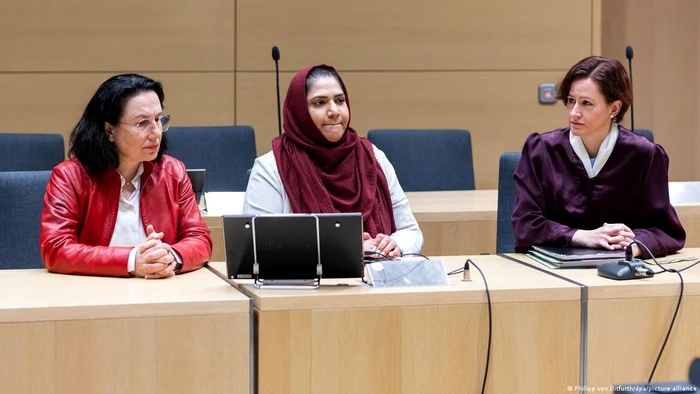
Applicant Humaira Waseem at the Federal Court of Justice in Karlsruhe
Also, age, religious orientation or an illness can become reasons for marginalization. However, the most frequent cases of discrimination relate to ethnic origin or skin color.
Ferda Ataman states that the phenomenon could be, in reality, even more widespread. This is because the analyzed data comes from the period of the pandemic, when many institutions were not accessible, social mobility was reduced, and people rarely changed their place of work or residence.
Germany still has a lot to recover from
Ataman seeks to expand the list of criteria protected by law so as to explicitly include citizenship among the characteristics for which discrimination is prohibited under the AGG.
She warns that Germany still has a lot of catching up to do in the fight against discrimination. In Belgium, she says, the authorities offer victims direct legal support, while the institution she runs can, for now, only offer counselling.
Furthermore, Ataman notes that in many Anglophone countries and in the Scandinavian states, everyday discrimination seems less widespread than in Germany.
The Federal Office for Combating Discrimination (ADS) is an independent institution within the Federal Ministry of Education, and Ferda Ataman holds the position of government commissioner for this field from 2022.
Jens Thurau – DW


