2026-02-28 16:00
publication
2026-02-28 16:00
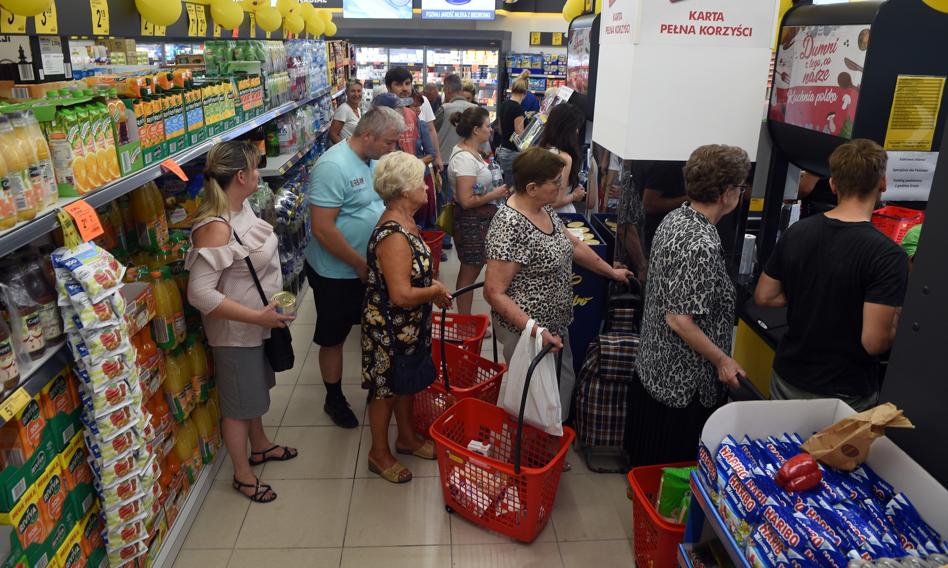
The impression that we are always in the slowest queue in the supermarket is primarily the result of psychological mechanisms – according to the analysis of experts quoted by the Belgian public broadcaster VRT NWS. Statistically, we are lucky as often as unlucky.
The feeling that “we always choose the wrong money” is a common consumer frustration. As sociopsychologist Griet Van Vaerenbergh from the Thomas More University in Antwerp explains, research does not confirm that customers systematically choose slower queues. Mathematical analyses, including: conducted in 2017 by Enrico Scalas from the University of Sussex, show that the probability of encountering faster or slower service is similar.
The waiting time is determined by random factors: payment problems, the need to check the price or technical problems. However, the way our brain interprets the situation is crucial.
The expert points to three mechanisms that amplify frustration. The first is the so-called counterfactual thinking – the tendency to imagine “what it could be like” if we chose a different queue. The second one is social comparisons: when we see others moving forward faster, the feeling of injustice increases. The third mechanism is negativity and accessibility effect – we remember irritating situations more strongly than neutral or positive ones.
Psychologists advise to accept the element of chance and not to treat a long wait as a personal failure. Distractions such as listening to music, talking or focusing on your breathing may help. It is also important not to compare the waiting time in other queues after making your choice. The experts' conclusion is clear: the belief that “we always get the worst result” is primarily a cognitive illusion, not an objective regularity.
Patryk Kulpok (PAP)
pmk/bar/