A new wave of violence is sweeping through Germany. The government is changing the rules of the game in the fight against criminals and is going on the offensive
The Berlin criminal world has been in a state of ferment for some time. Almost every week, the police receive reports of shootings in premises and threats against shop owners. Recently, an unknown perpetrator shot at a restaurant near Kottbusser Tor in the Kreuzberg district. One of the driving school units was shot at four times. Shell casings were found in front of a well-known Turkish supermarket chain in the Neukolln district.
There is an atmosphere of fear and uncertainty in the city, and investigators are becoming increasingly concerned. A branch of the Turkish mafia group “Daltons” is particularly active in the criminal underworld. The group, which is centered around the powerful boss Baris Boyun, tries to change the balance of power in the capital, using extremely brutal methods. During searches, investigators repeatedly find firearms. These are often semi-automatic and automatic models that were originally manufactured in Turkey or modified there.
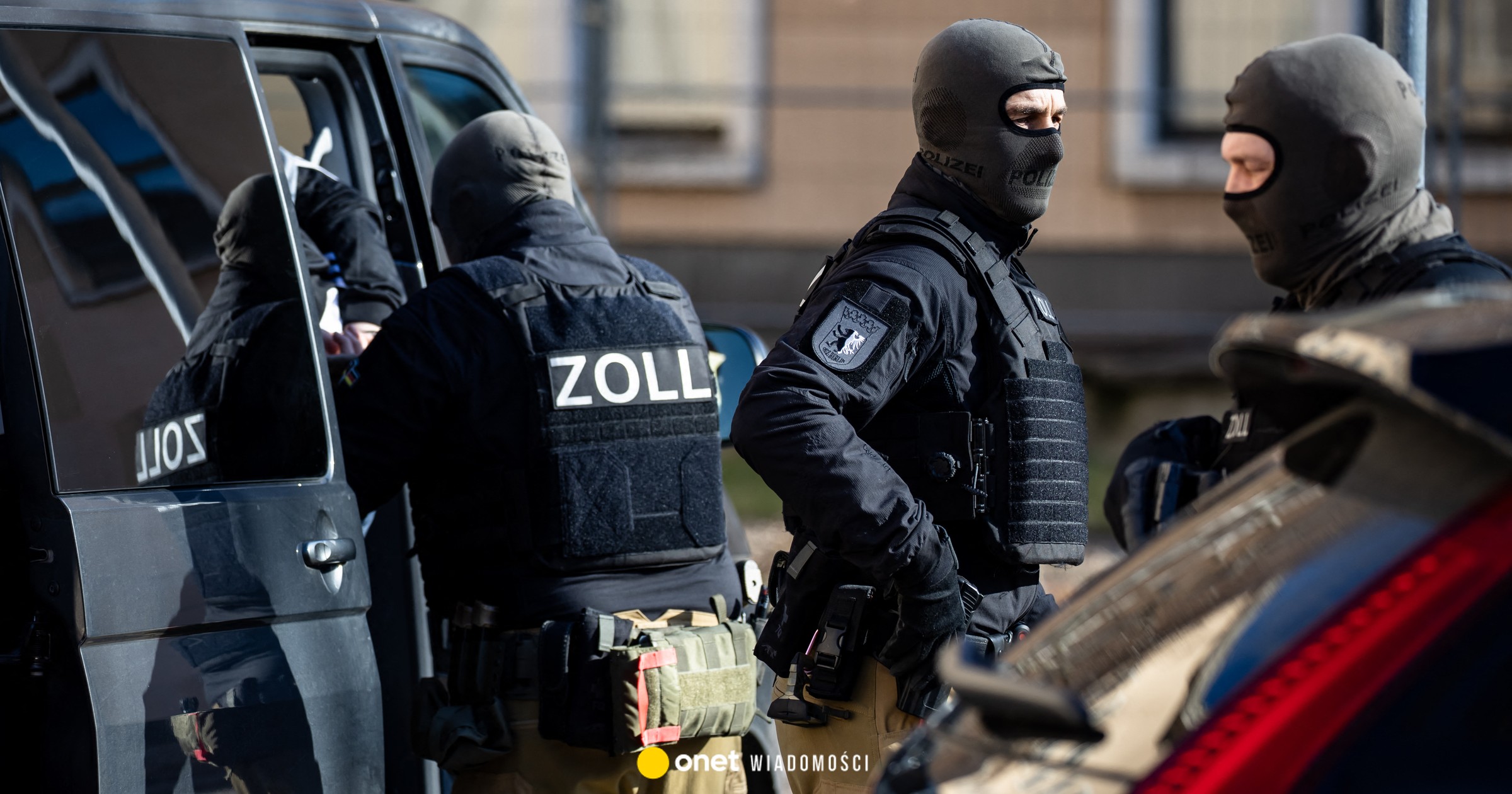
The police responded to these events by creating a new unit, the special task force “Ferrum” (Latin for “iron”). A special unit combines police patrol units and special forces and intensively monitors the situation. Investigators cooperate with the prosecutor's office, which is preparing for many proceedings. Earlier this week, the “Telum” (Latin for “weapon”) investigative team was established in the unit specializing in organized crime to fight criminal groups using violence on the streets of Berlin.
Restaurants where bullets fly; owners who have to pay five-figure protection fees; threatening phone calls: yeah a new wave of brutality in organized crime it no longer only prevails in the capital. The federal government now wants to counter the sprawling structures with a new action plan. Authorities are particularly concerned about the huge demand for cocaine across all social classes and the resulting turf fights between dealers.
The drugs arrive aboard container ships from Peru or Colombia across the Atlantic to European ports on the North Sea. Investigators from the Hamburg customs office have been intensifying their activities for a long time. However, the fight remains unequal. If a spectacular discovery is made, it is usually a coincidence – or the result of an alarm previously raised by friendly services, such as the US Drug Enforcement Administration (DEA).
The article continues below the video
Even seizures measured in tonnes have no impact on the price of cocaine sold on the street. 0.5 grams costs a stable EUR 50 (PLN 211). This shows that most deliveries reach their destination. Nowadays, cocaine is often smuggled in legal industrial products such as shoes or clothing, and is extracted in special laboratories in Europe. Illegal profits from the cocaine trade can be surprisingly easily invested in real estate and company shares in Germany. The country is considered a paradise for cash due to its previously lenient anti-money laundering regulations.
Men behind the wheel of expensive sports cars, with Rolex watches on their wrists, who on paper live on social benefits – this is a common phenomenon that investigators encounter during their investigations.
“Crime cannot be profitable in our country”
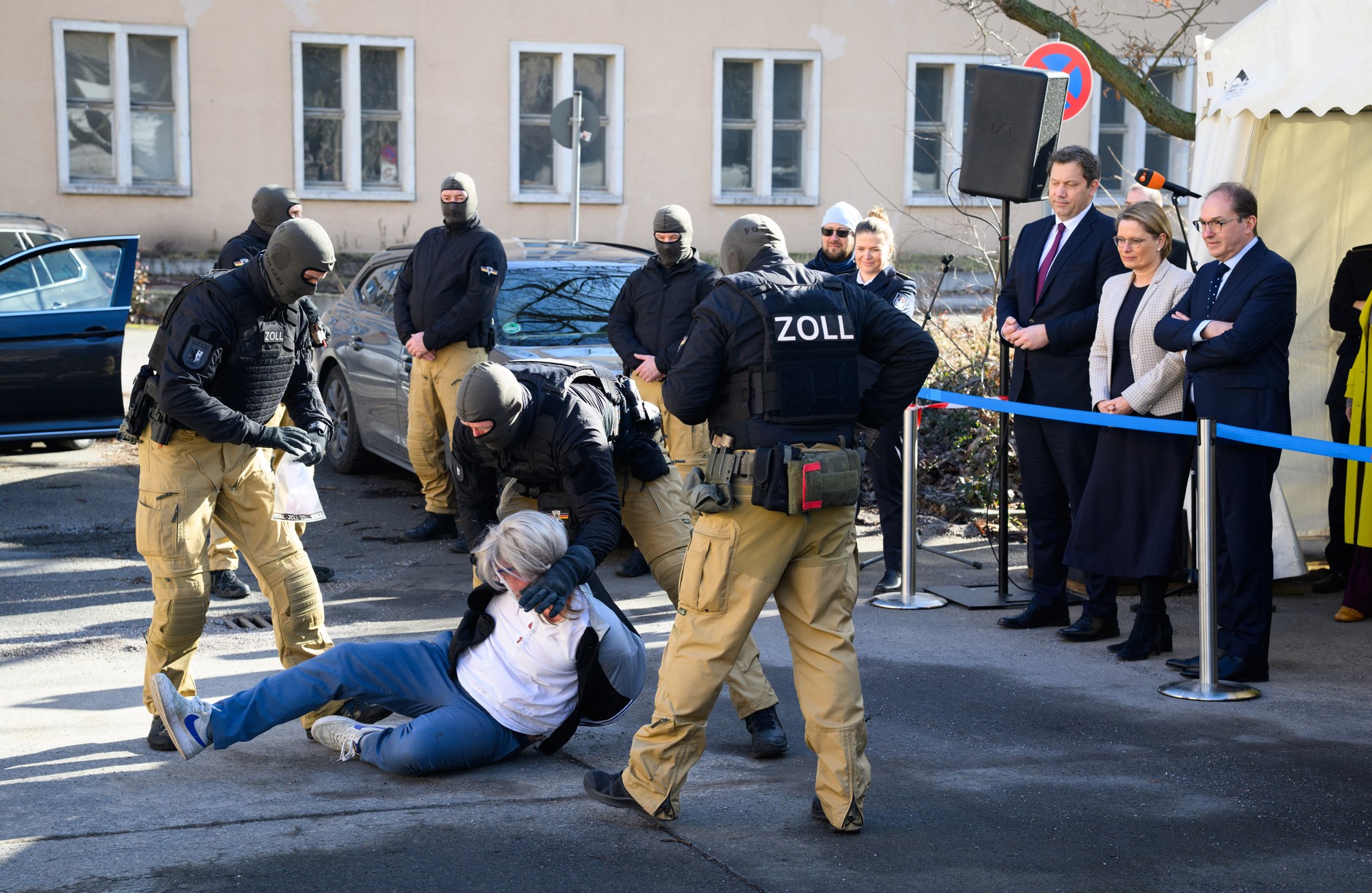
The federal government now wants to change the rules of the game. It was also for this reason that on Wednesday morning three ministers gathered in the courtyard of the customs office in the Tempelhof district of Berlin. Finance Minister and Vice-Chancellor Lars Klingbeil, Justice Minister Stefanie Hubig and Interior Minister Alexander Dobrindt watched as three masked customs officers overpowered two drug traffickers in a staged arrest. The show was intended to show that the state was putting up a fight.
— In the future, it will be possible to confiscate property from suspicious sources much faster. This applies to cash, luxury cars and houses, said the Minister of Finance during the presentation of the action plan. — The perpetrators now have to prove that they acquired the property legally. If they are unable to do so, the state must take action, he added.
Interior Minister Alexander Dobrindt (right), Justice Minister Stefanie Hubig (center) and Finance Minister Lars Klingbeil (third from right) watch a staged arrest on the occasion of the presentation of the Joint Action Plan against organized crime, Berlin. February 25, 2025BERND VON JUTRCZENKA / DPA / dpa Picture-Alliance via AFP / AFP
Last year, organized crime caused damage estimated at EUR 2.6 billion (PLN 10,978 million). The recently established joint competence center of the Federal Criminal Office (BKA) and customs services is intended to improve money laundering investigations in the future. Both institutions will also receive additional staff.
— Money is the fuel for the criminal underworld. We want to cut off the source from which it draws its strength, Dobrindt said. For this purpose, in some cases, security will take priority over data protection. Analysts will be able to search large amounts of data using artificial intelligence and use automatic facial recognition. In turn, the draft law on storing IP addresses will be presented to the government in spring.
Hubig warned that these far-reaching powers must be consistent with the rule of law. However, as she herself admitted, “clans and cartels want to test the strength of the state.” — Crime cannot be profitable in our country. This is a matter of security and justice, she added.
– This plan states a strong declaration to fight organized crime – said the spokesman for internal policy of the CDU/CSU parliamentary club in the Bundestag, Alexander Throm. — BKA and customs services will be freed, he added.
Isabelle Vandre, spokeswoman for combating financial crime of the Left parliamentary club (Die Linke), criticized the plan, claiming that it makes no mention of “the criminal activities of banks and companies that, according to estimates, defraud us all of EUR 125 billion (PLN 527 billion, 800 million) annually through organized tax avoidance.” “Instead, the federal government is once again reducing organized crime to clans or cartels, thereby perpetuating racist stereotypes,” she said.
There is hope in the federal government that the new “follow the money” strategy will work – and that the flow of dirty money will gradually disappear.
I’m Ashley Davis as an editor, I’m committed to upholding the highest standards of integrity and accuracy in every piece we publish. My work is driven by curiosity, a passion for truth, and a belief that journalism plays a crucial role in shaping public discourse. I strive to tell stories that not only inform but also inspire action and conversation.