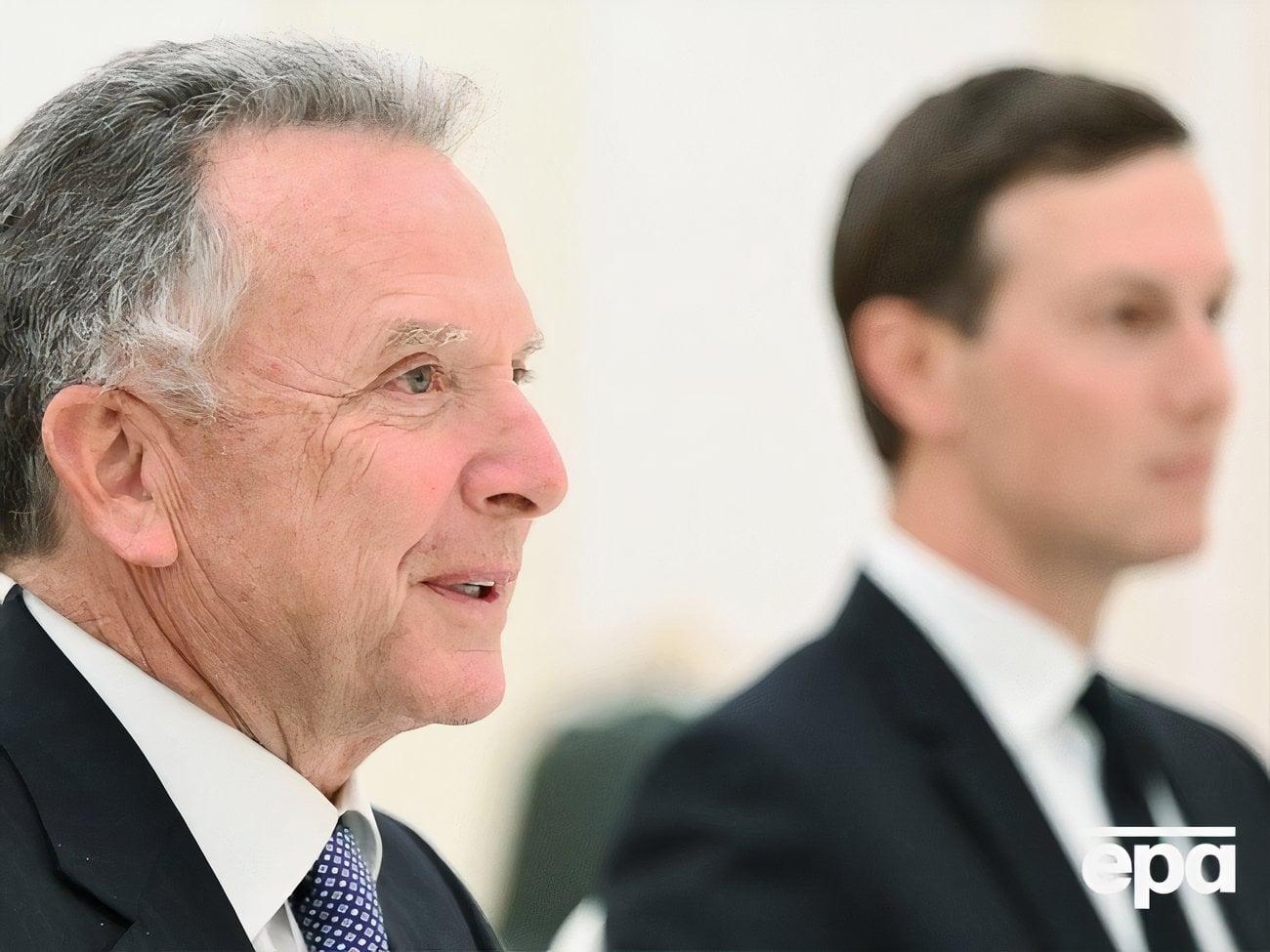
The negotiations were attended by special envoys Steve Witkoff and Jared Kushner from the American side, and Foreign Minister Abbas Araqchi from the Iranian side. According to publicationsthe negotiations took place through an intermediary – Omani Foreign Minister Badr al-Busaidi – and in a bilateral format.
A senior US official described the talks to the publication as “positive”, without disclosing details.
At the same time, the author of the material, Barak Ravid, citing sources, wrote that Vitkoff and Kushner were disappointed with what they heard from the Iranians at the morning meeting (later there was an evening meeting).
White House envoys Kushner and Witkoff were disappointed by what they heard from the Iranians in the morning negotiations session, per source with knowledge. Evening session is still ongoing https://t.co/jigslyYjZE
— Barak Ravid (@BarakRavid) February 26, 2026
Iran presented a draft agreement. According to Iranian sources, Tehran rejected demands to permanently abandon uranium enrichment, dismantle nuclear facilities and remove uranium reserves outside the country. Instead, it is proposed to reduce the volume of uranium to a low enrichment level under the supervision of the IAEA. The Iranian side stated that its proposals make it possible to quickly reach an agreement.
The United States, in turn, insists on the open-ended nature of the future deal and Iran’s refusal to abandon the accumulated 10 thousand kg of enriched uranium. Washington allows some flexibility on the issue of Iran's right to enrichment if it is proven that there is no path to creating nuclear weapons.
Iranian source Al Jazeera said that as part of the deal, Iran is ready to prove that it does not want to possess nuclear weapons and freeze uranium enrichment “for a limited period.” “The principle of complete and permanent refusal enrichment, dismantling of nuclear facilities and transfer of uranium reserves are completely rejected,” the official said.
Al-Busaidi after negotiations stated in X of “significant progress” and announced a technical consultation in Vienna next week.
The head of the Iranian Foreign Ministry also announced “progress” and noted that this round of negotiations “was the most intense to date.”
Context
January 28 US President Donald Trump demanded that Iran come to the negotiating table to achieve “a fair and just agreement – without nuclear weapons.” February 4, Iranian Foreign Minister Abbas Araqchi confirmed holding negotiations with the US delegation (on Tehran’s nuclear program) on February 6 in Oman. They took place in the capital Muscat.
Tehran wanted to discuss with Washington only nuclear issues, and not other topics, in particular the missile program, which is a priority for the United States and the countries of the Middle East, noted Axios.
In an interview published on February 4, the head of the White House said that Iranian authorities were thinking about starting construction of a new nuclear facility in another part of the country, but the United States warned them what they would do with them “very bad things.”
On February 12, Trump said that negotiations between the United States and Iran on the nuclear program could last up to a month and if an agreement is not reached, there will be “very traumatic” consequences for Iran.