I was in Russia when the war broke out. It will not end in Putin's lifetime [OPINIA]

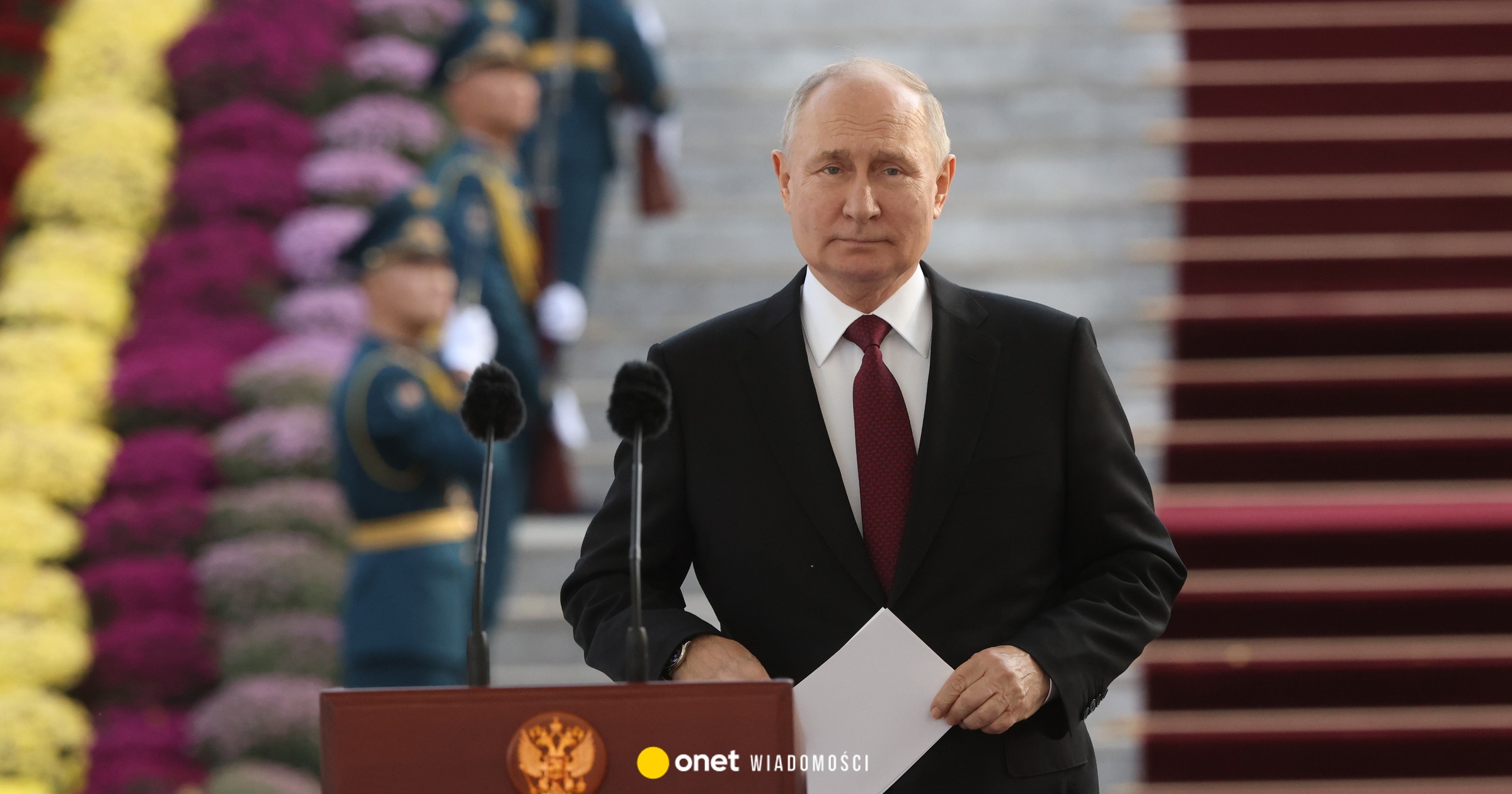
Andrei Malgin is a Russian journalist known for his critical attitude towards the Russian authorities. After its invasion of Ukraine in 2022, he left his country and settled in Italy. In 2023, the Russian Ministry of Justice included it on the list of the so-called foreign agents.
February 16, 2022, Moscow. The official representative of the Russian Ministry of Foreign Affairs, Maria Zakharova, started her weekly briefing with a joke about the constantly repeated reports in the Western media about Russia's alleged invasion of Ukraine.
— Sorry I'm a little late. I'm checking to see if we're entering [do Ukrainy]or are we not stepping in? No, we're not stepping in, she said. She added that it was time to introduce a special “Laughter and Sin” section at press conferences, dedicated to the most controversial fake news appearing in the Western media.
— They tried at all costs to get to her [agresji na Ukrainę] took place, and perhaps in their newspapers the fights were serious, but it has nothing to do with reality, Zakharova continued. — The war did not break out in the previous days, but they do not lose heart, they are still waiting for it with a persistence that deserves better use, she added. — We call on Western countries to stop stoking anti-Russian hysteria.
Everything seemed clear. However, until the last moment we believed that there would be no war.
Happy flight
The day after the invasion – February 25 – we were scheduled to fly to Moscow, and we bought tickets well in advance. We planned to renew expiring documents there, obtain the necessary certificates, settle all matters, and meet the family. When the war broke out, the question arose: to go or not. If it lasts several days (as it once did in Crimea), it would be wiser to wait it out. What if not? The West will not idly watch what is happening, and Putin will certainly close the borders – and we will find ourselves in a trap.
Our flight to Moscow turned out to be the last – after which Russian planes were no longer allowed to enter Europe. The return ticket was lost, and we, having arranged all the most urgent matters within three or four days, discovered that we could only fly out with Turkish airlines. Well, at least that much. Russian television happily reported the bloody but successful fighting on the outskirts of Kiev. They took place along the entire length of the Russian-Ukrainian border, with bombs falling on Ukrainian towns and villages.
We arrived at Vnukovo airport early in the morning. The departures board resembled a city bus timetable: Turkish planes took off every few minutes. After learning that there were three available seats on the next flight, we decided not to wait – we rebooked our luggage and bought tickets. Almost immediately after we boarded the plane, it took off.
In fact, the “special military operation” began not in 2022, but in 2014. Then the Kremlin launched a hybrid operation (its concept was developed by Chief of the General Staff Gerasimov, which the Russian media naively reported in 2013). At first, everything went well – the Russians occupied Crimea without bloodshed, planted Russian flags on the buildings of the regional administration of Luhansk, Donetsk, Kharkov, not to mention smaller towns. Unexpectedly, well-equipped with the latest weapons, the “concerned miners” occupied further territories.
Wrong plane
At some point, reports began to appear about strange individuals captured by Ukrainian forces: special forces soldiers without insignia and crews of modern tanks. Russian propaganda, with a smile and a wink, referred to them as “vacationers”, “missing people”, etc. It did not deny that the Kremlin had sent a regular army to Ukraine, but it did not confirm this fact either.
The television then showed singer Kobzon visiting “disturbed miners” in hospital who had been burned by tanks – all of whom turned out to be Buryats who had somehow ended up in Donbas. Even then, Russian propaganda continued to say that they were not there.
There is a version that instead of the Malaysian Boeing, the Russian military wanted to shoot down an Aeroflot plane flying to Moscow from Larnaca, but the crew confused the town of the same name – instead of Pervomaysk located northwest of Donetsk, they arrived at the one in the southeast, and another passenger plane was targeted. The shooting down of an Aeroflot plane filled with Russian families returning from vacation in Cyprus could have become a perfect pretext for starting a large-scale war.
All the more so because the “concerned miners” were clearly stuck at a dead end by that point – on July 5, the Ukrainian Armed Forces liberated Kramatorsk and Sloviansk from them, and in the Ilovaisk area, the “volunteer” battalions encountered overwhelming forces of the regular Ukrainian army and began to lose the initiative.
Three days before the Boeing crash, the Russian Foreign Ministry accused Ukraine of something it did not do — indiscriminate shelling of the city of Donetsk in the Rostov Oblast. The media immediately started a propaganda campaign. Military experts noted that Putin is clearly looking for an excuse for a full-scale invasion.
Due to the Boeing disaster, which occupied the front pages of Western media for a long time, these plans had to be postponed. The open appearance of Russian military equipment would confirm that the plane was shot down using it. Then, two rounds of talks took place in Minsk, which gave Putin hope that he would be able to subdue Ukraine using less bloody methods.
In spring 2019, residents of the so-called The Donetsk People's Republic and the Luhansk People's Republic began to hand out Russian passports en masse (so that in the future they could justify military actions as “defense of compatriots”). At the same time, the reconstruction of the “armed forces” of these self-proclaimed republics began, which actually became part of the Russian Southern Military District, and the territory was saturated with modern air defense systems. Putin then had to focus on Syria, after which COVID-19 forced the “fearless leader” to take refuge in a bunker, where his contact with the outside world was virtually severed.
And so, as they say, the time has come. The hour has struck.
Liberation from life
On Thursday, February 24, 2022, at around 5 a.m., the large-scale invasion, long postponed by the Kremlin, began. Russian troops entered the territory of Ukraine from the south – from occupied Crimea, from the north – from Belarus – towards Kiev, from the east – from the Donetsk People's Republic and the Luhansk People's Republic, from the north-east – towards Kharkov. By the end of March, Russia took 27 percent. territory of Ukraine (if counted together with the previously occupied Crimea and Donbas). By December, however, this value had unexpectedly dropped to 18%. — The Ukrainians defended themselves heroically, but plans to quickly take over their country failed.
In the fall of 2022, Russia announced the annexation of the Donetsk, Luhansk, Kherson and Zaporizhia oblasts of Ukraine, and began calling each occupied Ukrainian village “liberated”. Putin cut off his way back. After all, you cannot give back to the “enemy” what is already recognized in the constitution as Russian territory.
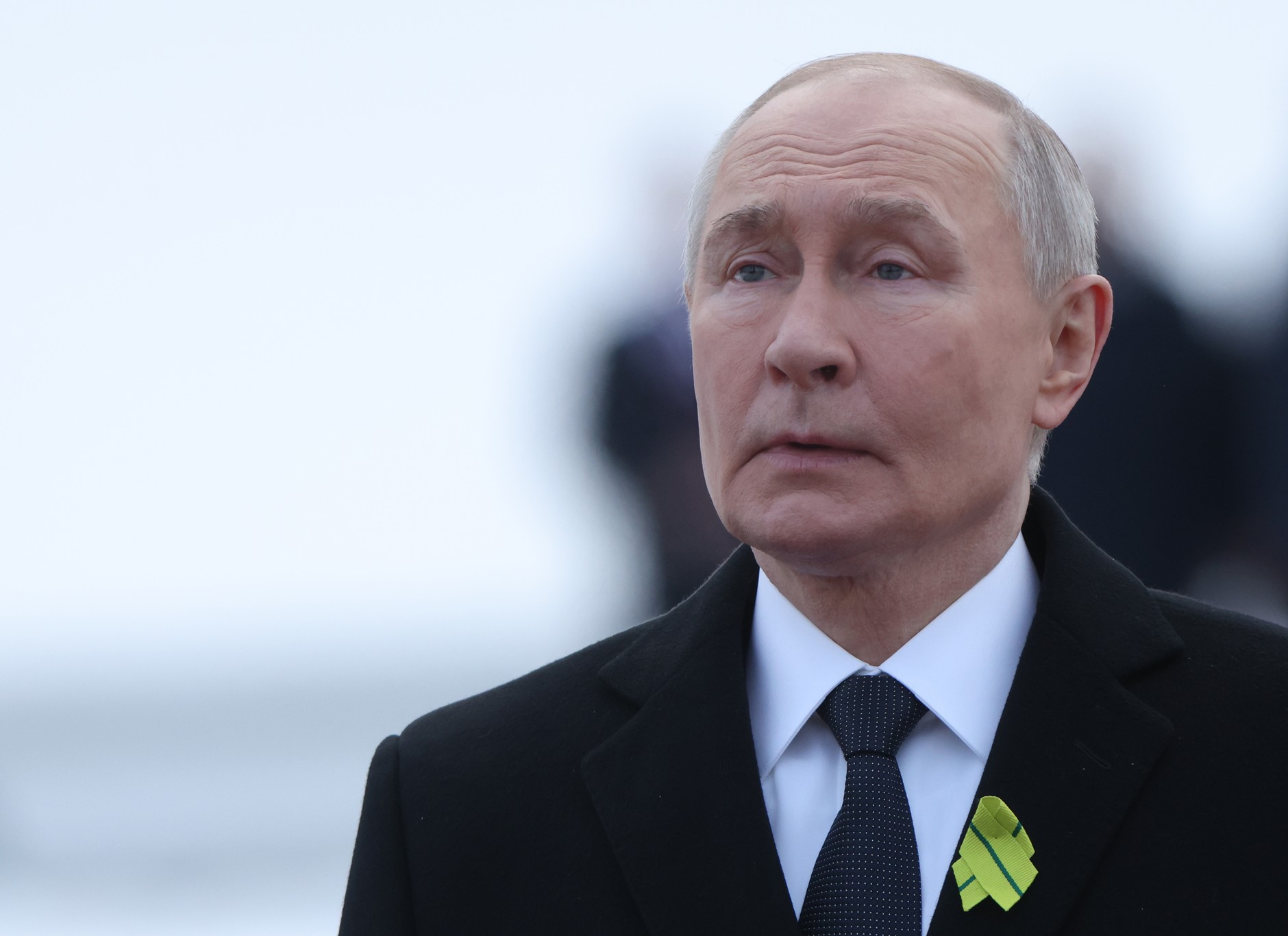
Vladimir Putin, Saint Petersburg, February 27, 2026Contributor / Contributor / Getty Images
To this day, after four years of war, he has not managed to achieve any of the goals of the “special military operation”. “Denazification”? The same government is still in power in Kiev. “Demilitarization”? Western countries continue to supply modern weapons systems to the Ukrainian front, and in terms of combat training, the personnel of the Ukrainian Armed Forces have long surpassed NATO (according to the assurances of the alliance itself). “Liberation” of the Russian population from the oppression of “Ukrainian nationalists”? So far, the Ukrainian towns and villages razed to the ground by Russian bombing are mainly Russian-speaking towns and villages. It seems that the Russians “liberated” their brothers, depriving them of their homes and normal lives.
What goals were achieved?
Ukraine has been re-armed, there are no longer “Russian brothers” in the east, there are only sworn enemies and it will most likely remain so for generations to come. Russia finds itself in international isolation and, even after the end of hostilities, it will likely never rebuild its reputation.
During the four years of war (or 12, if we look at it from 2014), the Russian economy has suffered significant losses, Russia's economic ties have been severed, and it has no ability to attract foreign investors. How do we now transform a militarized economy into a peaceful economy? Reformat the military-industrial complex into a civilian one? We all remember at what cost this was done during the Gorbachev era. Suffice it to mention the social problems that the country will face when hundreds of thousands of young people suffering from post-traumatic stress disorder, who have had a taste of blood and money, return from the front. This may become Russia's main problem for many years to come.
So what does ending the war make sense for Putin? None – especially since progress reports appear here and there on his desk every day. And whether the soldiers advanced 100 km or 100 m – these are the details. Putin is fully satisfied with the course of events. He is convinced that in conditions of war, society is united in support for him, and any oppositionist can easily be declared an enemy of the people hired by enemies to undermine this very social unity.
So now, four years after the beginning of the hot phase of the war, we can safely assume that it will not end during Putin's rule. Passenger planes will not resume flights to Russia soon.