Financial investment cannot be a substitute for the force that real power provides, writes the Washington Post in an opinion piece.
Launched in 2013 by President Xi Jinping, the Belt and Road Initiative aimed to connect the world through cheap credit and partnerships spread across the planet.
It seemed to many analysts a concentrated effort to transform China into a superpower on par with America. The strategy has been described in various ways: “credit-trap diplomacy”, “imperialism through credit” or the “Trojan Gift”. Hillary Clinton, then the Obama administration's secretary of state, had been warning about this “new colonialism” as early as 2011 as China expanded its influence across Africa.
Through below-market lending, easy credit, and abundant technical expertise, China would gradually capture the major arteries of the global economy. And if anyone had complained, they could have simply cut off credit and bankrupted the country – or closed trade routes.
We can all debate whether that was really the case, or whether, as Beijing's apologists liked to claim, it was pure chance that had led him to believe that all those railways and ports in Asia, Africa and Latin America were really profitable investments. Be that as it may, now another idea has become more important. China's power was incomparably more fragile than it might have appeared at first glance.
China's geopolitical ambitions have endured a series of setbacks. Courts in Panama have ruled that Hong Kong firm CK Hutchison cannot own ports on both ends of the crucial canal through which at least 40 percent of US maritime trade transits.
Following the arrest of Venezuelan dictator Nicolás Maduro, all of China's investments in Latin America seem incomparably less valuable. Iran? No one could qualify the country's investments as “absolutely solid” at the moment. Italy has started to withdraw from the agreements with China from 2023.
The more than $23 billion that Beijing has pumped into Argentina is unlikely to win it any special favors from President Javier Mila: he hates Marxists almost as much as he loves chainsaws. And the list goes on. China is estimated to have spent $1.5 trillion on the Belt and Road strategy, a colossal sum for a country that is still essentially developing.
However, to be fair to the geopolitical strategists around Xi, that invisible empire was not a bad idea at all. Of course, it couldn't be cheap: Beijing is not exactly a devoted follower of statistical accuracy, but it spent about 10% of its GDP for over a decade on this project, that is, about 1% of GDP per year.
On the other hand, it was much cheaper than trying to increase US and NATO-wide military spending in absolute numbers. With sufficient investment, it could have drawn the rest of the world into Beijing's orbit. And if that way they got to own all the infrastructure, plus the mines, plus the software that would connect it all, then they could become a superpower without the whole hassle of military invasions.
The problem is that financial and commercial power has its limits. Ownership of an asset can be annulled in court, as China would discover in Panama. After a regime change, as happened for example in Venezuela, control of the infrastructure can pass to someone else by decree.
Ports and railways can be nationalized, sometimes even without compensation. Legislative amendments can be easily imposed, and a central bank can devalue a currency, essentially turning a credit into nothing. And a distant shareholder or creditor can't really do anything. He can complain, including in court, if he wants, but the final decision will always belong to that state.
We could see something similar in the EU. Brussels' paper-walkers have spent much of the past 20 years boasting that they are working to turn the bloc into a “legislative superpower”. But when President Trump threatened to annex Greenland, it turned out that the power to set rules for phone chargers doesn't have the deterrent power they gave it credit for.
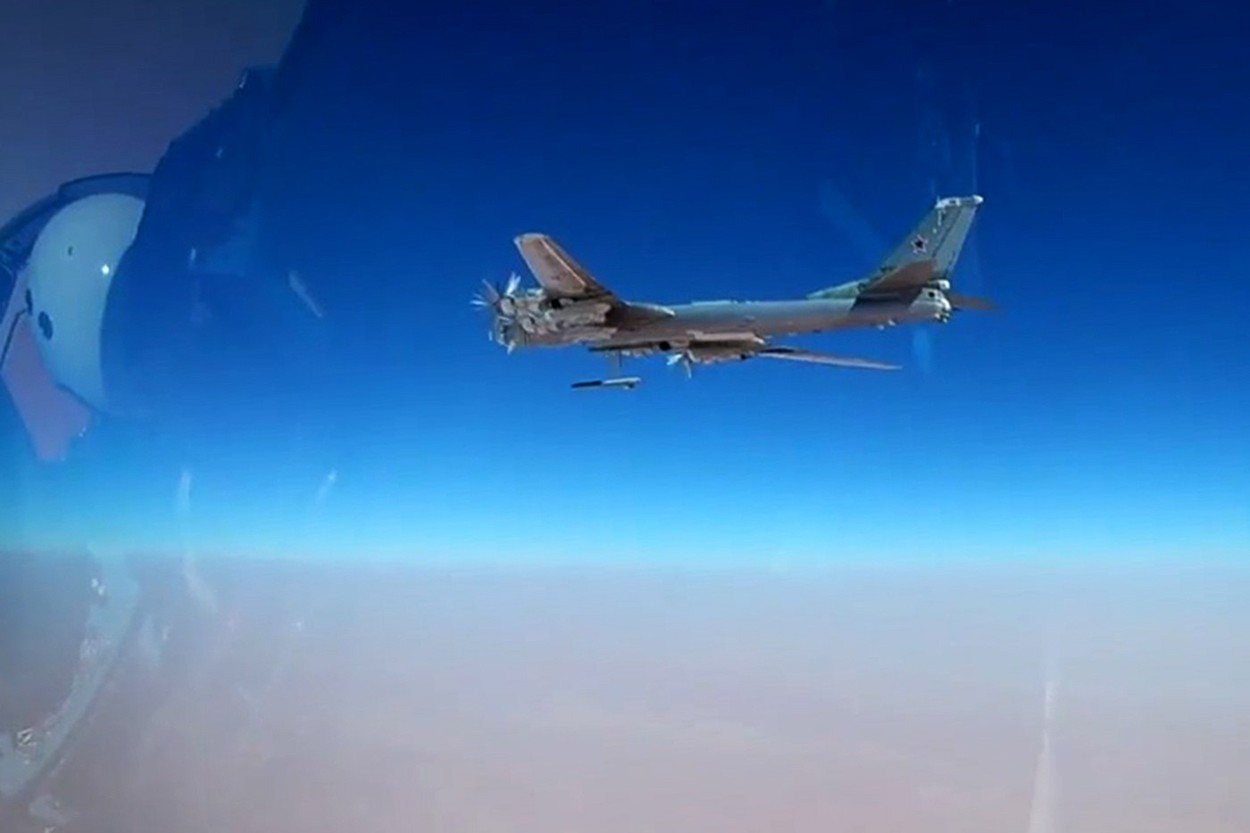
A lesson can be learned here. China can spend as much as it wants on infrastructure. The EU can legislate as much as it wants. But when the knife reaches the bone, only military force counts. That country that is able to send people and weapons anywhere on the globe in seconds is the only one that can influence the world according to its own interests.
China seems to be starting to realize this as well, which may well explain why it has continued to increase its military spending at a faster rate than GDP growth. He realized that the Belt and Road program may have been a colossal waste of money because it could not be supported with adequate military force. And the US will also have to increase its military spending accordingly.
The lesson of the last decade is surely this: you can't buy an empire, and you can't buy global influence. In any respect, it is only military power that matters. (Material produced with the support of Rador Radio Romania)