Article by Mitica Docan – Published Monday, February 23, 2026, 2:44 p.m. / Updated Monday, February 23, 2026, 2:49 p.m.
We used to debate performance, doping, beating, abuse or betting, but sport now has a new obsession: “mental health”. Should we be careful where discussion is warranted and where this buzzword becomes just a haven for failure?
It seems that the pressure of the current times has become so great that almost every contemporary champion feels at some point in an existential crisis.
Ilia Malininfor example, the heavy favorite in figure skating, which was lashed out at the free program, where the planet witnessed a blowout of historic proportions at the Olympics, quickly blamed … the pressure in the arena, the “vile hatred” on social media and the pressure that every heavy favorite feels when he meets history.
In a post on Instagram (where else?), the 21-year-old athlete made a dramatic vindication: “On the world's biggest stage, those who appear to be the strongest can still fight invisible battles within. Even the happiest memories can end up being tarnished by noise. The vile hate online attacks the mind and fear lures it into darkness, no matter how hard you try to maintain your sanity in the face of pressure endless and insurmountable. It all builds up as these moments flash before your eyes, leading to an inevitable crash.”
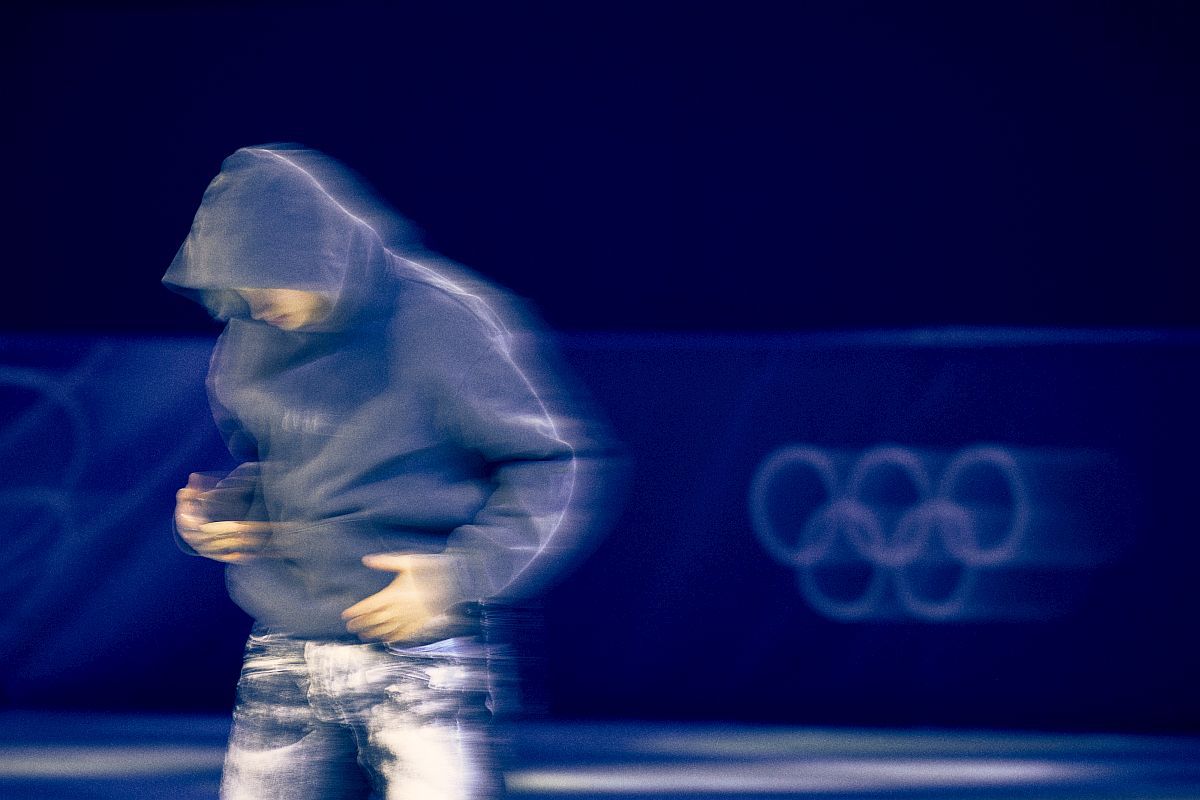
The modestly self-nicknamed “Quad-god” had a spectacular 3 years at the pinnacle of figure skating, where he swept all opposition, but discovered his “sanity” on a day when nothing came of it. Like any self-respecting American athlete, he turned defeat into victory with an emotional performance at the Laureates Gala, wearing a hoodie emblazoned with “FEAR” and a song of the same name by a fellow rapper.
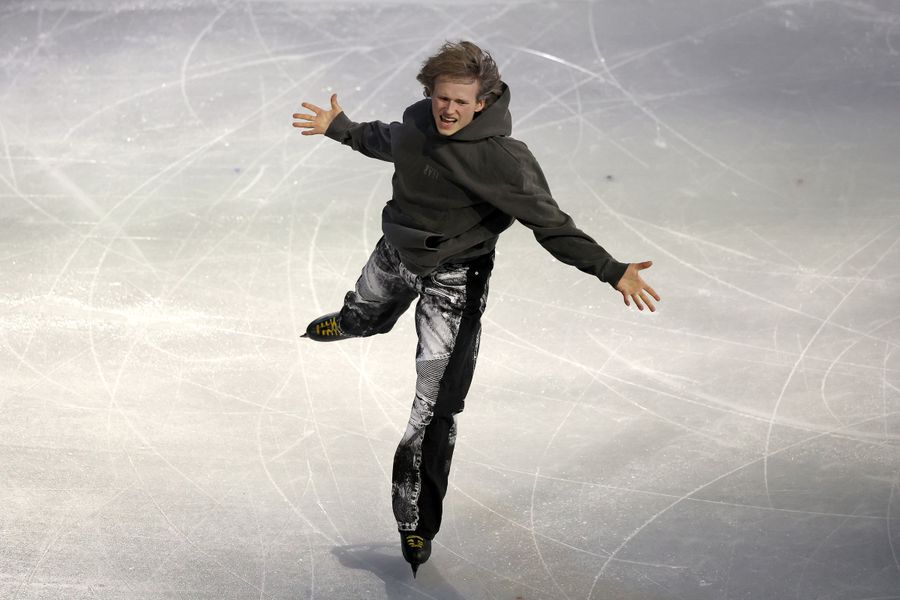
Ilia Malinin during his program PHOTO Guliver/GettyImages
But Malinin is far from the only one. Much bigger names did it before him, like Naomi Osaka, Simone Biles or, closer to home, David Popovici. The latter, turning a natural hesitance into a contorted internal dispute with Shakespearean accents about the fear of too much success (?!).
What's trending, what's not. Can we judge?
Many specialists applaud the openness of the new champions to the topic of “mental health”, analyzed “en masse”, without nuance. Many talk about empathy, in a golden age of sports-public communication. It seems that we are witnessing a major paradigm shift: for the first time, our champions are speaking for the first time about their experiences on the edge, about their inner springs, about suffering and challenges.
Paradoxically, in an age of unprecedented resources, where big and medium names are surrounded by teams of experts in physical/mental/emotional health, with meditation, visualization techniques (?!) and other modern techniques, the failures have multiplied exponentially. It seems that sport has quickly turned from an antidote to depression to a source of perpetual nightmares. That performance predisposes more to psychosis than balance. That, regardless of reality, anyone, at any time, can enter a forest of doubt that turns their whole world upside down.
And in our sober age, the general reflex is that every case must be treated with the same seriousness, without critical sense, with a serious mind and boundless understanding.
Of course, in certain cases, the struggle is palpable, obvious, remarkable. Mikaela ShiffrinUS super champion, who was diagnosed with severe psychological after-effects after a horrific fall, showed the world mental strength – for the first time! – when she got her first Olympic medal after an 8-year hiatus.
But when Alyssa Liuthe newly minted figure skating champion and, at 12, the youngest skater to land a triple Axel in international competition, retires at 16 citing “unhappiness and the need for balance,” then resumes skating on a ski trip to California and becomes the universally applauded super-champion, is this “the greatest comeback in sports history?” or just a natural victory of maturation?
What is a champion?
It goes without saying that elite athletes feel immense pressure, but that's part of the job. Since the beginning of time. A bunch of things lead to a gold medal: talent, coordination, training, noise in the arena or … mental resistance to pressure. Malinin is not a champion who finished in 8th place, he is 8th in the Olympics! We are obliged to understand personal traumas, injuries, rare life situations, but not the fear of 1st place or imagined internal conflicts.
Of course, no one can accurately rank suffering, because pain is like a gas, it uniformly covers any kind of surface that is put at hand. But we do ourselves no favors by lumping any hesitation or obstacle in life under the umbrella of “mental health.”
First, because working with yourself is part of the human experience. A multiple Olympic champion feels it, a Post Office employee who raises two children alone, in a daily struggle without anyone's support, also feels it. We would do well to pay attention to what is being sold to us as “mental health”, where it is appropriate or not, and where it is just a convenient refuge of the times.