Ivo Daalder is a former U.S. ambassador to NATO, senior fellow at Harvard University's Belfer Center, and host of the weekly podcast “World Review with Ivo Daalder.” He writes the “From Across the Pond” column for POLITICO.
Currently, Europe and America disagree on many issues. However, when it comes to a rules-based order, European and American leaders agree: such an order no longer exists.
But is it really? The American-led order — Pax Americana — died with Donald Trump's re-election in November 2024. It was clear that Trump 2.0 would continue and accelerate America's retreat from the global leadership role that Washington first assumed in the early 1940s.
However, this does not mean the end of the rules-based order. And yet this is exactly what a string of leaders have announced, starting with Mark Carney, who made a high-profile speech at Davos last month. “The old order will not return,” Carney warned his listeners. — Stop invoking the rules-based international order as if it were still in force.
Carney is not the only person declaring the end of the rules-based order. In his speech at the Munich Security Conference, German Chancellor Friedrich Merz similarly stated that “the international order based on rights and rules is on the verge of collapse.” “I'm afraid we have to say it even more bluntly: this order — imperfect even at its best — no longer exists,” he said.
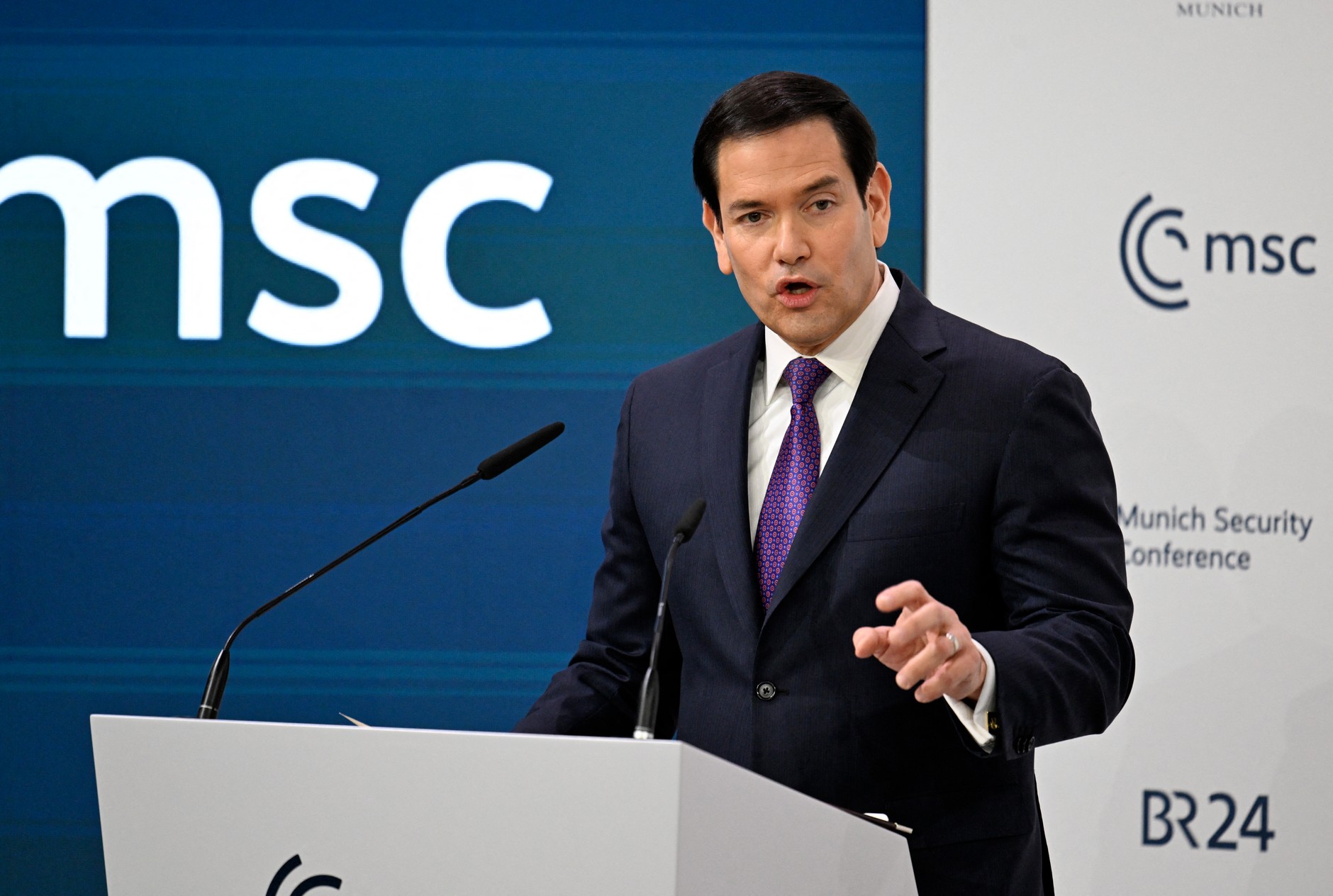
It wasn't just America's former allies who lamented the end of the rules-based order. Last weekend in Munich, US Secretary of State Marco Rubio also decided to bury him.
“The post-war world order is not only outdated, it has become a weapon used against us,” Rubio said. — We can no longer put the so-called world order above the vital interests of our citizens and our nations.
US Secretary of State Marco Rubio in Munich, February 14, 2026.THOMAS KIENZLE/AFP / AFP
The meetings of world leaders in Davos and Munich have undoubtedly highlighted the fact that The United States has abandoned its traditional role as leader of the free world andthe main advocate of an order based on strong security alliances, open trade and the defense of democracy and human rights.
Through tariff policies, threats to invade allied countries, and the unilateral use of force in Venezuela and elsewhere, America under Trump has returned to behavior similar to the imperial powers of the late 19th and early 20th centuries. Rubio seemed to lament the fact that this era was over. — For five centuries before the end of World War II, the West expanded its influence as missionaries, pilgrims, soldiers and explorers left its shores to cross oceans, settle on new continents and build vast empires stretching across the globe, he said.
If this is what the United States wants to offer the world as a new global order – a return to imperialism, empire building, exploitation of natural resources, imposition of Christianity – then surely the rest of the world will have the right to say: No thanks!
The article continues below the video
Rubio's nostalgic reference to Western civilization as the basis for transatlantic unity was also not well received. “We are part of one civilization, Western civilization,” Rubio said. — We are united by the deepest bonds that can divide nations, woven through centuries of common history, Christian faith, culture, heritage, language, origins and sacrifices that our ancestors made together.
But for most Europeans – and indeed for most Americans – these are not features that distinguish the West. The list did not include such basic Western values as democracy, human rights and the rule of law. As America celebrates its 250th anniversary of independence, it is remarkable that its top diplomat seems to have forgotten what sets America apart – the idea enshrined in the Declaration of Independence that:
We hold these truths to be self-evident: that all men are created equal and endowed by their Creator with certain unalienable Rights that among these are the right to life, liberty and the pursuit of happiness.
Trump's America offers the world something that is clearly unacceptable to all but the most staunch realists who place their faith in power and the uncompromising pursuit of it. This is not a world that others will want to live in.
Hope in middle powers
This does not mean, however, that the rules-based order is over. Yes, the major powers, led by Russia, China and the United States, are no longer willing to follow the rules that have been painstakingly developed over the last 80 years. But the rest of the world certainly wants it — especially middle powers like Canada, the EU, Japan, Australia, India, Brazil and others that Carney called to action.
On security, America's NATO allies are reaffirming the importance of their security alliances and increasing spending on new and necessary capabilities. They support Ukraine in ensuring its membership in Europe, thus depriving Russia of the main target of their war of aggression.
All middle powers are negotiating new trade regimes to reduce their economies' dependence on the predatory trade policies of China and the United States. Existing and new rules could govern trade between countries within the EU, the Revised Trans-Pacific Partnership, India and others. Together, these countries account for almost 40 percent. world GDP – far surpassing the United States and China.
There is nothing stopping middle powers from upholding basic human rights, supporting democracy and the international institutions that have evolved over the years to provide goods and services and protect those in need.
The United States could have given up its role as leader of the rules-based system. However, there is every reason to hope that the middle powers, who have benefited greatly from this system, will take the lead.
I’m Ashley Davis as an editor, I’m committed to upholding the highest standards of integrity and accuracy in every piece we publish. My work is driven by curiosity, a passion for truth, and a belief that journalism plays a crucial role in shaping public discourse. I strive to tell stories that not only inform but also inspire action and conversation.