The connection between the Thracians and one of the most mysterious religious sects. Her followers were vegetarians, believed in the immortality of the soul, and had a famous prophet

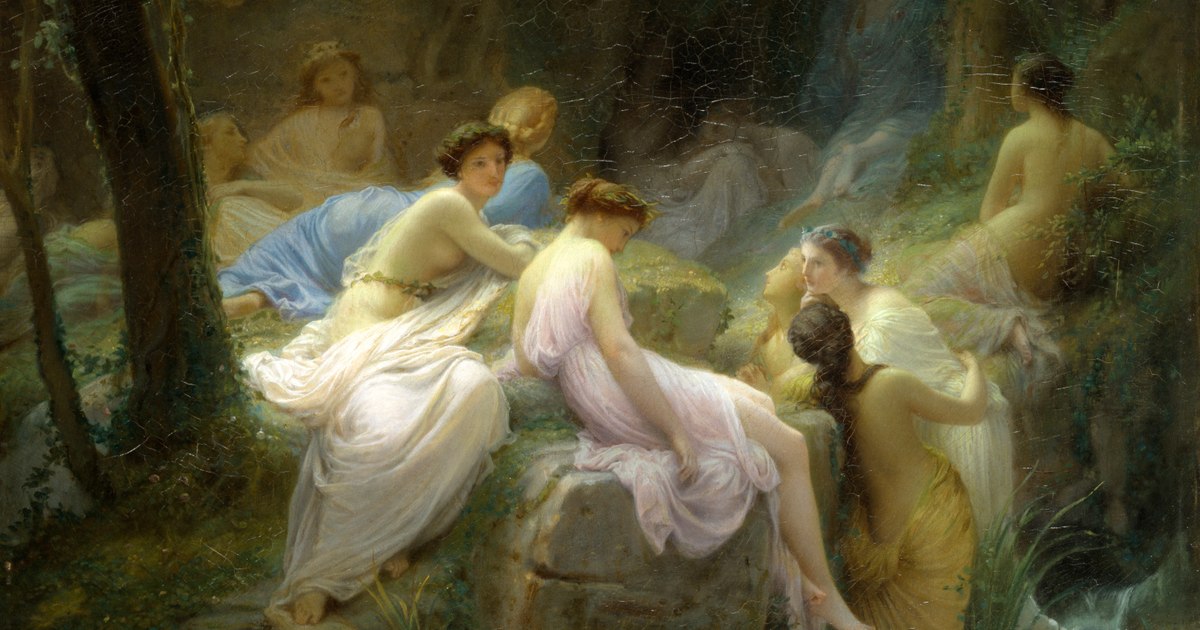
One of the most mysterious ancient religious rituals has Thracian origins. Based on the worship of ancient deities from the south-Danube world and enigmatic initiations, the Orphic mysteries were extremely popular and included entrances into trance with the help of hallucinogenic substances.
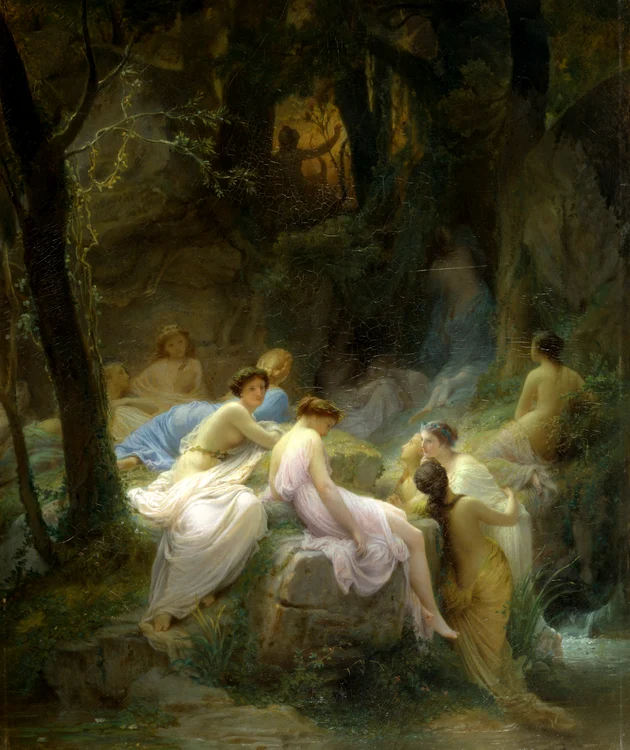
Nymphs listening to Orpheus PHOTO wikipedia
One of the most mysterious cults in the world is the Orphic one, a kind of sect inspired by the rituals and religious beliefs of the Thracians and which then spread and acquired new valences in the Greek world. The ancient Greeks made famous this cult and Orpheus, a kind of Thracian “prophet”, the central character of these religious manifestations. Even today, specialists do not know exactly what this cult really meant, nor its hidden practices that would have included the consumption of hallucinogenic substances to enter an ecstatic state. Thanks to historical sources from different periods of Antiquity, specialists were able to find out some precious information: it was a monotheistic religion, unique in the religious landscape of the time, with elements that would later be found in Christianity and Buddhism, including original sin, asceticism, reincarnation or the afterlife. It was learned that the secrets of this sect were known only to those initiated into the Orphic mysteries, but no one knew what this initiation entailed.
The son of a Thracian king and the archaic rituals of the princes of gold and war
The Thracians were a very large ancient population, spread over an area between the Haemus Mountains (today's Balkans), the Danube, the Black Sea, the Aegean Sea and the Sea of Marmara. The Thracian tribes were numerous and divided, famous for their warriors and their ecstatic rituals, being first attested in the 8th century BC. They were gentiles who earned their living from agriculture and animal husbandry, but mostly from mercenaries. “Thrace it is inhabited by one large nation, the Thracians, who each have a different name and different customs. Some are wild and always ready to face death, especially the Getae, who believe that souls do not die and go to a happier place… That is why their funerals are occasions for celebration and they honor them as holy things, through song and play“, stated the Latin historian Pomponius Mela. For his part, the ancient historian Herodotus said that the Thracian race was in his time the most numerous in the world, after the Indian, and the Thracian tribes, numbering over 100, had similar customs.
“If they had only one ruler, or if the Thracians would agree among themselves, they would be invincible and much stronger than all the nations, according to my reckoning. But this is not possible and will never happen. That is why they are weak. The Thracians have several names, according to the regions, but the customs are about the same among all, except the Getae, Trausi and those who live north of the Crestians.”says Herodotus. The Thracians were Indo-European peoples who spoke a language that is now dead. Even the Getae were part of the great group of Thracian tribes. The most famous Thracian state was that of the Odris, which maintained strong cultural, economic and political ties with the great city-states of Ancient Greece. In turn, the Thracians borrowed from the Greeks their barbaric beliefs and rituals.
The ecstatic ones were the most attractive to the Greeks. The Thracians, these princes of war who put their warlike fury into the service of whoever paid the most, loved wine, parties, and gold. There was no shortage of hallucinogenic substances either, as some ancient authors claimed. One of the gods that the Thracians borrowed from the Greeks was Dionysus, the famous god of drunkenness and wine. The Greeks may also have taken from the Thracians the god of war, Ares, a central figure in the mythology of these warriors. To them he was called Sabazios. The most enigmatic figure that arrived from the Thracian area in the Greek world was that of Orpheus. He was a sort of mythological Thracian prophet around whom the most mysterious cult of European antiquity was created. Some ancient authors believe that Orpheus was a very real character, the son of a mythical Thracian king, Oeagrus, who had his territory somewhere in present-day northern Greece, not far from Mount Olympus. This character would have lived somewhere around the 13th century BC. Once he was borrowed from Greek mythology, the biography of Orpheus was enriched with Greek deities. The ancient Greeks said that Orpheus' mother was the muse Calliope.
The pacifist son of the Thracian king, a star in Greek mythology
According to Greek legends, Orpheus was a renowned musician, a peaceful hero in a violent world, even though he came from a warlike tribe. His weapon was his unsurpassed voice that could tame any beast or squeeze tears from even a stone.
There are many stories where Orpheus made his presence felt, including the famous story of the Argonauts. He accompanied Jason and the Argonauts on their journey to recover the golden fleece from the distant lands of Colchis. Without him, the Argonauts would never have succeeded in their perilous journey. The Argonauts met the sirens of Sirenum Scopuli, who lured the sailors with their enchanting and beautiful songs. These were the same mermaids that Odysseus encountered in the Odyssey. Their song caused men to throw themselves overboard and find their end in the depths of the sea. When the sirens began their alluring songs, Orpheus stepped forward, took out his lyre, and began to sing a song louder and more beautiful than the sirens.
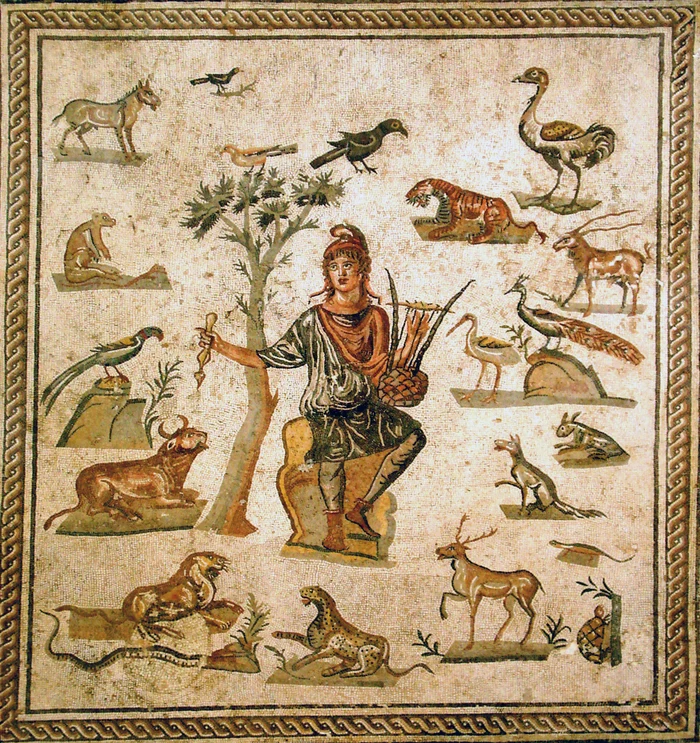
Representation of Orpheus PHOTO wikipedia
Orpheus' song covered the voice of the sirens, saving the Argonauts not by force or cunning, but by music. But perhaps the most famous myth about Orpheus is his descent into the Underworld to retrieve his dead wife, Eurydice. Orpheus and Eurydice fell in love at first sight and lived happily together for a short time. Eurydice traveled with some nymphs to a nearby forest. In one version of the story, they meet the shepherd Aristaeus, who is hot on his heels after Eurydice and begins to pursue her. Frightened, she runs away, is bitten by a poisonous snake and dies. When Orpheus heard of the disappearance of his beloved, he sang a song of grief so touching that both heaven and earth knew of his loss. Orpheus decided to travel to the Underworld to find his beloved. Along his journey, he used his supernatural music to ward off the three-headed dog, Cerberus. Orpheus soon met the masters of the Underworld, Hades and Persephone. He sang them a heartbreaking song that moved even Hades, the god of death, to tears. He agreed to allow Orpheus and Eurydice to return to the realm of the living, but on one condition: Eurydice would follow Orpheus and Orpheus would not be allowed to look back at her until they reached their destination.
Orpheus agreed. But Orpheus could not hear his beloved's footsteps and thought he had been tricked by the gods. Just a few steps from the exit, Orpheus lost confidence and turned to see if Eurydice was following him. Eurydice was pulled back into the Underworld. Orpheus returned to the realm of the living, consumed by guilt and grief. Grief-stricken, he never wanted to have relations with women again and took a vow of celibacy. Orpheus meets his end at the hands of the Maenads, worshipers of the god Dionysus, who tear him apart. The Maenads kill him after he rejects their advances.
A mysterious sect, the “monks” of antiquity and a unique religious message
A special cult arose around this mythical character, Orpheus, in Ancient Greece. It is one of the most mysterious religious manifestations in the world, about which even today specialists do not know much, especially as a way of organization and initiation. It is about the Orphic cult, with Orpheus as the central character and the model he provided after the death of Eurydice. Only the initiated could know how this cult was applied. The little information about this cult comes from ancient authors.
“Much of what is known about the cult's practices has survived through references by ancient writers such as Plato, Euripides, and others. Many of these references are mentioned derisively and should not be taken ad litteram. However, the fact that numerous ancient sources referred to similar beliefs implies that there is a grain of truth in their words(…)Scholars, both today and in the ancient past, could only speculate about what was really going on within it. However, in the last century, archaeologists and historians have discovered fragments of information such as the Orphic tablets and the Derveni Papyrus, both of which shed some light on the group's unique mythology and practices.”specified the specialist in classical history Aiden Nel, in “Orpheus & the Mystery Cult of Orphism”.
The cult of Orpheus was quite well organized with sanctuaries, meeting places and followers. It was a monotheistic cult, enunciating philosophical and religious ideas and concepts that would be found in Christianity and Buddhism. For example, the Orphics talked about original sin, life after death, and reincarnation. Followers of this cult, mostly from the Greek and later Roman world, believed that Orpheus was a disciple of Dionysus. “Orphism differed significantly from other religious practices of the time. Mainly in their belief in metempsychosis (reincarnation), the concept of original sin, and a strong inclination toward monotheism in their devotion to Dionysos-Zagreus. They believed that their founder, Orpheus, learned these truths during his journey to the Underworld, which itself is akin to the cycle of rebirth of a soul. Moreover, the untimely death of their founder is very similar to the death of Dionysos-Zagreus”specified Aiden Nel. In fact, this cult was based on a series of hymns and poems with a philosophical undertone and of spiritual conduct that Orpheus would have written or composed. Because Orpheus was a peaceful mythological character and his followers campaigned for pacifism. Celibacy was practiced among the most ardent followers, following the pattern of Orpheus after the final loss of Eurydice. In addition, the Orphics were staunch vegetarians, a kind of monks of the ancient world.
They would have also had some sacred texts that they used to look for new followers, a kind of “holy book” of the cult of Orpheus. Unfortunately, no manuscript has been preserved. In addition, the followers of Orpheus believed in “Adikia” or avoiding harm or wrongs to any living soul. They believed that killing and any acts of violence against another person are great sins. They also had a kind of idea of salvation. To reach the realm of the gods, to redeem your soul, you had to go through initiation rituals. But even today it is not known what they meant. “The cult of Orphism remains a mystery to this day. Historians still debate whether or not it should be considered a distinct religious sect, an alternative lifestyle, or a new school of philosophical thought. It is unclear what happened to the cult and how it lost popularity. However, new archaeological discoveries indicate that answers may be discovered in the near future.”continues Nel, in the same work. Orpheus was also a Thracian deity, because even the Getae believed in this idea of the immortality of the soul.
A Thracian “prophet” or just a mythological character?
Some of the ancient authors believed that Orpheus was a real personage, a poet and a special singer from the area of Thrace. Pindar called Orpheus the father of songs, and ancient writers recognized him as the greatest musician and poet who ever lived. Pindar's idea is supported by Strabo and Apollodorus, who believe that the Thracian Orpheus actually existed. Aristotle, on the other hand, said that he was just a mythological character.
Some archaeologists claim that the musical god of the Thracians may have been a real person who lived in the Rhodope Mountains in Bulgaria and that he was a Dionysian priest who had access to hidden knowledge of the Egyptian and Oriental sages.