The repression became the rule in the Russian Federation. In a country where reality is written with criminal files and “suspicious” suicides, the death of the former Romanian Starovit-presented as suicide-marked a new psychological threshold for the Kremlin elites. It was for the first time in the little era when a high -ranking official dies under such conditions.
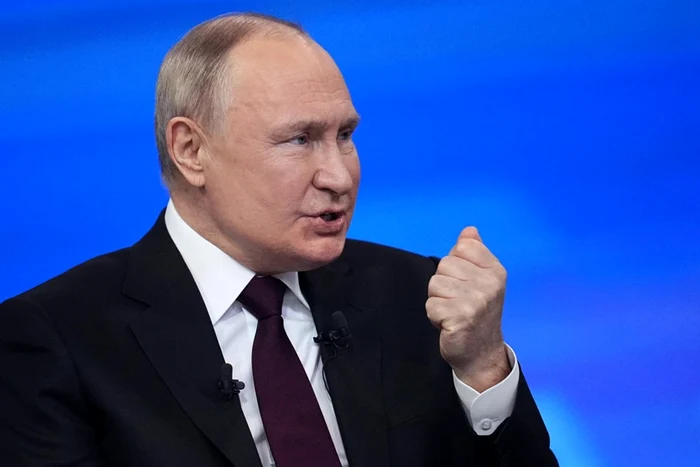
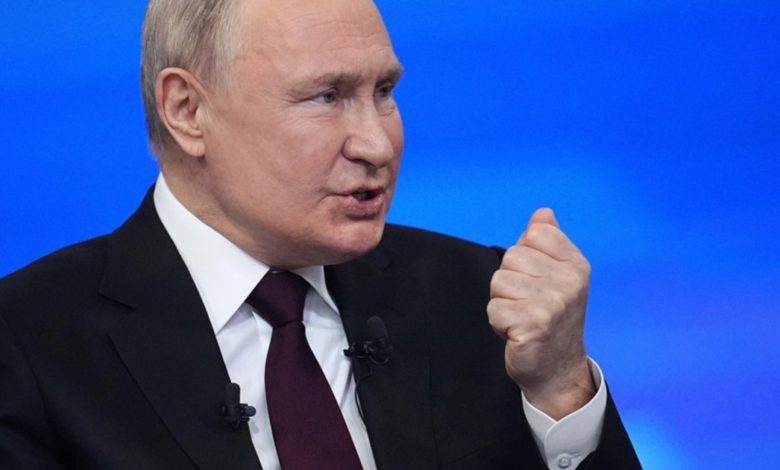
Russian President Vladimir Putin/Photo: EPA/EFE
For a regime that, from 2022, accelerated the derivation to militarized authoritarianism, the signals are clear: the old loyalty guarantees no longer work. The elites are no longer intangible, and the support from the “towers” of power no longer offers immunity.
Spectacular arrests, criminal investigations and confiscations of assets become part of a force show meant to maintain control over a structure that risk at any time.
It's pure treatment
The series of recent cases shows a coherent strategy of purifying the bureaucratic and economic elite. The former deputy of the commander of Rosgvardia, senior officials from the Ministry of Defense, generals and former vice-masters have been detained for corruption-accusations that, in the context of Russia, can mean anything: from real violations, to regulations of accounts.
At the center of this mechanism is the Attorney General Igor Krasnov, a figure that strengthens his position as “cleanliness” advances. In contrast, Aleksander Bastrîkin, the head of the investigation committee, seems more and more disconnected from the center of the decision, a sign of a subtle balance within the repressive system.
Masked nationalizations and forced redistribution
But the repression is no longer only political or military – it is also economic. The confiscation of billionaire Konstantin Strukov's assets, the owner of one of the largest gold producers in Russia, announces a new stage: the masked return to the state-owner model. According to official data, in March 2025, the Russian state nationalized assets worth over 2.4 trillion rubles, writes Zerkalo Nedeli.
In fact, it is a forced redistribution of resources, given that the “feeding base” of the system begins to be exhausted. The internal conflict between the elites does not threaten the regime, but on the contrary – it gives Putin an additional control tool.
Censorship is officially returned. WhatsApp, on the black list
Against the backdrop of these treatment, the state accelerates information control. The idea of official re -establishment of censorship, according to the Soviet model of Glavlit, is publicly discussed by officials from Putin's circle. Already applied measures are added: massive internet disconnections, port control and the expansion of FSB prerogatives, including creating their own prisons.
In parallel, the State Duma voted a new package of laws through which the use of VPNs is considered an aggravating circumstance, and the search for “extremist”-liable to the fine. And WhatsApp, the most used messenger in Russia, is about to be banned or replaced with a state -controlled domestic product – Max.
Economy: Behind the smoke curtain
Russia maintains a facade of economic stability, but the foundations are cracking. After a period of growth based almost exclusively on military expenses, the economy slows down. Estimates show an increasing GDP by only 1.3-1.5% in 2025 – below the previous levels. Inflation remains high, and the budget deficit has already reached 90% of the level envisaged for the whole year.
The situation is aggravated by the decrease of oil and gas revenues, but also by the lack of liquidity in the national prosperity fund, in the context of the reserves blocked by sanctions.
Potatoes – a shortage symbol – are the new “food problem”, after last year the egg crisis put the authorities in difficulty. Despite all these dysfunctions, the Kremlin refuses any major foreign policy adjustment.
Little, between war and forced loyalty
Vladimir's power Putin still seems solid. But it is stability obtained by fear and isolation. Unlike previous years, the elites no longer seem convinced that they can rely on mutual loyalty. Many think of a possible controlled output from the “special military operation”, but I can't say that out loud. Not now.
The stake is not only political, but also personal: the access of children to the Western life, the protection of wealth, the personal survival in the event of a post-Putin chaos. In this equation, Putin remains for them a guarantee of order and continuity.
But the history of Russia has a cruel memory: the regimes collapse not when they seem weak, but when they seemed invulnerable. And if the system crack – it is possible to do it at the edges. And at this moment, the edge is called Chechnya, warns Volodimir Kravcenko in Zn.ua.
The less it balances the external aggression and the internal pressure, the increased the risk that one day it will lose control unexpectedly. Russia's history has already seen situations in which a regime that seemed undecided has collapsed in a few days. Putin's death could radically change the situation in the country. The situation in Chechen, where the chief of the Republic, Ramzan Kadîrov, faces serious health problems and tries to transfer the power of his son Adam, could be affected.
Chechnya could become a serious stress test for the regime: the Russian presidential administration will succeed in maintaining a balance between fear, money and loyalty or the system will begin to collapse from the periphery. If the Kremlin fails to manage the risks there, it does not control the country anymore. And then everything that seems today a rigid order can be transformed very quickly into an uncontrollable chaos, in which everyone will be on their own, writes Volodimir Kravcenko in Zn.ua.