What would we like to be decided on Thursday at Washingtondori? What did I have to offer? With what consequences?


It is absolutely obvious that, more clearly than ever, it is evident that no one has been able to propose a solution for conflict prevention and management that derives from the UN Charter or from the many conventions, agreements or treaties negotiated and then approved by the Security Council or in the UN General Assembly.
AFP PHOTO
As a result, no one seems to believe that such a practical solution can be generated to respond to the horror of the current conflicts – for example Gaza or Ukraine – and, according to the provisions of the UN Charter, that a resolution formula can be decided that expresses the strength of the international community. As a consequence, the belief that real negotiations take place or can take place in other formats and between groups almost completely separated from major actors, return to the fundamental intolerances of the Cold War period.
Theoretically, absolutely theoretically and at the level of humanitarian hopes of the past, what would be the missions that could have been entrusted to the “blue helmets”, soldiers and civilians made available by countries that would like to engage in such an action?
They could supervise the implementation of a cease-fire, they could disarm and demobilize combatants, they could ensure the protection of civilian populations, ensure the maintenance of public order, they could train local police detachments, they could contribute to demining operations, they could ensure the protection of refugees. Since 1992, peacekeeping missions have been organized by the UN Department of Peacekeeping Operations. And of course there is also a UN Under-Secretary-General responsible for this sector of peacekeeping operations, Jean-Pierre Lacroix, who said so beautifully that “UN peacekeeping is an outstanding example of how strong partnerships and shared political will can bring about meaningful political change”
Wrongly, the idea was perpetuated that these missions they can only be activated after a ceasefire or peace treaty has been concluded. False.
Since 2008, the so-called “Capstone Doctrine” talks about first-generation missions that are focused on peacekeeping and come after a cease-fire agreement has been signed. Second-generation missions are of the “peacekeeping” category, when the UN intervenes in an active conflict to create the conditions for establishing a ceasefire. Finally, pay attention to this aspect, there are third-generation missions that are located in the area of ”peacebuilding” and that, in reality, can go far beyond this framework, becoming, if this is the mandate conferred, even active interposition operations.
This last principle of operation, the most interesting because it is credible and means the participation in force of the international community determined to apply the principles of the UN Charter https://peacekeeping.un.org/en, appears in Agenda for peacea document promoted by Boutos Boutros-Ghali that evokes the possibility of the UN initiating peacekeeping operations with much more precise missions and a mandate that would involve the use of armed force if the circumstances require it. If, as now, the Security Council is completely paralyzed by the use of the veto by its permanent members, the General Assembly can make important decisions such as entrusting very complex missions to regional organizations such as NATO or ECOWAS.
The question to which the political leaders of the world do not have an answer lies in their will to identify realistic means of response, beyond pathetic and demagogic speeches as long as, in parallel with the incessant messages of peace, they allow the unprecedented flourishing of military industries that now produce intensively, at a rate comparable to the period of the Second World War, to the detriment of national and international programs to eradicate diseases, hunger or poverty.
The power dome at the UN is increasingly empty and less effective. How quickly can it be repaired? Can its international credibility be repaired? With what actors?
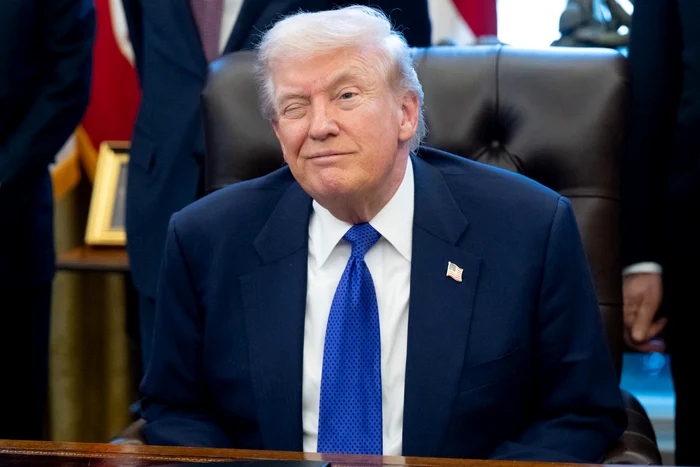
Donald Trump proposes an answer: an organization created by him, led only by him, and which can intervene where the UN has failed, and shows no signs of solving the problem of stopping armed conflicts and managing the post-conflict period, which is often more dangerous than the first.
It starts in force, we will see on Thursday how many countries (some already members of the body chaired by the American president, others with not very clearly defined observer status) will engage in the reconstruction programs in Gaza and in ensuring security in the area and the complex offer of training the Palestinian institutions of Palestinian force in Gaza. In this sense, on Thursday, for the first time since the creation of the UN, a new offer could appear which, depending on the political decisions, could even complement the UN. For here are the 7 types of peacekeeping operations now provided for in the UN Charter, pending the novelties possible through the contribution of that Board of Peace chaired by Trump:
1. Preventive deployment of forces.
2. Traditional peacekeeping operations – ceasefire monitoring, patrols, intervention between conflicting parties.
3. Extended peacekeeping operations: multipurpose missions to include civilian protection, humanitarian assistance and political support.
4. Peace enforcement missions: authorized actions to enforce peace when parties do not comply with signed agreements
5. Assistance during the period of political transition: support given to the democratization process, the organization of elections and constitutional reforms.
6. Provisional territorial administrations: direct management by the UN of a territory (eg Kosovo or East Timor).
7. Peace support operations: support given to regional missions such as those organized by the African Union
What would we like? What did I have to offer? With what consequences? What kind of civilian and military missions would we find ourselves in, first in Gaza and then anywhere in the world? With what mandate?
It is no longer just about Gaza, but about the future of future conflicts and about the emergence of a superpower that will deal with the management, directly with the imposition of peace. Romania's option now will hang particularly heavily in what will be our positioning in the new international order. This is the real stake and let's see with what assurances and negotiated assurances the President of Romania will return.