
When the USSR realized it had lost the Cold War. The moment when the Soviet doctrine collapsed in the desert

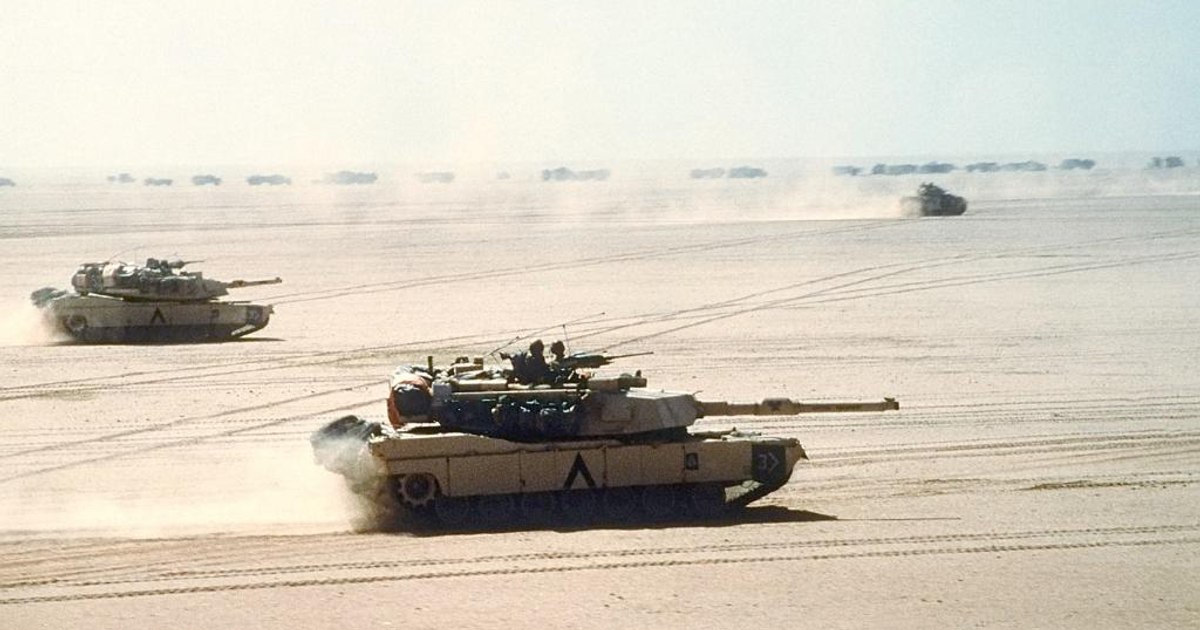
When the US-led military operation ended in February 1991, the impact on the Soviet military establishment was profound. In Moscow, planners were aiming for the systematic and precise destruction of an Iraqi army built according to their playbook: Soviet equipment, Soviet training and a Soviet-inspired air defense concept, writes Then Mighty.
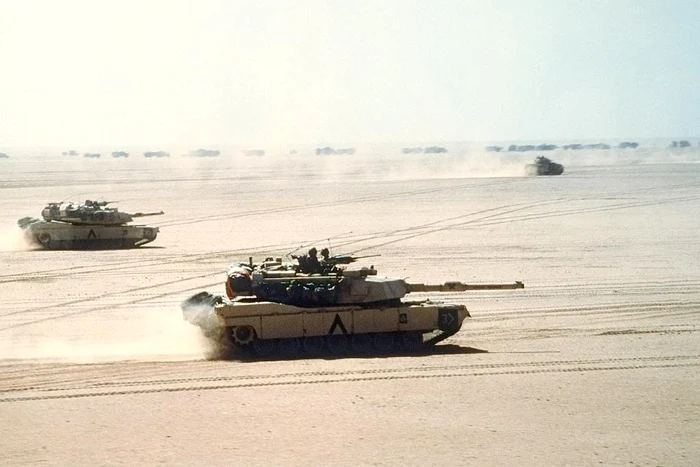
The coalition's main maneuver — a wide envelopment through the desert/PHOTO:X
For the Kremlin, Iraq was meant to be a stress test for American air power and its all-volunteer army. The Soviet leadership expected a conflict of attrition, a long and costly land war that would provide a glimpse of what a direct confrontation between East and West in Europe would look like. The release of Kuwait was expected to come at a heavy price for Washington and its allies.
Instead, the international coalition launched a sustained air campaign and then ended the ground offensive in about 100 hours. For the Soviet military, it wasn't just about defeating a regional ally like Saddam Hussein. It was a public demonstration that the Soviet model of modern warfare was outdated.
In Moscow, images of Iraqi recruits in burning tanks were also viewed through another lens: in a conflict with NATO, they could have been Soviet recruits. And the General Staff, already faced with a collapsing economy and a decaying political system, could do nothing but observe and note.
The “shredder” that never came
On paper, Iraq looked like a formidable opponent: one of the largest armies in the world, substantial armored forces, robust anti-aircraft defenses and years of experience in the war with Iran. For the Soviet generals, it was reasonable to believe that the ground offensive would degenerate into a long and bloody conflict.
Soviet doctrine held that air power could weaken or slow down an enemy, but it could not decide a war on its own. The decisive moment was to come on the ground, and there—it was believed—an American volunteer force would be put to the test.
However, reality contradicted these assumptions. The ground offensive began on 24 February 1991 and was virtually over four days later. Iraqi air defenses were quickly neutralized. Armored units were sometimes destroyed without realizing what had hit them. Coalition forces maneuvered at night, through sandstorms, across the desert and into the Iraqi flanks with surprising speed.
For Soviet doctrine—built on mass, depth, and resistance to losses—this was a major conceptual blow.
“Left Hook”
The coalition's main maneuver—a sweeping desert sweep known as a “left hook”—should have been familiar to Soviet planners. But what shocked was the speed and coordination. US forces operated in low-visibility conditions, maintaining unit alignment in featureless terrain. Battles like the Battle of 73 Easting illustrated the new type of mobile and integrated warfare.
The Iraqis reacted late or incoherently. By the time they realized where the main blow would fall, losses were already significant.
For Soviet observers, the issue was not the maneuver's existence, but its effectiveness in a context where the air campaign had already destroyed the adversary's ability to see, communicate and coordinate.
“Highway of Death”
In the retreat from Kuwait, Iraqi troops traveling on Highway 80 were hit repeatedly by US aircraft. Images of columns of destroyed vehicles made the rounds of the Western world, where the road was dubbed the “Highway of Death”.
In Moscow, analysts saw something else: what happens when one side can detect, track and strike with precision, while the other is unable to respond. The traditional strategy of massive armored concentration became, in these conditions, a vulnerability.
The war of the networks
Initially, the convenient explanation was that Iraq had misapplied Soviet doctrine. But this interpretation ignores the essential: Iraq was not fighting only against some American units, but against an integrated system.
Technologies such as the Global Positioning System and aerial surveillance platforms such as the Northrop Grumman E-8 Joint STARS enabled the rapid detection and transmission of targets. Early warning planes coordinated the information, and the strike forces already knew where to strike before they arrived in the area.
In contrast, Soviet doctrine assumed a hierarchical chain of command, with inherent delays in the transmission of information. At such an operational pace, the units could have been destroyed before receiving the necessary orders.
Lessons and the end of an era
An analysis published in 1992 by the RAND Corporation showed that Russian military thinking quickly grasped the implications: modern warfare had fundamentally changed. Air control, speed of decision, interoperability and integration of forces had become decisive.
For an army trained in the culture of mass and attrition, this was a painful revelation. If the adversary controls the sky, armored forces become targets.
A few months later, the Soviet Union ceased to exist. The causes were many and deep, but the Gulf War sent a clear warning: in the information age, victory belongs to the one who sees first, transmits faster, and decides faster.
For Moscow, the lesson was clear. But the question remained whether it would be fully learned.


