Why Israel is banking on Trump for regime change in Iran. Analyst: “Netanyahu doesn't care what happens the next day”

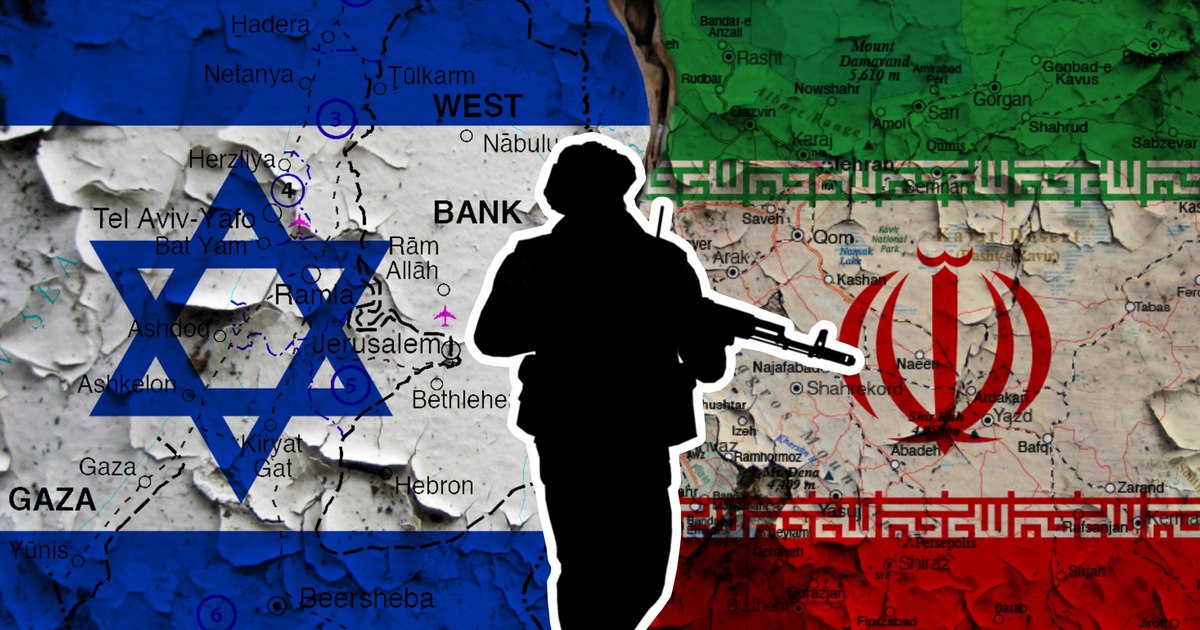
In the context of speculation about what the US is aiming for by building up forces close to Iran, Israel has remained unusually silent, a silence that can only be very telling against the background of a situation marked by tension, according to a BBC analysis.
SHUTTERSTOCK PHOTO
Beyond a few comments in support of Iran's widespread anti-government protests this month, Israel's prime minister has had little to say publicly about the plight of the allied superpower facing his country's greatest enemy. Israel's government has remained equally silent.
“It's an indication of the importance that Netanyahu places on this moment,” said Danny Citrinowicz, who worked for 25 years in Israel's Defense Intelligence Service and is currently a research fellow on Iran at Israel's Institute for National Security Studies.
“As for Netanyahu, being in this position where the US has so many forces in the Gulf, being so close to a Trump attack on Iran, this is – for him – a golden moment that he's living to the fullest.”
Other analysts perceive this silence as strategic.
“The leadership [israeliană] believes that we should allow the Americans to lead this time because they are stronger, have more capabilities and have much more legitimacy in the world,” says Asaf Cohen, former deputy director of Israel's intelligence unit.
Benjamin Netanyahu has always perceived Iran as the main threat facing Israel and the biggest source of instability in the Middle East. If he remains silent in public, this does not mean that private discussions with his main American ally are absent.
In fact, recently, the head of the Israeli military secret services, Shlomi Binder, had talks with representatives of the US intelligence agencies in Washington. According to Israeli media, the discussion focused on possible targets in Iran.
Israel would aim higher
Citrinowicz believes that privately Netanyahu is pushing the US toward maximalist strikes aimed at regime change in Iran, and that when he urged Trump to refrain from a strike earlier this month, it was because that planned US strike would have been, in his view, “too small.”
US President Donald Trump is considering a series of actions against Iran, which, according to US media, include both limited symbolic strikes and possible regime change. In public, he alternated threats of military intervention with an offer of new negotiations.
While many US allies warn that an attempt to depose Iran's leadership poses huge risks to the region, many in Israel see benefits for their own security.
For example, Israel hopes it would end the threat posed by Iranian ballistic missiles and the possibility that Iran might one day acquire nuclear weapons.
It would also weaken Iran's proxy militias in the region, including Hezbollah, which still has up to 25,000 rockets and other munitions on the border with Lebanon, according to Israel's Alma Research Institute.
On the contrary, some Israeli lawmakers believe that a limited attack or even a new deal with Iran could pose greater risks to Israel's security because in this way the regime is kept in power.
“When you are faced with total evil, you do not act limited. There is a consensus that Israel should act much more firmly, and so should the Western world,” said Moshe Tur-Paz, a member of the opposition Yesh Atid party who sits on the Israeli parliament's Defense Committee.
Many argue a new crackdown that leaves the regime intact would not be worth the price paid for Iran's retaliation.
During last year's 12-day war, when Israel and the US attacked Iran's nuclear and ballistic missile sites, Iran fired back with hundreds of missiles at Israeli cities, killing at least 28 people.
For their part, analysts have suggested that Iran learned lessons from that conflict, adapting its tactics as the war progressed. After half a year, Iran is rebuilding its missile stocks.
A senior adviser to Iran's supreme leader warned on social media that Tel Aviv would be hit with an “immediate and unprecedented” response in the event of any US attack.
“Netanyahu fears that Israel will again suffer an attack without regime change,” Citrinowicz said. “He concluded that to stop the missile build-up, regime change is needed, but that can only happen with the US.”
However, this moment of great vulnerability for the Iranian regime represents an opportunity, says Cohen.
“Iran is now at its weakest point – this is an opportunity that may not come again,” Cohen said. “There are many people who are convinced that the time has come: now or never.”
In Tel Aviv, residents who witnessed Iranian missile attacks last June are speculating about the likelihood of a new conflict.
“I hope so [liderii noștri] they will not miss this opportunity,” said Neria, a young man in his early 20s.
“Whether it's through an attack or some other means, I don't know, but we should certainly take advantage of the situation to change the regime. It wouldn't be the first time we've faced bombs – it's not pretty, but if it helps us feel safer in the long run, then we'll have to accept it.”
Shani, a young woman from the neighborhood, said she has mixed feelings.
“I know the Iranian people – many of them – want US help. I just hope everyone stays safe,” she said. “Politicians need to think about people. Actions have consequences.”
Regime change comes with risks
With no obvious cracks in the military-clerical alliance around Iran's Supreme Leader Ayatollah Ali Khamenei, and no fragmented opposition movement in the country, it is unclear who would take control of Iran if the government fell.
A younger successor from the same ruling elite would not necessarily be more flexible toward Israel, and the chaos of a civil war would not only be deeply destabilizing for the Iranians, but for the region as a whole.
Furthermore, many defense experts have pointed out that regimes are not usually overthrown by airstrikes alone.
Israel's prime minister, who faces an election this year, has worked hard since the Hamas attacks to try to restore his image as Israel's “Mr. Security.” In this sense, regime change in Iran – or the assassination of Khamanei – would be a political prize, but also a risk.
“It's a risk, but a calculated one,” says Citrinowicz.
“Netanyahu doesn't care what happens the day after Khamenei leaves. He wants to show, along with Trump, that he has destroyed the Iranian regime. It's a risk he's willing to take if he's sure the Americans will follow through. The problem is Trump.”
Negotiations, blocked by Iran's red lines
Both the U.S. and Iran have shown openness to negotiations, but Trump has conditioned the talks on an end to Iran's uranium enrichment, an end to support for partners in the region and limits on ballistic missiles — conditions that are red lines for the regime.
Israel's leadership is staunchly opposed to a deal, and Israeli analysts are divided on its feasibility.
According to Cohen's estimation, Washington and Tehran want a deal, but if it doesn't materialize, the US could attack.
“The supreme leader of Iran and Trump have something in common. There aren't really any red lines. During the 2013 negotiations, we called them “pink lines,'' because they've changed,” Cohen said.
“We always talk about Iran as evil, but they are very rational,” he said. “I think they realize that in order to change the situation, they have to do something that hasn't been done before.”
“Yes, there is an opportunity to compromise, I'm not North Korea, but this regime has its own red lines,” Citrinowicz also noted, explaining that a war would be difficult to control “because the Iranians will think it's a war for survival.”
There are signs that Trump may limit the conditions imposed on negotiations and that he is focusing on Iran's nuclear program. If the bar is lowered enough for Tehran to begin talks, much of the region will breathe a sigh of relief — and many in Israel will hold their breath.
Cohen points out that there are ways to reach compromises on issues such as uranium enrichment that could temporarily prevent any new activity while allowing Iran to avoid an outright ban.
“The key difference between us and the Iranians is that we like quick results and the Iranians have a lot of patience,” he said. “They say, 'We've been here for 2,000 years, if it takes another 30 years to get a nuclear weapon, that's fine.'”