INTERVIEW. Explaining why the candidates for the headship of TNB were rejected, the Minister of Culture, András Demeter, compares the institution with the Dacia Factories: “You don't have to do experiments”

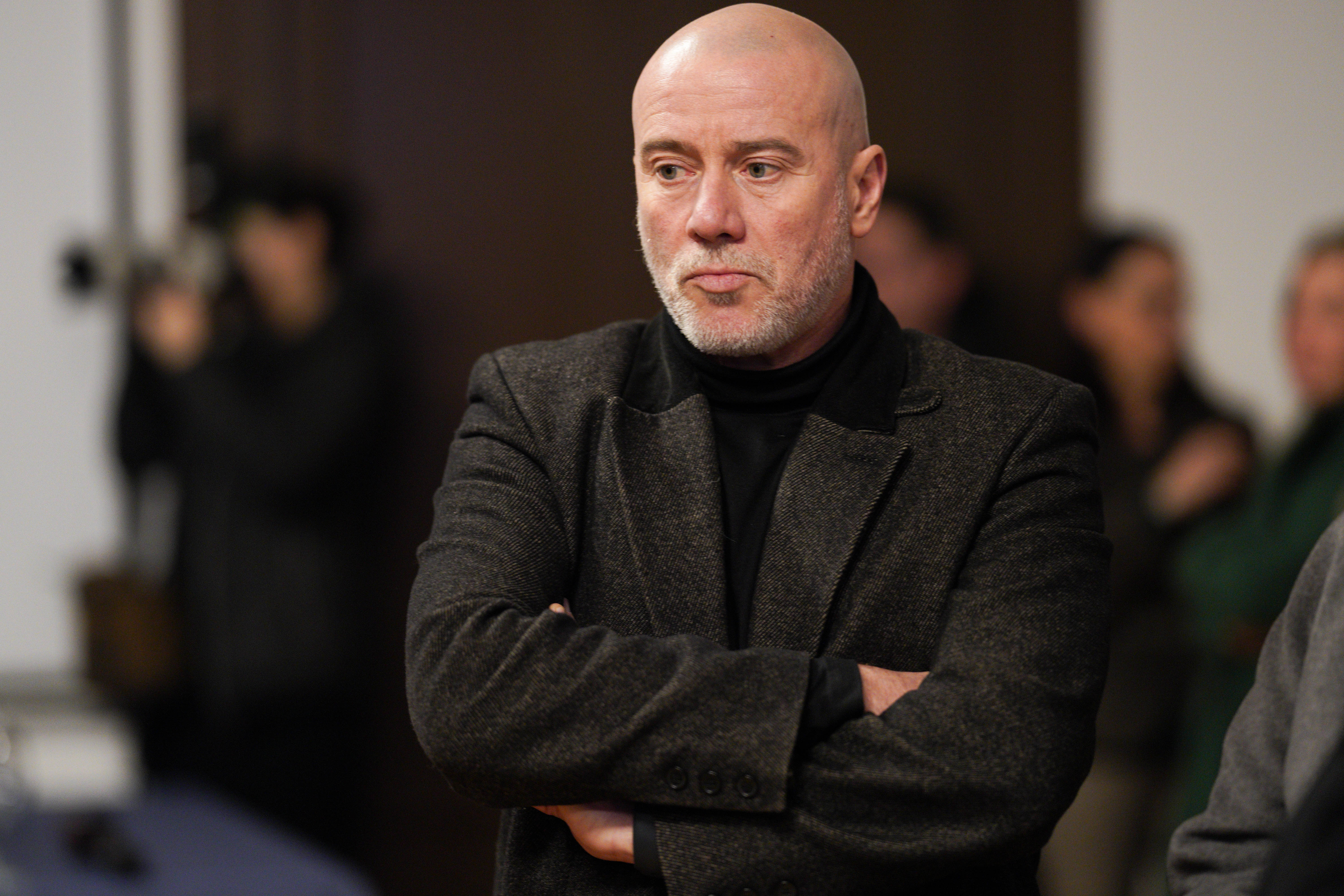
In an interview given to HotNews in the context of a public scandal regarding the modification of the criteria for participation in the Bucharest National Theatre's management contest, the Minister of Culture states that he is “interested in attracting a young breath, including from the independent area, but not at the Bucharest National Theatre”, claiming that their approach is not appropriate. It's not the only controversy targeting Demeter these days.
In the last few days, actors, directors and members of the TNB jury accuse the politicization of the selection criteria and the non-transparent manipulation of the 2025 leadership contest. And members of the judging commission, including Marinela Țepuș, reported on Facebook that “the members of the former commission, with the exception of three, refused to talk with the former candidates about the projects, so that they could understand their errors or deviations”.
Alexandra Badea, playwright and director in France, Ada Lupu Hausvater, director and manager of the National Theater in Timișoara for 20 years, and Radu Popescu, director and co-founder of the independent theater Apropo, participated in the previous competition. Alexandra Badea obtained the highest mark, 6.83, but insufficient for promotion, the minimum mark being 7.
In December, during a public debate, Alexandra Badea asked Minister Andra Demeter for clarification regarding the marking of the competition, but the dialogue degenerated into acid retorts and screams from the minister: “I let you talk, but it doesn't do you any good. It shows that you are totally unprepared! You haven't done your homework! I, in your place, wouldn't insist, but it's your job. You haven't read the regulations, you don't know the law, but you comment on it!”, reports Cultura la duba. Alexandra Badea is an active director in Paris and Bucharest, founder of the theater company Hédéra Hélix, master's student at the Sorbonne Nouvelle and laureate of the Theater Prize of the French Academy.
The minister's latest proposals led hundreds of employees in the cultural sector to petition Prime Minister Ilie Bolojan for his dismissal. And the list of accusations is long: undermining the human resource in culture, managerial incapacity and lack of strategic vision, the intention to abolish the National Institute of Heritage, the intention to politicize cultural institutions, discrediting the idea of competition for management projects, etc.
In the interview given to HotNews, Demeter answers the protestors: “You don't have to do experiments on the biggest theater,” says the minister.
The Minister also provides explanations about the draft of the Cultural Management Law, which stipulates that, in institutions in areas with national minorities, candidates for the position of cultural manager must receive the opinion of representative organizations of the community, such as the UDMR.
“False, erroneous, taken out of context”
Hotnews: Mr. Minister, several dozen personalities from the cultural area accuse you these days of intending to politicize cultural institutions. How do you respond to these accusations?
Andras Demeter: – False. It is false, erroneous, taken out of context.
– And then how do you justify the condition provided for in art. 3 paragraph (4) of the project of the new cultural management lawthat “a candidate for the management of a public cultural institution should obtain a favorable opinion from the organization that represents the respective community in the Romanian Parliament or from the Parliamentary Group of National Minorities, if it has no parliamentary representation”?
– The provision you refer to is part of a legislative proposal under public debate, designed on the model of a solution that has already been working for years in the field of education (art. no. 195/L.198/2023). The proposal was also based on concrete experiences from the system, including the experience of directors of public cultural institutions with activities aimed at national minorities. When administrative or financial difficulties arose, support was requested precisely from the representatives of the minority community in the language to which the respective institution was addressing.
– So, in the sense of the same article, a candidate for the management of a theater in an area where the majority population is of Hungarian or Roma ethnicity, for example, should obtain a favorable opinion on his candidacy from the UDMR or the Pro-Europe Roma Party?
– The intention of the proposal was not to condition the access to a leadership position of political affiliation or the support of a specific organization, but to create a consultation mechanism with the representatives of the community to which the respective institution is addressed. The opinion was not intended as a control tool, but as a form of institutional dialogue, intended to provide a better understanding of the cultural, linguistic and community context in which the institution operates. Considering the sensitivities expressed in the public space, the Ministry of Culture treats this proposal with the utmost attention, which is under analysis with the actors involved so that the final solution respects managerial autonomy and the public interest.
I am interested in attracting young people, even from the independent area, but not at TNB
– What is the reasoning behind the change in the conditions for registration to the management competition at TNB, which require a minimum of 10 years of experience in public cultural institutions or 5 years in the case of a master's degree in cultural management?
– Analyzing all the elements resulting from two unsuccessful contests, we came to the conclusion that for the largest repertory dramatic theater institution in the country, with the largest budget, with its own revenues located at the highest level in the country, with the number of employees and the number of collaborators far above the average of all theaters, almost equal to the number of employees and collaborators in operas in the country, we will only entrust it to those candidates who have experience in the public sphere.

To give you a more practical example: Dacia factories. I cannot entrust the management of the Dacia factories to someone who has not even once managed a mechanical department in a small factory. You don't have to experiment on the biggest theater. I am interested in attracting young people, even from the independent area, but not at TNB. Why? It's very simple because there have been four candidates so far; in the first competition, there were the spouses Andrei and Andreea Grosu, now it was Radu Popescu and Alexandra Badea, and the projects of these candidacies revealed the fact that the approach from the independent-private environment, in relation to the requirements, responsibilities and complexity of the National Theater in Bucharest, is not the appropriate one.
– Are people who managed a theater, whether independent or state, from another country eligible?
– The answer to your question is negative. If they ran an independent company in another country, such as Alexandra Badea in France, that is according to the French law that regulates the activity of legal entities under private law, regardless of whether they are NGOs or another form of organization. It is clear that this experience is not enough to apply for TNB. Nothing will stop Alexandra Badea from applying to another theater.
– I am not referring to her, my question was about both state and independent theaters. Can people who have managed a state theater in another country apply?
– Public institution means institution governed by public law in which, if you do not have experience, if you do not have sufficient knowledge, then you risk endangering not only the budget of the institution, but the daily life of the employees, their families and, last but not least, the cultural offer that targets hundreds of thousands of spectators annually.
– Don't you think this new criterion somehow favors seniority instead of real competence?
– Madam, you are talking to a man who, at 24 years old, won the first management competition for the management of a theater in Romania. You probably didn't know that. Having been the beneficiary of this chance at 24, I cannot be one to favor seniority or I don't know what. I don't ask for experience at the first theater, at the flagship institution in the field, I ask for experience in public institution management. We have in this country many professional people who meet all the other conditions and who already have more than ten years of management experience in a public cultural institution, without necessarily being my age of 57. So I don't know where we get from 5 years plus a master's degree or 10 years to this definition of “seniority”.
The case of Alexandra Badea
– So, before applying to TNB, should he first run a theater in the country to gain managerial experience?
– I didn't say that. She can also go to a theater in Bucharest, she can go wherever she wants, but all the dialogue, how can I tell you, all her manifestation in the public space, if we are talking about Alexandra Badea, including the two independent candidates who are circulating that they would now be negatively discriminated against or would be wronged. No one is stopping them, there are many other competitions in the capital. The theaters that are run by temporary workers should be put out to tender. There are several countries in the European Union that have theaters governed by public law. Anyone who managed a theater in Slovenia, in Slovakia, in Hungary, in these post-socialist countries, because there are public cultural institutions governed by public law, then they are eligible. Even if Romanian national legislation differs slightly in certain areas, it is still public law and that experience, being a member state of the EU, is absolutely acceptable, but not from the area of the private sphere.
Prices may be higher at first around premiere
– You stated at Political Insider (Prima TV) that the ratio between the theaters' own income and state subsidies should be changed. How do you propose to change the ratio of own income vs. state subsidies, if a theater cannot support itself from tickets alone?
– The change from an almost non-existent percentage does not imply the transition to self-financing at all. It is not a fundamental change. It must be a managerial concern that year after year the ratio between the subsidy and own revenues has an increasing trend, within the limits of possibilities. Anyone who knows, who knows how the ratio between supply and demand works in the field of culture knows that, regardless of whether we are talking about an exhibition, a concert, a show, the prices can be higher at the beginning, around the premiere and after a while, they have to be adjusted according to the decrease in interest, in order to keep the number of visitors or spectators. Then you can take a break and start again. The price policy is also a given of demand in public cultural institutions.
There is no risk of the architectural stamp being cancelled
– Is the stamp of architecture in danger of being abolished?
– There is no threat; it's a bogus problem. I had a discussion with my colleague Ștefan Bâlici, on December 24, and also with Mr. Varujan Vosganian, the acting president of ANUC. There is no risk of the architectural stamp being cancelled. We are talking about a parafiscal tax and a law from 1994 which, at the request of several creative cultural sectors, will have to be revised. No one, absolutely no one, raises the issue of canceling the stamp.
– What do these updates mean? I mean what will change?
– To say now what the update will mean would be risky. Updates will take shape through dialogue. Stamp Law, no. 35/1994, was conceived in a reality dominated by video cassettes, CDs and other supports on which the stamp was applied, most of them disappearing. A few cases remain: the literary stamp, the theater ticket, the architectural project that is stamped, but at the level of the contributors everything remains at the level of 1994. Many other areas have appeared that are not provided for by this law and, as such, are not stamped. The second aspect concerns stamp collection. For now, everyone is hunting everyone, but we are in the age where administrative simplification is on everyone's lips and is a natural desire. We should find a single collection system like ghisheul.ro, where you can easily pay all your taxes.