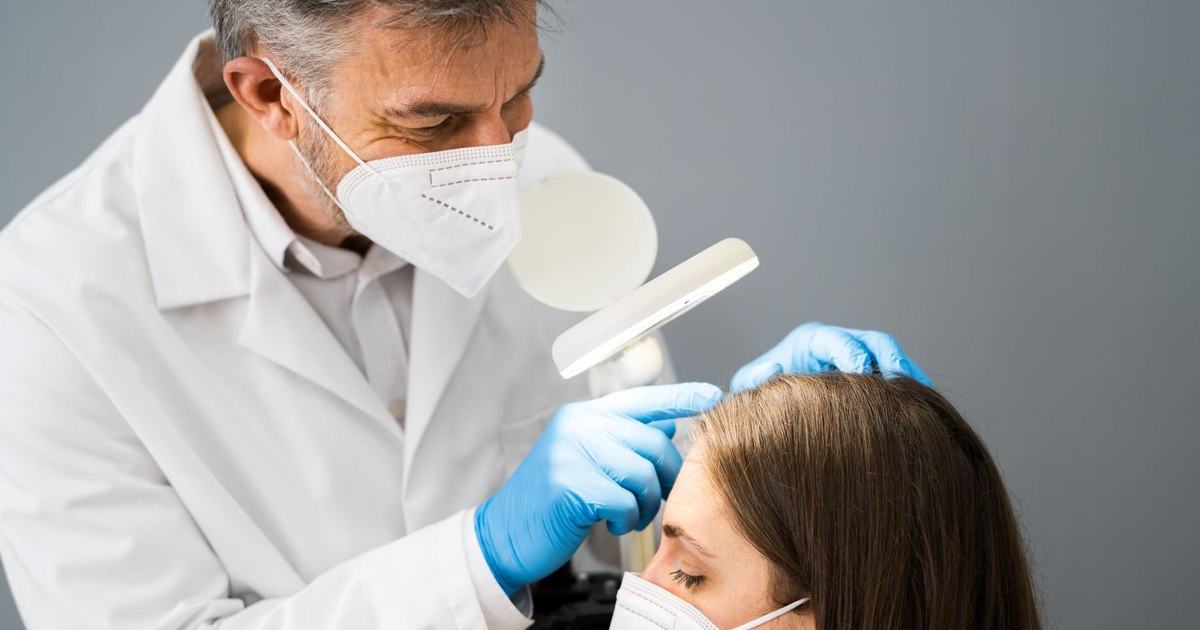
For more and more women over 30, hair loss is starting to feel almost natural. Discussions of minoxidil, rosemary water or baby remedies with onions and olive oil became the order of the day. In parallel, the health of the scalp has officially entered the beauty industry's radar, with therapies such as exosomes, HydraFacial for the scalp or PRP, a sign that we are talking about a wider phenomenon than a simple aesthetic problem.
Photo credit: Shutterstock
“Women in their thirties often experience hormonal changes, nutritional deficiencies, GLP-1-induced hair loss, and inflammatory scalp issues as a result of modern lifestyles. Add to that tight hairstyles and harsh heat or chemical treatments, and hair follicles come under unprecedented stress.” explains Dr. Joyce Park, dermatologist, to Forbes.
Stress, hormones and the modern lifestyle
The factors are concrete, experts say, and stress almost always figures into the equation. “Many women with demanding jobs, postpartum, or on GLP-1 treatments develop telogen effluvium, a condition where stress pushes hairs into the shedding phase prematurely. We've seen the same thing in the pandemic, with massive hair loss on a daily basis,” says dermatologist Joyce Park.
In addition to this type of accelerated hair loss, dermatologists are increasingly noticing that hair thinning begins at younger ages due to genetic, inflammatory and behavioral factors. Aggressive hairstyles, repeated heat treatments and the rhythm of life speak for themselves. The scalp doesn't escape either: excessive washing, but also the lack of proper rinsing can maintain inflammation and destabilize the environment in which hair grows.
For many patients, the first instinct is to blame the hair plate or tight hairstyles. But, says Dr. Angel Aguado, doctor at SHA Spain, the cause is rarely purely cosmetic.
“All these factors leave a mark on… hairAguado explains. “That's why a full set of blood tests is essential. Not just basic tests, but also iron and ferritin, vitamins like B12 and D, zinc, thyroid function and in some cases sex hormones. Hair often reflects internal balance. So before any treatment, we need to understand if there's a micro-nutritional or medical problem behind what we're seeing on the scalp.”
What doctors say is worth checking out
Another major obstacle remains misdiagnosis. Although stress-related alopecia is common, it is often lumped in with all forms of hair loss.
“There are over 100 different diagnoses in trichology, and some can look very similar on the surface, although the prognosis and treatment are completely different. I often see scarring alopecia, inflammatory conditions, or chronic hair loss mislabeled as simple male pattern or female pattern hair loss.” says Aguado, quoted by Forbes. Just as often, the scalp is ignored as an organ in itself. Psoriasis, seborrheic dermatitis or other local inflammatory diseases are underestimated, although they can be the key to understanding and treating the problem correctly.
Before investing in red light therapies, supplements or serums aggressively promoted online, it's worth taking a step back, experts warn. A scalp analysis by a certified trichologist and a complete set of blood tests can make the difference between a random treatment and one with a real chance of success.
Because, although cosmetic solutions can help temporarily, without understanding what is happening in the body, you are only treating the symptom.
Basically, the hair acts as a barometer of internal balance. When hormones, nutrients, sleep and stress get out of sync, the scalp is among the first places to show signs. This explains why, for more and more young women, hair loss is no longer an isolated episode, but a warning sign of a lifestyle that calls for serious adjustments.
Hair, as an indicator of internal balance
We recall that, recently, the American doctor Mark Hyman drew attention to the fact that genetics only explains part of the story of hair loss. According to him, consistently high insulin levels associated with diets high in sugar and refined carbohydrates can create a metabolic imbalance that favors the activity of androgen hormones. In this context, the enzyme 5-alpha-reductase can increase the production of dihydrotestosterone (DHT), the hormone directly involved in the progressive thinning of hair and the appearance of androgenetic alopecia.
Hyman argued that excess weight and the accumulation of abdominal fat influence hormone levels in both women and men. The process is largely determined by individual sensitivity to DHT, a derivative of testosterone. “DHT binds to receptors in hair follicles and shrinks them over time, leading to thinning or hair loss,” explained the doctor.
However, DHT does not act alone. Hormonal imbalances, insulin resistance, inflammation, nutritional deficiencies and food sensitivities all play a critical role, Hyman points out. In women, conditions such as polycystic ovary syndrome frequently lead to increased levels of androgen hormones, including DHT, which causes both thinning scalp hair and unwanted facial hair growth.
A central element in this equation is insulin. “Insulin resistance and obesity are the main factors leading to hormonal imbalances in both women and men”said the doctor. Belly fat promotes inflammation and androgen dominance – that excess of male hormones.
Chronic stress increases cortisol levels, which directly affects hair follicles. Sleep deprivation is, in turn, a form of stress. Poor diet, especially excessive consumption of sugar, starch and ultra-processed foods, plays a major role. Zinc deficiency is another important factor, because zinc naturally inhibits the enzyme 5-alpha-reductase. Also, iron deficiencies, even in the absence of anemia, can cause hair loss, with the ideal ferritin level being above 45. Protein deficiency also contributes.
Collagen, zinc, vitamin D, biotin and vitamin B12 are essential for hair health, and deficiencies are widespread.
Basically, the hair acts as a barometer of internal balance. When hormones, nutrients, sleep and stress get out of sync, the scalp is among the first places to show signs. That's why, for more and more young women, hair loss is starting to be more than just a passing episode: it's becoming a lifestyle alarm that calls for real adjustments, from the inside out.