Dr. Alexandru Cristescu, neurosurgeon at Ponderas, about the case of a patient operated on and reoperated on for a herniated disc: “When he entered the office, he told me that he was in pain and that he wanted a different approach”

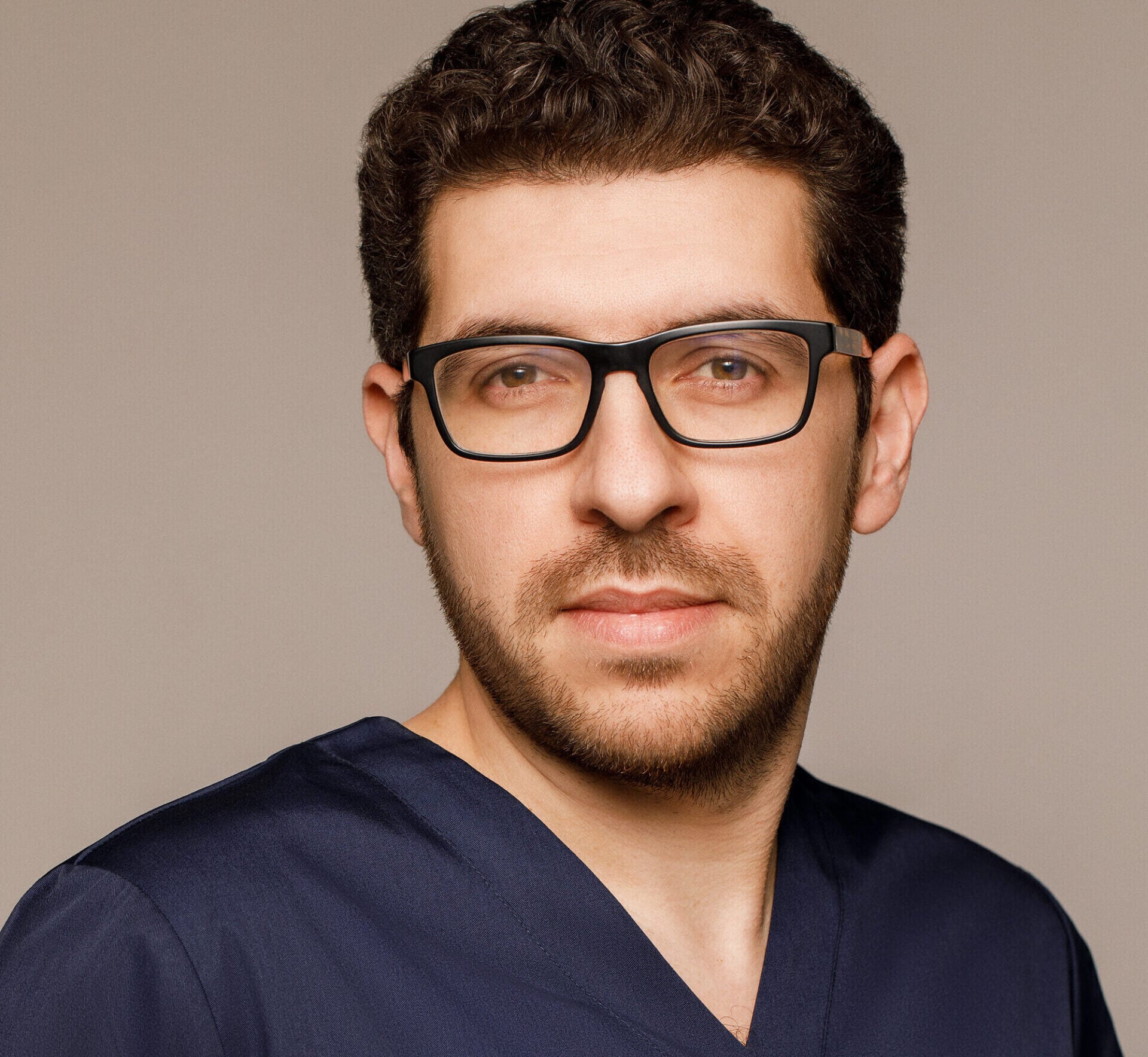
Surgery to fix a herniated disc is common and considered trivial. Sometimes, however, patients need interventions and re-interventions because, in fact, the underlying condition remained undiagnosed and therefore untreated. It is also the case of a patient who, until the age of 40, had undergone several surgeries on the spine, which had proven successful from a surgical point of view, but after which, paradoxically, the patient did not feel better. Fortunately, at Ponderas Academic Hospital, part of the Queen Mary Health Network, where the patient finally ended up, there are also the necessary technologies and multidisciplinary teams that perform the surgical interventions for the entire pathology of the spine. Dr. Alexandru Cristescuprimary neurosurgeon at Ponderas Academic Hospital, is the one who operated on the man through a minimally invasive technique and solved his problem.
In the operative practice, Dr. Alexandru Cristescu also met with patients operated on and reoperated for simple pathologies, but who had not managed to solve their health problem. One such patient who came to Dr. Cristescu had, up to the age of 40, undergone several surgeries for a herniated disc and, despite this, the problem kept recurring. “The patient had no unsuccessful surgical operations, but they had not led to the expected result. This unsuccessful evolution led us to the conclusion that he had, in fact, an underlying problem, namely, an instability of the spine that was not really evident by the usual investigations, not being very advanced, but not insignificant enough to not cause him problems. And this condition “on the edge of the knife”, I would say, made the interventions that he he had – about three or four – had partial or no results”, explains Dr. Cristescu.
“We prepare each case in detail”
Using a minimally invasive approach, the medical team managed to fix the spine through two smaller incisions than the operations the patient had had before, which solved the problem completely and immediately, indefinitely, emphasizes the neurosurgeon: “I remember that when he entered the office, he told me that he was in pain. And he was looking for a solution for this recurring problem. That he wanted a different approach because he understood that everything that had been done for him until then had not been suitable. And that he heard of us, so he came to Ponderas. The patient agreed to have a more extensive operation, which involved more implants than what he had, precisely to solve the problem, which he actually had the feeling that he couldn't get rid of.”
The team's experience in solving such cases is very important, emphasizes Dr. Cristescu. It is essential to know how to solve a problem without bringing an additional deficit to the patient: “Every time we feel that it is too risky to achieve the expected result, we choose to make a compromise, say, to protect other functions of the patient. But this happens quite rarely, precisely because we prepare each case in detail.”
Intervertebral disc problems, the most common
The most common spine problems are those at the level of the discs that make it up. And so we end up with disc herniations, spinal canal stenoses – that is, narrowing of the spinal canal with nerve compression in both situations – or misalignment between the vertebrae, segmental instabilities in the spine, which need more extensive spinal fixation procedures with implants. “The moment when we have to go to the neurosurgeon is when the pain persists, despite simple, conservative management measures, i.e. physiotherapy, rest, physical therapy. These persistent, more intense pains show us that there is a structural problem at the level of the spine. Such as its deformations, disc dehydration or damage to the intervertebral discs, inflammation of the joints between the vertebrae”, emphasizes Dr. Alexandru Cristescu.
As we age, natural deformations of the spine occur which, as long as they occur at an expected rate, allow the body to adapt to these changes. “And, more than that, with advancing age, our activity level decreases, so these changes may not be problematic. Discomforts appear precisely when we have larger deformations that occur more suddenly or earlier in life. And in this sense we can often, even quite often, see structural problems. Structural changes of the spine in young people after the age of 30, in some situations, even faster,” the neurosurgeon draws attention.
“The causes of these spinal problems are many and act in different proportions from one person to another. Some of them are out of our control and are related, for example, to the genetic quality of the tissues, to our conformation, to how we are built. But there are also things that are within our control that we either overdo or don't do enough. Namely, today's lifestyle predisposes to chronic tension of the spine without a its adequate support”.
Bad diet and habits lead to a loss of muscle mass in general, but mainly in the supporting muscles of the spine: “Basically, it amplifies the conformation problems that we have, degenerating into a larger situation that requires surgical intervention. It's always a mix of several things that come together in different proportions. Sometimes it's just plain bad luck, the fact that I made the wrong move, on a field inappropriate, in an inappropriate position. But, most of the time, it is a question of a progressive degradation of the column in one place or another, at which comes the straw that fills the glass. That is, a movement, a punctual effort, which finalizes the problem,” adds the specialist.
Persistent pains, the ones that should get attention
The patient does not go to the neurosurgeon depending on how much the spine hurts, the doctor also says, because, when it comes to nerves, the pain can be great even with small problems. It is the persistence of the pain that makes the difference. “If we are talking about an inflammation or an irritation at the level of the spine, in a relatively short time, with a conservative treatment, things can be completely overcome. When the pains are more or less intense, but persist for long periods of time, despite the conservative treatment, we must go to the neurosurgeon, because it is most likely a mechanical problem, which needs a mechanical solution”, emphasizes Dr. Cristescu.
Pain is a signal sent by the body that should not be ignored. “But often we choose to ignore this signal by taking pain medication. And then the problem develops, and if enough time goes by ignoring the problem, it can no longer be simply managed and surgical correction is required.”
The most common neurosurgical conditions
Disc herniations and vertebral canal stenosis are, by far, the most common conditions that require spinal surgery: “These are also the easiest problems. But there are also deformations of the bones, of the vertebrae, secondary to osteoporosis or bone demineralization, imbalances, vertebral instabilities that require segmental fixations,” says Dr. Cristescu.
In many situations, the classic approach to solving these health problems is no longer a viable option for patients, because, in addition to surgical and post-surgical discomfort, it also involves a harder and longer recovery. In addition, minimally invasive interventions also have benefits in limiting the occurrence of instabilities in the spine, which can occur following a classic intervention. “The main benefit is rather a protection at the level of the spine in the future, after the surgical solution through the minimally invasive techniques. These techniques require approaches as limited as possible, in order to be able to do exactly what the neurosurgeon proposed. That is, it is not a compromise in the sense of doing a smaller operation, to have fewer problems. It is about having the same solution, the same final goal, but with as little disturbance as possible. This would be, if you want, the principle of minimum invasiveness when it comes to the spine and not only”, argues the neurosurgeon.
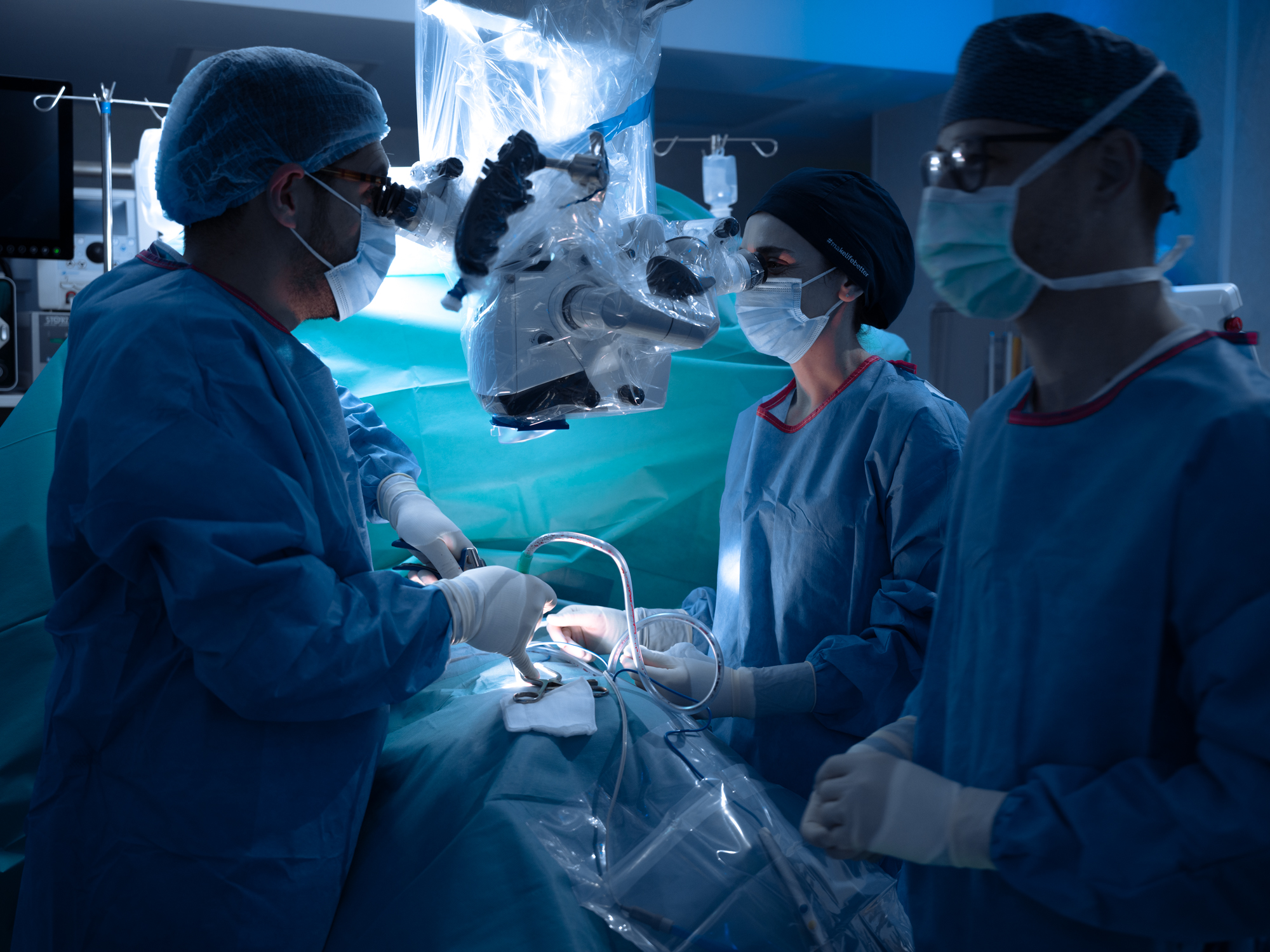
Minimally invasive techniques require the use of state-of-the-art equipment, mainly the operating microscope and endoscope for intraoperative imaging, which allow extremely precise location of the problem, much better visualization and illumination. “And we also use techniques to monitor peripheral nerve functions during surgery,” adds the neurosurgeon.
Compared to classic interventions, minimally invasive techniques reduce the risk of infections, bleeding at the surgical site or muscle problems, spinal instability or even the recurrence of the problem in the operated area or in an adjacent area. Even if present in minimally invasive interventions, these risks are significantly lower.
The major impact of multidisciplinary teams
The most complicated cases are, however, those in which the problem is at the level of the spinal cord. Because, within the same intervention, both maneuvers involving the bony part, to stabilize the spine, i.e. a more mechanical intervention, must be performed, as well as inside the marrow, gestures that must be extremely delicate, carried out under a microscope, in which the neurosurgeon basically navigates among the cords of the marrow to remove a tumor, for example. “In such cases, we need the help of the neurologist in the operating room, who can electrophysiologically monitor in real time the nerve functions of the patient, which we, by manipulating the tissues next to them, put at risk. This monitoring provides comfort that translates into a greater efficiency of the surgical gesture”, believes the neurosurgeon.
Complicated cases require multidisciplinary medical teams, especially if the origin of the underlying problem is not neurosurgical. “For example, when we talk about tumor lesions or metastases that affect the spine, marrow, nerves and so on. Their starting point may not be at the level of the spine, but somewhere in the abdominal or thoracic region. But, through their extension, they also end up involving structures of the spine and nerve structures at its level, the removal of these lesions being a problem that is addressed by several specialties. Then multidisciplinary teams are needed to manage the situation”. explains the neurosurgeon.
One key thing patients need to know is that surgery does not make them 'just like us'. “Surgery still leads you to have to adapt your lifestyle and do less of the things that damage your spine. It doesn't give you an 18-year spine, because that's how many people perceive it and ignore the diffuse pain until it's too much. On the principle that they let me operate and reset the clock, but things don't work that way. Surgery comes and brings you back to the moment before you crossed the limit. But it doesn't bring you at the starting line”, concludes Dr. Alexandru Cristescu.
Article endorsed by Queen Mary