2026-01-26 16:42
publication
2026-01-26 16:42
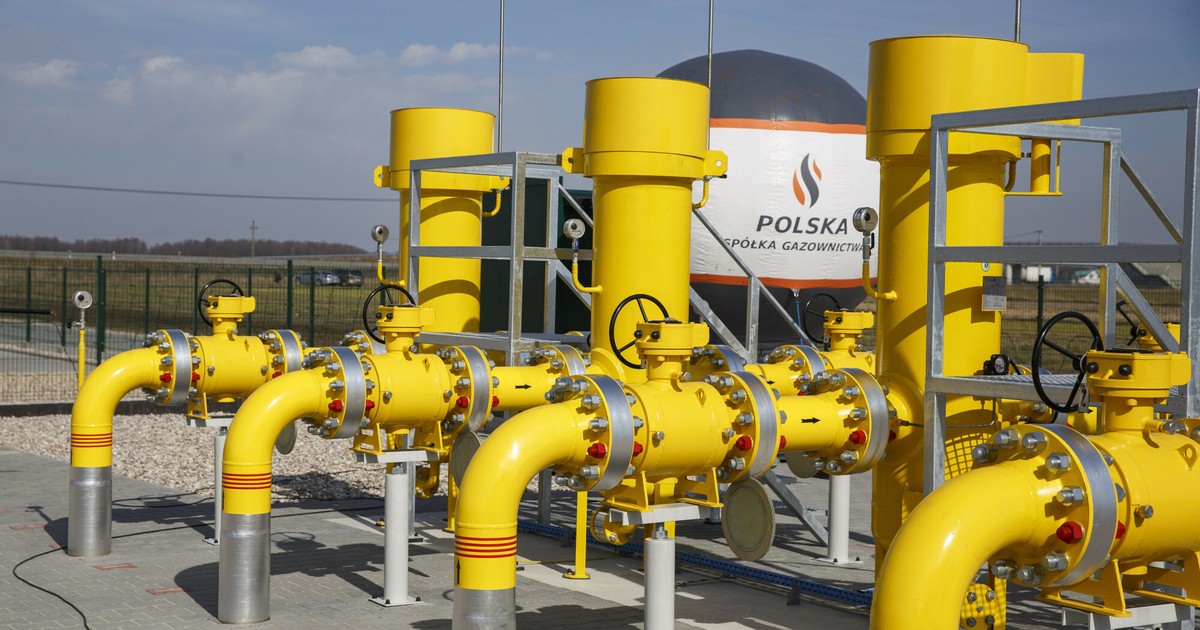
Currently, the total export capacity towards the EU is approximately 10 billion cubic meters. gas annually, of which 4.7 billion cubic meters is available towards the south – informed the Ministry of Energy. He added that in response, among others, Due to the difficult situation in Ukraine, the transmission capacity in this direction was temporarily increased to approximately 5 billion cubic meters. annually.
“Poland has a fully diversified portfolio of natural gas supplies, based primarily on raw material from Norwegian sources and LNG. The key elements of this infrastructure reach levels that are important not only from the point of view of the domestic market, but also from the point of view of the entire region,” wrote the ministry, commenting on the new EU regulation on phasing out imports of raw materials from Russia.
The ministry listed the capacities of the Polish gas infrastructure: Baltic Pipe – up to 10 billion cubic meters. per year, LNG terminal in Świnoujście – 8.3 billion cubic meters. annually, and after the launch of the floating FSRU terminal in Gdańsk – approx. 6.1 billion cubic meters. per year, with FSRU capacity expected to be available from 2028.
The ME also emphasized that additional interconnectors on the border with Germany and Lithuania increase the flexibility and availability of raw materials for entities in the region, and as part of the implementation of the EU policy of gradually abandoning the import of Russian natural gas, Poland is consistently strengthening its export and transit capabilities to the countries of the region.
“Currently, the total export capacity towards the European Union is approximately 10 billion cubic meters per year, of which 4.7 billion cubic meters is available towards the south (Slovakia). Additionally, in response to the needs of energy security and the difficult situation in Ukraine, the transmission capacity in this direction has been temporarily increased to approximately 5 billion cubic meters per year, taking into account continuous and intermittent capacities in various products,” the ministry concluded.
On Monday, at the EU Council meeting, ministers from European Union member states finally approved a ban on imports of Russian gas, which is to enter into force in 2027.
In its information, the Ministry of Energy emphasized that the regulation will enter into force the day after its publication in the Official Journal of the EU, and the first restrictions on the import of Russian gas will come into force this year – deliveries will be able to be made only on the basis of previously concluded contracts and only within strictly defined, transitional frameworks, without the possibility of their commercial renewal or extension.
“The process of gradually phasing out imports will continue in 2027. By November 2027 at the latest, the European Union will completely and definitively end the import of Russian gas, both in the form of pipeline gas and liquefied LNG,” the ministry emphasized.
He added that under the new regulations, Member States must submit national plans for the diversification of gas supplies by March 1, 2026.
The new EU regulations provide for the suspension of imports of Russian liquefied natural gas (LNG) until the end of 2026, and gas supplied via pipelines – until September 30, 2027. Almost all member states supported the adoption of the regulations. Hungary and Slovakia voted against, while Bulgaria abstained. (PAP Business)
jz/ gor/