“Data speeds of up to 6 Tb/s anywhere on Earth.” What Bezos' new communications network promises, which will have thousands of satellites in space, like Musk's rival Starlink


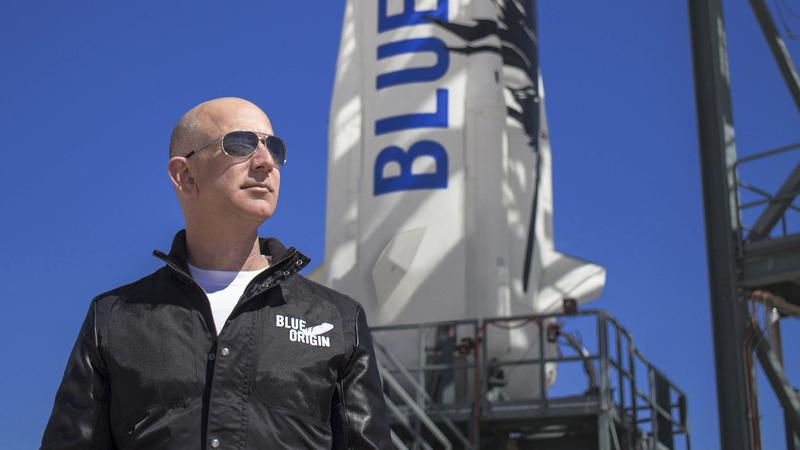
Jeff Bezos, Photo: Blue Origin/MEGA / The Mega Agency / Profimedia
The space company of American billionaire Jeff Bezos, Blue Origin, announced on Wednesday its plan to transport 5,408 satellites into low Earth orbit that will form a new communications network that will provide services to data centers, governments and the private sector, thus entering the communications satellite constellation market that is currently dominated by Bezos's rival, Elon Musk's company SpaceX.
The implementation of the satellites is planned to begin in the last quarter of 2027, the company Blue Origin announced, adding that the network is designed to have “data speeds of up to 6 Tb/s anywhere on Earth”, reports Reuters, quoted by Agerpres.
This speed, made possible by the planned optical communications of the satellites, is extreme by consumer standards and would make the network essential for data processing and large-scale government programs. Blue Origin said the network is intended to serve a maximum number of approximately 100,000 customers.
The announcement of the TeraWave project coincides with a rush by the space industry to build data centers in space that can meet the growing demand for “large-scale” artificial intelligence data processing, which on Earth requires immense energy and resources as adoption of the technology expands.
 What is known about Project Prometheus, the mysterious new company founded by Jeff Bezos
The planned network adds another constellation of satellites linked to Bezos, Amazon's chief executive, who is in an “early phase” of implementing Leo — a network formerly known as the Kuiper Project — that will involve 3,200 satellites that will provide internet to consumers and businesses.
Musk's Starlink network of about 10,000 satellites is the most advanced in the global effort to place internet infrastructure in space, where swarms of low-orbit satellites offer greater security and faster connection speeds than traditional, single satellites further out in space.
The SpaceX CEO has said he plans to build data centers in space, complementing the Starlink network, while Bezos has predicted such space centers will be common in orbit within the next 10 to 20 years.
Distinction from Starlink
Starlink, which has reported more than six million customers in at least 140 countries, targets individual consumers, businesses, governments and, with its Starshield variant, US national security agencies. Amazon Leo, with 180 satellites in space to date, has a similar strategy for customers.
Several Chinese companies are rapidly deploying similar satellite networks to catch up to Starlink, which has proven essential for long-distance communications and geopolitical conflicts.
China is also developing new reusable rockets that can launch thousands of such satellites in the coming years at lower costs, a path also opened by Elon Musk's company SpaceX, with the Falcon 9 reusable rocket.
Blue Origin's reusable New Glenn rocket, which has been launched twice, is likely to be a vital part of the TeraWave constellation deployment.
Unlike Starlink, however, the TeraWave network appears to be inaccessible to individual consumers, according to Blue Origin.
“What makes TeraWave different? It's designed specifically for business customers,” Blue Origin CEO Dave Limp said on the X Network.