“Disastrous for the president.” Trump is threatening Europe, and a rebellion is growing in his backyard

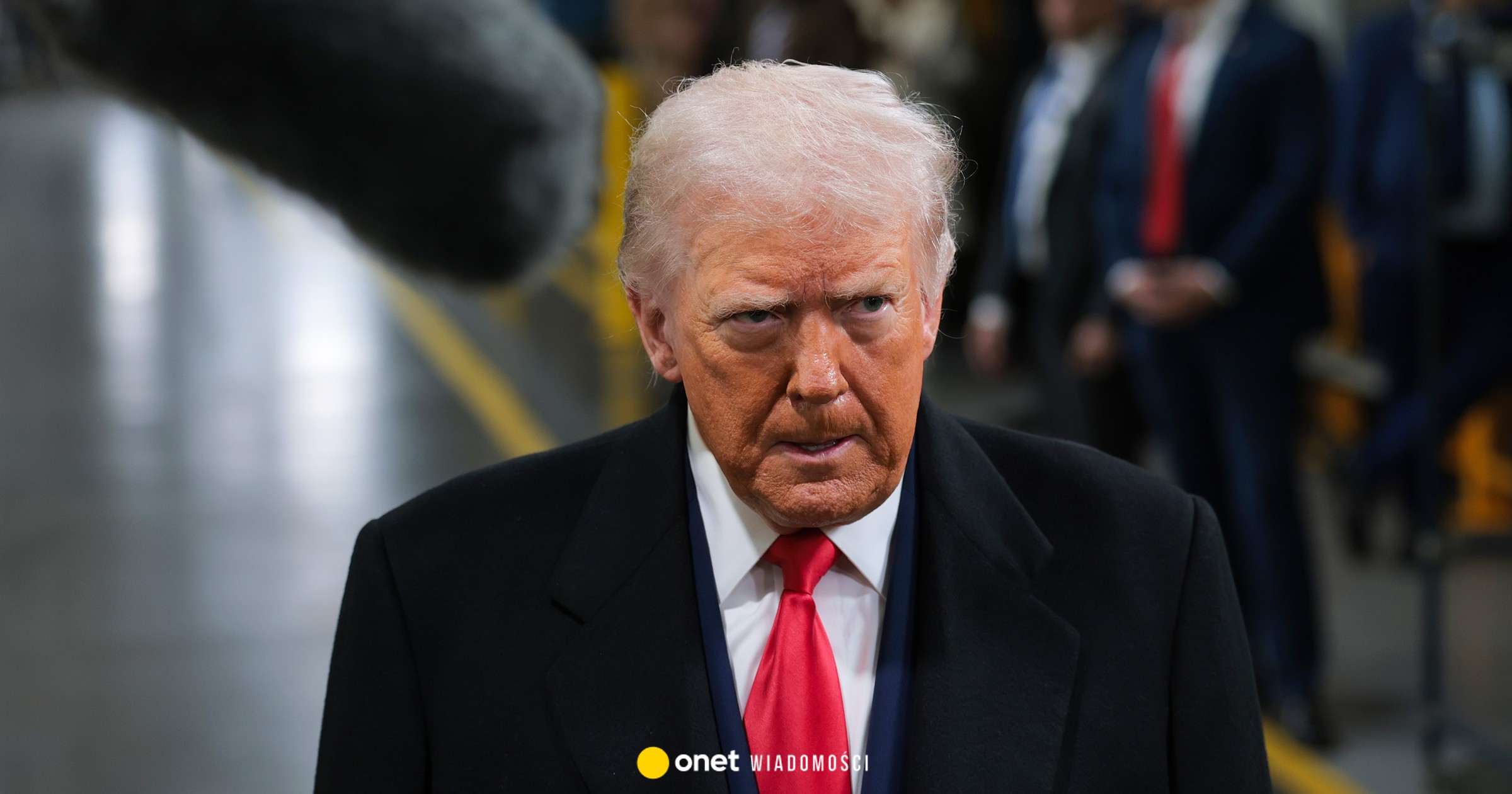
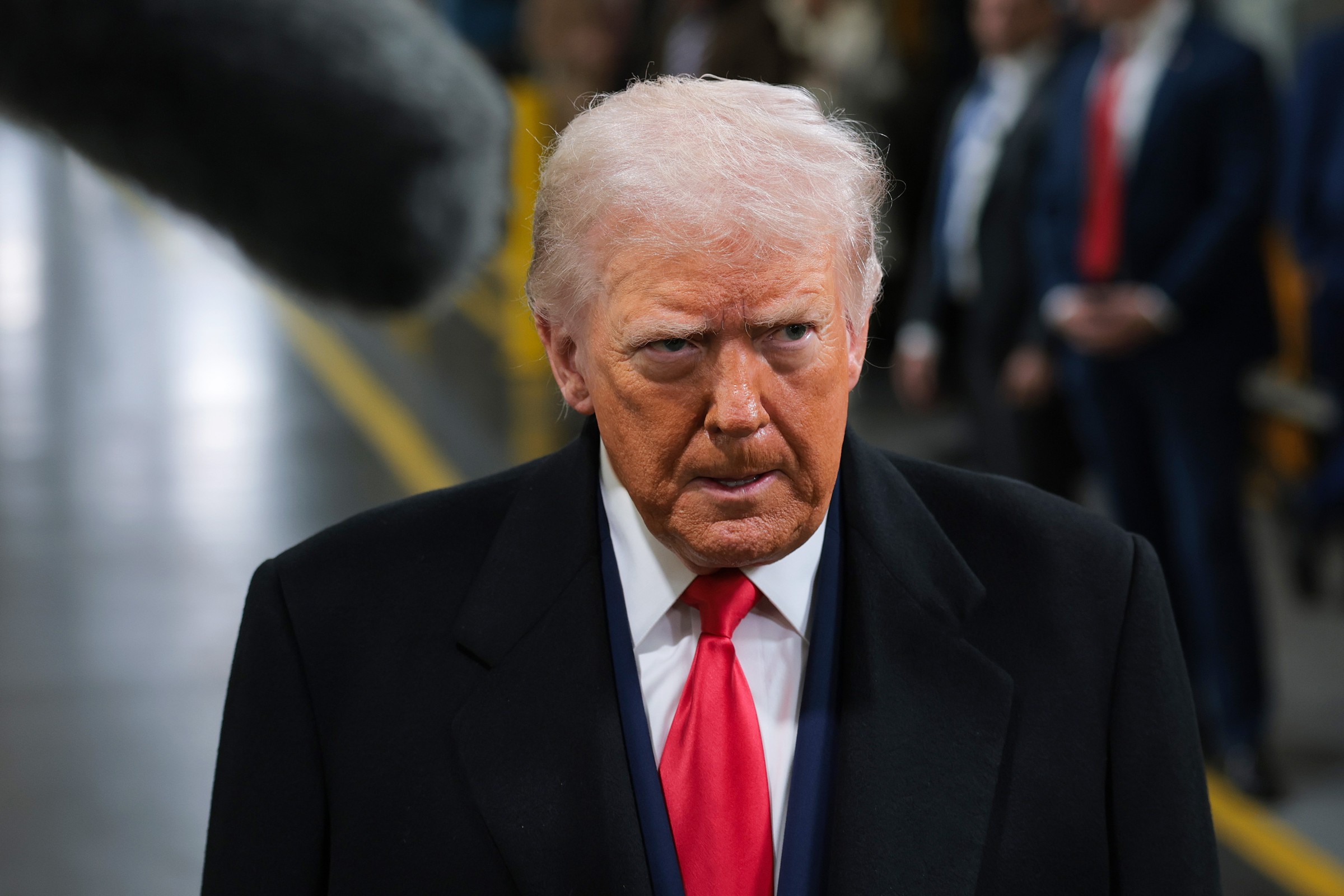
Nearly a year ago, Donald Trump delivered his inaugural speech. The world media then focused on numerous announcements made by the newly sworn-in US president – from declaring a state of emergency on the border with Mexico to declaring that the US would accept only two genders: women and men.
However, at the end of the speech there was a sentence that went largely unnoticed. Trump declared the United States a “rising nation.” He said they would be a country that “expands its territory” and “carries its flag to beautiful new horizons.”
In recent weeks, he has made it clear that one of those horizons is Denmark's Greenland. Now he has backed it up with a specific threat against Europe.
On Saturday evening, he wrote on the Truth Social website that until an agreement is reached on the “total and complete purchase of Greenland,” the United States will impose import tariffs of 10 percent. for goods from Germany, Denmark, Norway, Sweden, France, Great Britain, the Netherlands and Finland. The tariffs are to come into force on February 1 and will increase to 25% on June 1.
This step sparked reactions ranging from shock to outright horror in Europe. In Washington, too, more and more people are vocally opposing Trump's threats regarding Greenland.
“Tariffs are my favorite word,” Donald Trump admitted during the election campaign. As soon as he took office again, he imposed tariffs on almost every country in the world. In some cases it was intended to equalize the trade balance, in others it was for a completely different purpose. For example, the US president wanted to force China to limit the production of fentanyl. Tariffs are a legal means of pressure for Donald Trump, used to force concessions from other countries.
In his opinion, they will now also act in this way towards Europe. It has been building in the Republican Party in recent weeks opposition to Trump's threats to take over Greenland militarily. However, the White House did not want to rule out such a step. Stephen Miller, Trump's deputy chief of staff, stated in a televised interview that no country would dare to fight the US military.
Opposition in Congress
However, many influential senators condemned this rhetoric and made the president understand that they would not support him on this matter. Therefore, Trump decided to take a different path. By threatening customs duties, he wants to force Europe to agree to the US implementing the second option – purchasing the island.
However, this move also met with opposition from members of the Republican Party. Shortly after Trump posted on Truth Social about the tariffs, Republican Senator Thom Tillis called the threat “extremely stupid.” On Friday, he traveled to Copenhagen with a bipartisan delegation to show solidarity with Denmark.
Last June, however, Tillis announced that he did not intend to run for senator again. This makes it easier for him to openly criticize the president. The situation is different for Senator Susan Collins. He plans to run for re-election in Maine in the fall. Nevertheless, he clearly says what he thinks about the president's ideas. — “I do not support the plan to annex Greenland by force or purchase,” she said. This isn't the first time Collins has openly criticized Trump.
The president's well-known intraparty critics also include Alaska's Lisa Murkowski. She called Trump's tariff threats “unnecessary and punitive,” adding that this is a “serious error”.
Mitch McConnell, former leader of the Republican majority in the Senate, has condemned Trump's threats against Greenland in an equally strong manner in recent days. — Implementing these plans would be more disastrous for the president's legacy than withdrawing from Afghanistan was for his predecessor – he said. However, McConnell's criticism carries less weight due to the fact that he has already announced that he will withdraw from politics. This is not the case with Senator Jerry Moran from conservative Kansas. He stated that control over Greenland was “none of our business.”
Not everyone stops at criticism. Chuck Schumer, the Democratic Senate Minority Leader, announced that intends to stop the tariffs announced by Trump with a bill. Democrats are in the minority in the upper house of Congress, but Republicans have a slight advantage of only three votes. Due to numerous dissenting voices within his party, Republican Majority Leader John Thune may have to allow the vote to take place.
In the House of Representatives, however, the chances for this are smaller. Its chairman, Mike Johnson, spoke out against US military intervention in Greenland, but suggested that he was open to purchasing the territory.
Still, Trump is risking a lot by making threats against Greenland. A new Ipsos poll released on Thursday shows that 47 percent Americans oppose the takeover of Greenland. Only 17 percent would support this idea. subjects. Even among Republicans, there is no majority that would support this idea. 40 percent evaluates it positively, 46 percent are undecided, and 14 percent is against him. What's more, the number of Americans who have a negative opinion of the president's economic policies has reached a record high. According to a CNN poll published on Friday, the most important topic and problem for Americans is inflation in their country.
The fact that Trump has been focusing primarily on foreign policy rather than the economic crisis at home for several weeks has also irked the isolationist MAGA base. With midterm elections approaching in the fall, every day that Trump focuses on Greenland instead of the more important topic of inflation for Americans makes it less likely that Republicans will maintain a majority in Congress.
European leverage against Greenland's blackmail
There is an opportunity here that Europe can seize. When Trump threatened the EU with tariffs in the spring of 2025, Brussels reacted defensively. Commission President Ursula von der Leyen concluded an agreement with Trump that was favorable to the US, which set a tariff of 15%. on most European products imported into the US, while US goods can be imported into Europe duty free.
Due to Europe's dependence on Trump over Ukraine, von der Leyen was forced to make concessions to the US president on trade issues. In the Oval Office, this was interpreted as weakness. The ratification of the agreement in the European Parliament, scheduled for next week, has been suspended for now.
Another concession from Europe would be the worst thing it could do. If Trump did impose tariffs on a number of countries as he announced, they would make European products more expensive for American consumers. In light of already high inflation in the US, this would only strengthen dissatisfaction with the president's economic policy.
The Chinese government has successfully exploited this. He did not succumb to American threats to impose tariffs of 145%. — instead threatened to ban the export of rare earth metals, which ultimately prompted Trump to make concessions. The EU also has the means to defend itself against trade threats – and these go beyond retaliatory tariffs, which would primarily fall on European consumers. The strongest of them is the Anti-Coercion Instrument. It allows the EU, for example, to suspend patents, limit investments or exclude US companies from public procurement procedures.
The first reactions from European capitals show that they have changed their attitude and this time they want to decisively oppose Trump. “Neither in Ukraine, nor in Greenland, nor anywhere else in the world, will we allow ourselves to be influenced by intimidation or threats in such situations,” wrote French President Macron on X.
Swedish Prime Minister Ulf Kristersson also made it clear: “We will not allow ourselves to be blackmailed.” However, all that came from Berlin was: “The federal government took note of the US President's statements.”