Educated Poles with whom Poland has nothing to do. We have an excess of them that the West envies


While the West is desperately looking for specialists with new competences, we have plenty of them. The latest Skills Imbalance Index from the International Monetary Fund puts our country in the role of a factory of talent that our economy is not yet able to use. Are we at risk of a mass brain drain?
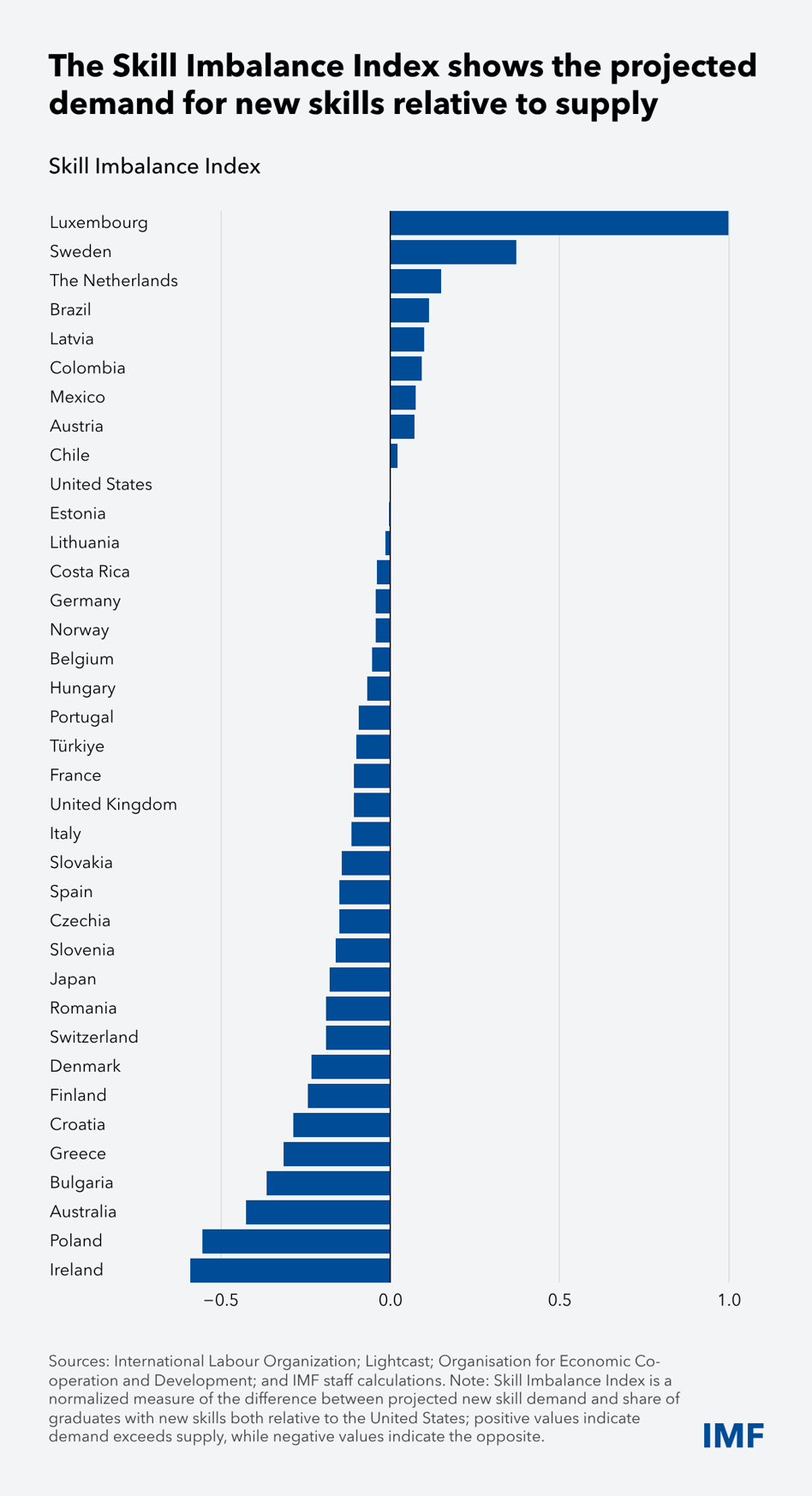
The Skill Imbalance Index published by the International Monetary Fund (IMF) sheds new light on the condition of the Polish labor market. This indicator measures the relationship between the supply of people with modern skills (including digital, technological, analytical) and the demand for them from employers.
While countries such as Luxembourg, Sweden and the Netherlands are struggling with a huge talent deficit, Poland was at the bottom of the ranking with a score of approximately -0.6. This means a profound oversupply of competences. In practice: we educate faster and better than our companies can use it.
Why is the Polish economy “not keeping up” with employees?
There are several reasons. They result from both our educational successes and the structural constraints of the economy. For years, Poland has had a very high percentage of people with higher education and excellent results in science (e.g. PISA research, programmers' successes).
However, the Polish economy is still largely based on low-tech sectors, production and shared services (BPO/SSC), which do not always require the most “future-proof” skills.
According to OECD and EC data, Polish companies' expenditure on R&D (Research and Development) is still lower than the EU average. Domestic companies are less likely to implement breakthrough technologies, which is why they do not report demand for the unique competences that our graduates already have.
The middle development trap
Although the term “Europe's assembly plant” is becoming less and less relevant, Poland still serves as a production and logistics hub. Automation is progressing in these sectors, but the demand for AI engineers or high-class data analysts is local, not mass.
Although the modern business services sector is growing, a significant part of the Polish industry is still based on simpler production and assembly. In such conditions, advanced employee skills remain unused and companies do not demand innovation at a pace that would balance the supply of talent.
Risk of “brain drain”
A negative imbalance indicator is a situation that has both good and bad sides. On the one hand, it builds our competitive advantage, on the other, it creates real economic threats. The risk of “brain drain” is very real. If high-class specialists (e.g. in cybersecurity or biotechnology) do not find ambitious projects and adequate salaries in Poland, they will emigrate to countries at the top of the chart (e.g. Luxembourg or Sweden), where demand significantly exceeds supply.
This is a waste of human capital. The state invests billions in free education for specialists who later work below their qualifications (the so-called overeducation phenomenon) or go abroad. This is a real loss for the economy in the long term. Moreover, it may give rise to another wave of social frustration, similar to that which concerned mainly low wages two decades ago. Now, however, it may be that if you have high skills, you cannot sell them on the domestic labor market.
Poland as a magnet for investments by technological giants
Despite the risks, the IMF data are an optimistic signal for foreign investors. For global technology giants such as Intel, Google and Microsoft, Poland is today a mine of talent and an ideal place to open R&D centers. In Western countries, the barrier to development is the lack of talent. In Poland this barrier does not exist. We have available, qualified staff, which may become a key argument for moving research and development centers to us, and not just operational centers.
What needs to change?
To reverse the negative effects of the imbalance, Polish companies must increase spending on innovation. Without the transformation of domestic business from the “cheap production” model to the “added value” model, we will only be an intellectual base for richer economies. For Poland, the key challenge for the coming years is not the education of human resources, but the creation of conditions for these personnel to want and have a place to work in the country.
What is the Skills Imbalance Index?
The Skill Imbalance Index uses employment data from several countries. It reflects the relative weight of potential future demand for new skills compared to supply, using the United States as the benchmark. It complements the existing AI Preparedness Index of the International Monetary Fund (IMF AI Preparedness Index), which focuses on countries' readiness in four areas important for the efficient implementation of AI.