Donald Trump retweets social media suggestion that Marco Rubio be Cuba's next leader: 'Sounds good'


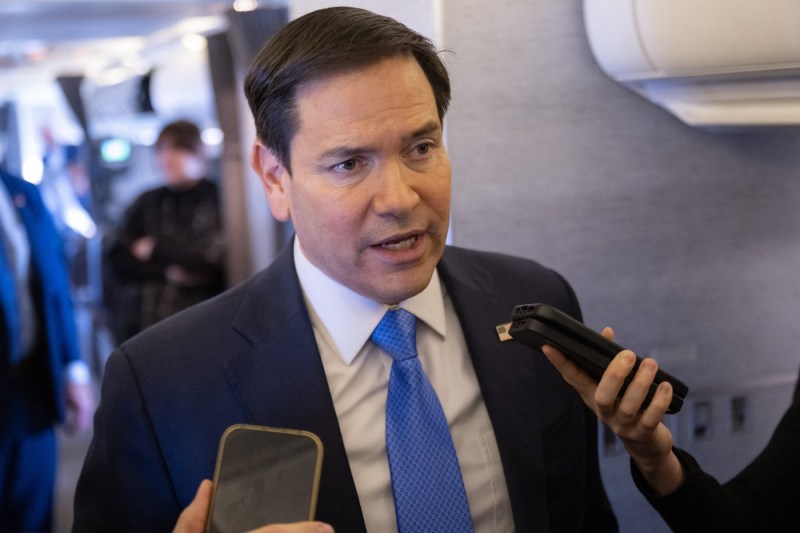
US Secretary of State Marco Rubio speaks to the press on his military plane as he flies to Jeddah, Saudi Arabia, March 10, 2025. Credit line: SAUL LOEB / AFP / Profimedia
US President Donald Trump on Sunday retweeted a message on social media suggesting that US Secretary of State Marco Rubio, born to Cuban immigrant parents, could become Cuba's next leader, AFP reports.
Trump took to his platform, Truth Social, a post published on January 8 by user Cliff Smith, which read: “Marco Rubio will be president of Cuba,” accompanied by a laughing emoji.
Trump's comment on redistributing the message was: “Sounds good to me!”
The user who originally posted the message is little known online, describes himself in his bio as a “conservative from California” and has fewer than 500 followers.
The post retweeted by Trump comes a week after US forces launched a nighttime military operation in Caracas that captured Venezuelan President Nicolás Maduro in an operation that left dozens of Venezuelan and Cuban security forces dead.
Also on Sunday, Trump urged Cuba to “make a deal,” warning that it would face unspecified consequences if it did not and that the flow of oil and money from Venezuela to Havana would stop.
“Cuba will get no more oil and money – zero! I strongly suggest they make a deal before it's too late,” Trump wrote on his social media platform, Truth Social.
Since the capture of Venezuelan President Nicolas Maduro by US forces, US President Donald Trump and members of his administration have issued warnings to several other governments, namely those of Colombia, Cuba, Mexico, Iran and Greenland, an autonomous territory of Denmark, that they could follow.
Trump also said that military intervention is not necessary in Cuba, a key ally of Venezuela, because it is “ready to fall.”
“I don't think any action is needed,” Trump said. “It looks like it's collapsing.”
“I don't know if they will last, but Cuba now has no income,” he added. “All their income came from Venezuela, from Venezuelan oil,” he explained.
The U.S. ouster of Venezuelan dictator Nicolas Maduro has shaken the country of fewer than 10 million people, which has long relied on Venezuela for oil imports that have barely kept its small economy from collapsing.