Blow to Trump: Senate votes to limit his powers over further military action in Venezuela. “Bombing another nation's capital is an act of war”


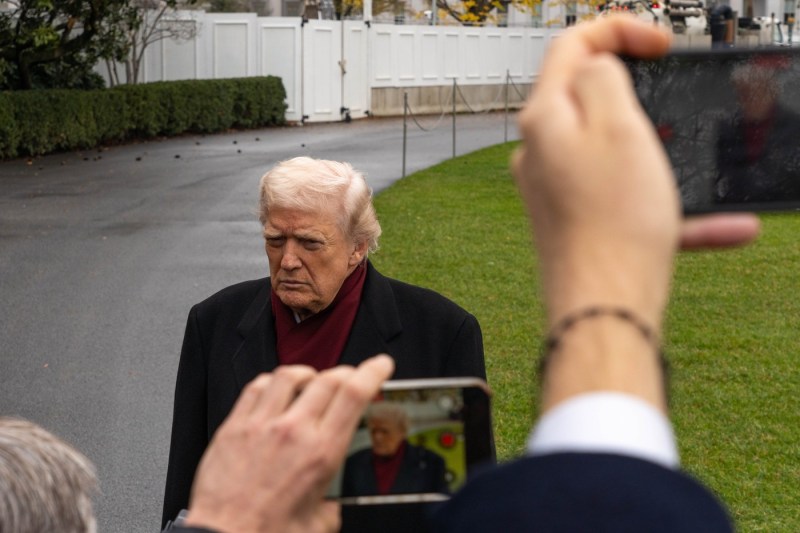
Donald Trump, November 22, 2025, Washington. Credit line: Joey Sussman / Zuma Press / Profimedia
The US Senate on Thursday advanced a resolution that would bar President Donald Trump from taking further military action against Venezuela without authorization from Congress, paving the way for further consideration in the 100-member upper chamber, Reuters and AFP write. The Senate's gesture expresses clear disapproval of the White House leader's expanding ambitions for influence in the Western Hemisphere, notes The Associated Press.
The vote on a procedural measure to advance the resolution on the US president's war powers was 52 to 47, with a handful of Trump's fellow Republicans — five to be exact — voting with all Democrats in favor of proceeding.
The vote came days after US forces captured Venezuelan President Nicolas Maduro in a dramatic military raid in Caracas. Two previous attempts to pass similar resolutions were blocked in the Senate last year by Trump's Republican colleagues, as the Washington administration stepped up military pressure on Venezuela with attacks on ships in the southern Caribbean since September.
The final vote, expected next week, is now considered more of a formality and would mark one of the strongest assertions of Congress's wartime authority in decades.
But the effort is seen as largely symbolic, as the resolution faces a difficult ascent in the House of Representatives and has little chance of surviving a likely veto from Trump.
“An Act of War”
The air and naval strikes, as well as Maduro's midnight capture in Caracas, were seen by lawmakers in both parties as going beyond a limited law enforcement operation and undeniably entering a war-like phase.
“Less brave members of Congress are huddling to avoid taking responsibility, to avoid the important vote to declare war,” said Sen. Rand Paul, the Kentucky Republican who broke with much of his party to support Thursday's resolution.
“But rest assured that bombing another nation's capital and removing its leader is an act of war, plain and simple. No provision in the Constitution gives such power to the presidency,” the Republican senator added.
Trump said in an interview published Thursday that the United States could rule Venezuela and exploit its oil reserves for years, telling The New York Times that “only time will tell” how much Washington will seek direct oversight of the South American nation.
Democrats are presenting the resolution as a constitutional line drawn in the sand after what they described as months of misleading information, including assurances from the administration as far back as November that it was not planning attacks on Venezuelan soil.
The Washington administration argued that Maduro's operation was legally justified as part of a broader campaign against transnational drug trafficking, characterizing it as a fight against cartels designated as terrorist organizations.
Republican leaders have largely defended the president, citing his authority to take limited military action in defense of US national security.
“It's something that should have happened, probably in a previous administration,” Sen. Markwayne Mullin of Oklahoma told reporters Wednesday.
“Only President Trump had the courage to do it, to remove a criminal and illegitimate president who was holding Venezuela hostage,” the Republican senator added.
Since Trump returned to power, war powers resolutions on Venezuela have been defeated twice in the Senate and twice in the House of Representatives.
In the past century, only one congressional resolution has successfully imposed a broad and lasting limit on the president's unilateral military actions abroad: the War Powers Resolution of 1973, passed over the veto of then-President Richard Nixon.
 Donald Trump plans to take over Venezuela's oil industry and has calculated the price of crude oil / Map of Venezuela's oil resources
 The three-step plan for Venezuela revealed by Marco Rubio in a secret meeting. Democrats, shocked by its 'scale and insanity'