
The government is laying down its weapons in the fight against the pathology of junk contracts? Prime Minister: We will find better ways

2026-01-08 13:00
publication
2026-01-08 13:00
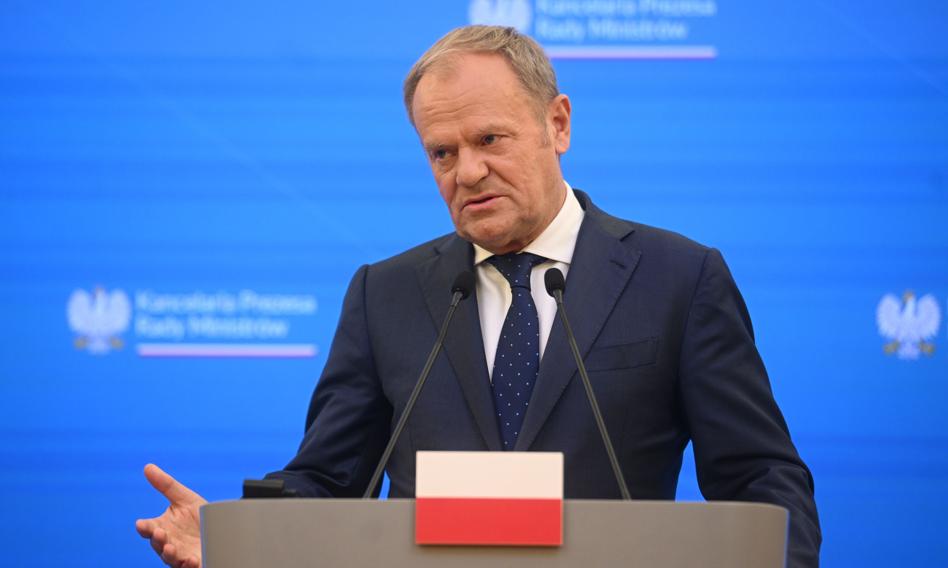
The possibility of an official changing the form of employment without asking for the opinion of the employer or employee and without a court judgment is a bad idea – said Prime Minister Donald Tusk on Thursday, referring to the project of reforming the National Labor Inspectorate. He said the government would find better ways to protect workers.
The draft act on the reform of the National Labor Inspectorate, developed at the Ministry of Family, Labor and Social Policy, included, among others: enabling district inspectors to change contracts for specific work, mandate contracts or B2B contracts into employment contracts. At the beginning of December last year the regulation was adopted by the Standing Committee of the Council of Ministers. On Tuesday, Prime Minister Donald Tusk announced that work on the PIP reform will not continue. As he explained, excessive power for officials introduced by the reform would be destructive for companies and would mean many people losing their jobs.
Storm after the Prime Minister's decision
The Prime Minister's decision sparked wide comments in the public space. The head of government referred to the topic again and said via social media that the government would find better ways to protect employees.
“The possibility of an official changing the form of employment without asking the opinion of the employer or the employee and without a court verdict is a bad idea. Our task is to free the economy and citizens from excessive regulations and bureaucracy. We will find better ways to protect employees,” Tusk said on the X platform.
Government spokesman Adam Szłapka announced on Wednesday that the Prime Minister will soon meet with the Speaker of the Sejm, Włodzimierz Czarzasty, regarding the PIP reform.
In turn, the Minister of Family, Labor and Social Policy, Agnieszka Dziemianowicz-Bąk, said in the Sejm on Wednesday that will talk with coalition partners about an effective tool to combat the “pathology of junk contracts.” – This is a problem that the Left wants to fight, it is a problem that the Left will fight, but what specific tool will be used and what shape this tool will have will of course be agreed with the coalition partners. If there is an expectation that something should be clarified or changed, this conversation will be held – declared the head of the Ministry of Labor and Social Policy.
In turn, the main one Labor inspector Marcin Stanecki assured that he was ready to cooperate when clarifying doubts regarding the project. He emphasized that the regulation, even without the most controversial changes, is beneficial for entrepreneurs and inspections.
The PIP reform in this form, especially the possibility of transforming civil law contracts into employment contracts, has sparked discussions. Entrepreneurs were against this change and trade unions defended it.
The proposed solution was assessed negatively by, among others, Government Legislation Center. The comments on the draft state that the regulation violates the constitutional principles of freedom to conduct business activity, freedom to choose and pursue a profession, and choice of place of work.
In response, the Ministry of Labor emphasized that the project does not introduce arbitrary violations of the freedom to conduct business activity, but it specifies the procedure for detecting and correcting abuses in the use of civil law contracts in place of the employment relationship. According to the ministry, the reasons for introducing new powers for inspectors include, among others: the scale of the phenomenon of concluding civil law contracts instead of employment contracts, which absolutely must be prevented.
Project details
The bill on the PIP reform also provided for: exchange of information and data between ZUS, PIP and KAS for the purposes of risk control and analysis; improving PIP inspections by introducing remote inspections and using technical devices enabling remote inspection activities, introducing electronic documentation prepared during inspections, in particular inspection protocols. The regulation also introduced, among others: solutions regarding the amount of fines for offenses against employee rights, aimed at ensuring more effective protection of employees and acting as a deterrent for employers who do not comply with labor law provisions. (PAP)
kkr/ agz/


