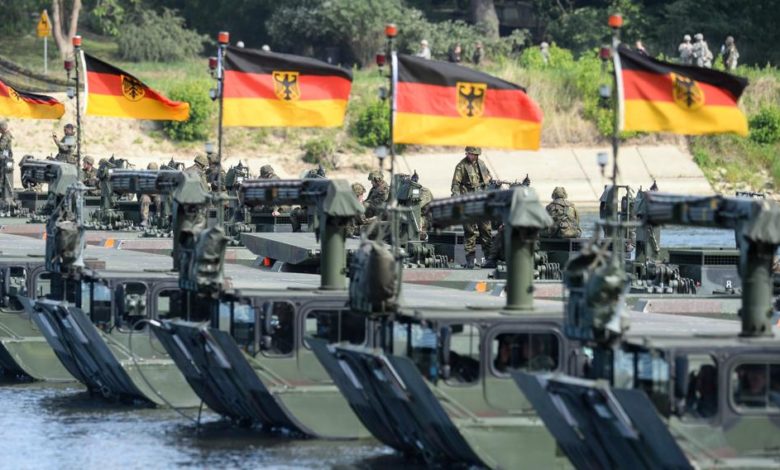
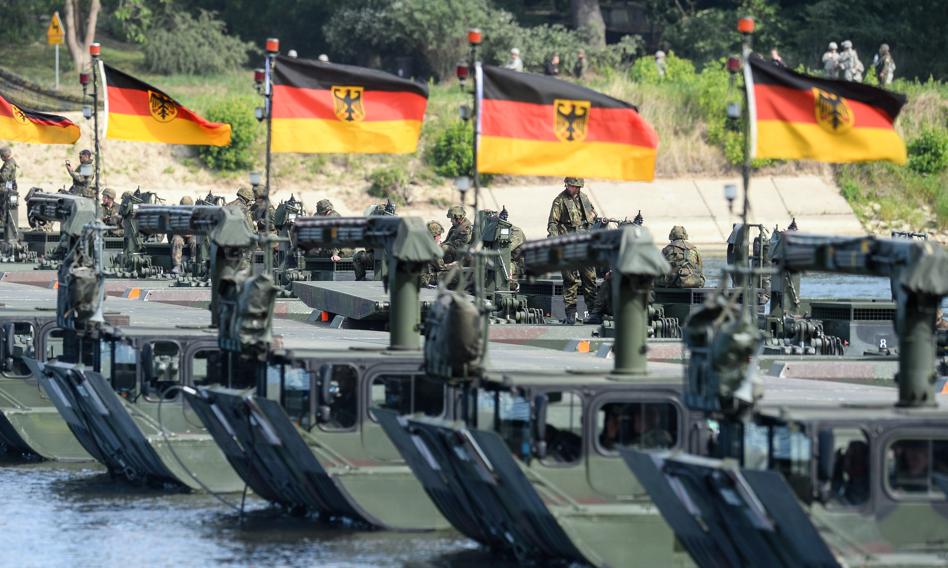
Record billions and a new model of military service are intended to strengthen the Bundeswehr after years of neglect. The scale of defense spending is historic, but the German armed forces may have a serious problem with gaining new personnel, Dr. Karol Janoś from the Western Institute told PAP.
The German parliament passed in December, after long negotiations and public protests, new model of military service. It provides for compulsory military qualification for all young men and the possibility of introducing conscription by lot if the number of volunteers turns out to be insufficient. However, the new regulations do not mean the automatic restoration of universal military service and entered into force on January 1.
According to Dr. Karol Janoś, an expert on German security policy from the Institute for Western Affairs, the adopted model will most likely not solve the Bundeswehr's personnel problems.
– The needs of the German army are very great. By 2035, the Bundeswehr would have 260,000 soldiers. professional and contract soldiers and 200,000. reservists. Currently, the army numbers approximately 182,000. soldiers and approximately 50 thousand reservists – pointed out Janoś.
He also emphasized that the actual staffing demand may be higher, taking into account the demand reported by some commanders of individual types of Bundeswehr troops.
Janoś reminded that The Bundeswehr has not yet achieved the numerical goal set in 2018, when Ursula von der Leyen was in charge of the Ministry of Defense. According to these assumptions, the German army was to number 203,000 in 2031. soldiers. In his opinion, in the long run, the introduction of partial mandatory collection may prove necessary.
The expert pointed out that the new model of military service had been negotiated for a long time, and work on it was carried out in an atmosphere of tension within the government coalition. – The vote in the Bundestag was accompanied by protests by students, parents and families with children in many towns in Germany – he added.
In accordance with new regulations The Ministry of Defense will inform the Bundestag every six months about the degree to which the Bundeswehr's numerical goals are being achieved. If they are not achieved or the security situation requires it, the Parliament will be able to decide to launch partial collection by drawing lots.
Public opinion polls show that only 16 percent people aged 14-29 imagine their service in the German armed forces. Among young men, this percentage is approximately 30%. – according to a survey by the Forsa Institute. – Support for compulsory conscription is highest among older people, i.e. those who are not directly affected by it. The younger the respondents, the greater the opposition, noted Janoś.
In parallel Germany is significantly increasing its defense spending. Next year they will allocate approximately EUR 108 billion for this purposeof which approximately EUR 83 billion will come from the budget of the Ministry of Defense, and approximately EUR 25 billion from a special fund for the modernization of the Bundeswehr. The release of these funds is linked to specific military orders.
As Janoś noted, expenses are expected to continue to grow in the coming years. – In 2028, over EUR 136 billion has been planned for defense, and in 2029 – over EUR 152 billion. Germany itself will soon spend more than the European Union has planned for 19 member states in the SAFE program, he emphasized. He added that freeing military spending from the debt brake rule was a breakthrough decision that significantly increased the government's ability to act.
In December, the Bundestag budget committee approved a package of purchases of Bundeswehr equipment and weapons worth approximately EUR 50 billion. As Janoś pointed out, this amount corresponds to the 2021 budget of the Ministry of Defense. He also recalled that in 2025, total expenditure on new equipment and armament for the army reached approximately EUR 83 billion.
Increased financial outlays translate into accelerated modernization of the army. The expert emphasized that equipment shortages affected all types of armed forces, and for years the Bundeswehr received weapon systems with significant delays. – Since the announcement of the epoch-making breakthrough, we have been observing a growing number of new orders for equipment and weapons, he noted.
The land forces plan to include, among others: further purchases of the latest version of Leopard 2 tanks and an increase in the number of infantry fighting vehicles and armored personnel carriers. The air force will gain multi-role F-35 fighters, some of which are to be allocated to NATO's Nuclear Sharing program. At the same time, Germany is investing in the development of Eurofighter aircraft in cooperation with other European countries, Janoś said.
The Bundeswehr's operational doctrine is also to change. Long-range strike capabilities are becoming increasingly important, especially in land-based systems. – According to the announcements of the command of the land forces, the ability to conduct distance combat is to be of priority importance – said the expert.
In preparations for a potential large-scale conflict in Europe, Germany places emphasis on the development of land forcesbut at the same time they are expanding their navy. Purchases of modern surface and underwater units are planned, including: in cooperation with Norway, and intensifying cooperation with Great Britain and the Scandinavian countries.
The Bundeswehr is also strengthening its reconnaissance capabilities. Germany will soon have a fleet of P-8A Poseidon patrol aircraft, intended for, among others, for detecting and combating submarines. Some of them will be stationed in Great Britain and operate in cooperation with the local armed forces.
Investments in modernization are also an important element of modernization space abilitiesincluding satellite systems, and in the development of drones. – Unmanned systems will play an important role on the future battlefield – emphasized Janoś.
According to the expert, the current scale of reforms and spending is a response to many years of neglect.
– Before the Russian invasion of Ukraine, the Bundeswehr was struggling with deep structural problems, including an inefficient and extremely bureaucratic military procurement system. Decisions made at a low level required approvals at many levels, which made the entire process slow and inefficient, he noted.
As Janoś recalled, the army crisis in Germany became visible to public opinion immediately after the outbreak of the war in Ukraine, when the commander of the land forces admitted that the Bundeswehr was basically “naked”. – The change in security policy announced at that time by Chancellor Olaf Scholz and the creation of a special fund of EUR 100 billion for the armed forces by Chancellor Merz can be described as groundbreaking decisions, although it was clear from the beginning that this amount was insufficient. Since then, however, we have observed a gradual intensification of activities aimed at strengthening the capabilities of the Bundeswehr, which orders a lot – concluded the expert.
From Berlin Iwona Weidmann (PAP)
ipa/zm/