The probability of a recession in the Russian economy is growing rapidly, warns the analytical Center for Macroeconomic and Short-Term Analyzes (CMACP), considered to be close to the Kremlin. As the center's analysts warn, the signal of a high risk of recession already appeared in the statistical data for June and is becoming more and more clear with each subsequent month.
This warning is generated by CMACP's Leading Recession Indicator (SOI). In October, its value increased dramatically to 0.32 (compared to 0.24 a month earlier), clearly exceeding the critical threshold of 0.18. According to the center, this means that By July 2026 inclusive, the Russian economy will most likely enter a recession phase.
The crisis is getting closer and the prospect of recovery is receding. War, sanctions and monetary policy create a system in which the Russian economy has no good scenarios for 2026.
Initially, the early warning system indicated a risk of recession mainly due to very high interest rates. Although rates have started to fall since June, the warning signal is not weakening at all – quite the contrary. This means that other factors have come into play, such as a decline in Russian business confidence and a general slowdown in economic activity.
CMACP defines recession differently than the classic approach assuming a decline in GDP for two consecutive quarters. In his methodology, recession means a decline in the real volume of GDP calculated over the last twelve months.
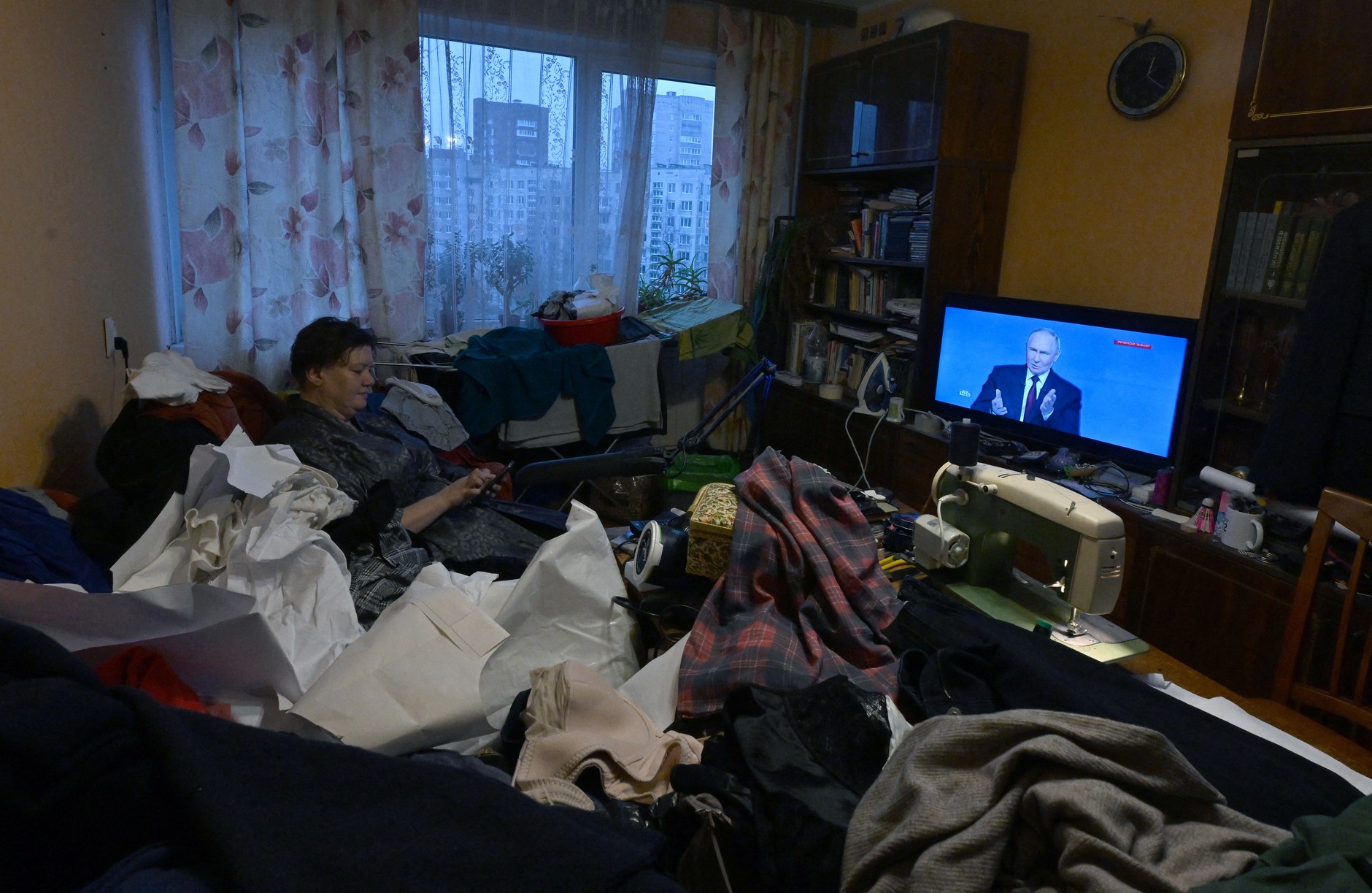
A Russian woman watches the telecast of Vladimir Putin's annual press conference at her apartment in St. Petersburg, Russia, December 19, 2025.Olga Maltseva AFP / AFP
For this reason the slowdown in growth itself gradually increases the probability of recessionalthough formally – according to this method – it appears later. According to this approach, the last recession in Russia occurred in November 2022. During the rolling year (November 2024 to October 2025), the GDP growth rate was 1.7%. and is still systematically decreasing.
At the same time, the Center emphasizes that the “activation” of a signal about a high probability of recession does not mean that it is inevitable.
The light at the end of the tunnel is fading
At the same time, the readings of another leading index – regarding the Russian economy's recovery from recession – are deteriorating. In October, its value dropped sharply from 0.345 to 0.1, clearly below the critical threshold of 0.35.
This means that for the second month in a row the indicator signals that the upcoming recession may be long-lasting and last over a year. However, for a signal to be officially recognized as binding, it must persist for 12 consecutive months.
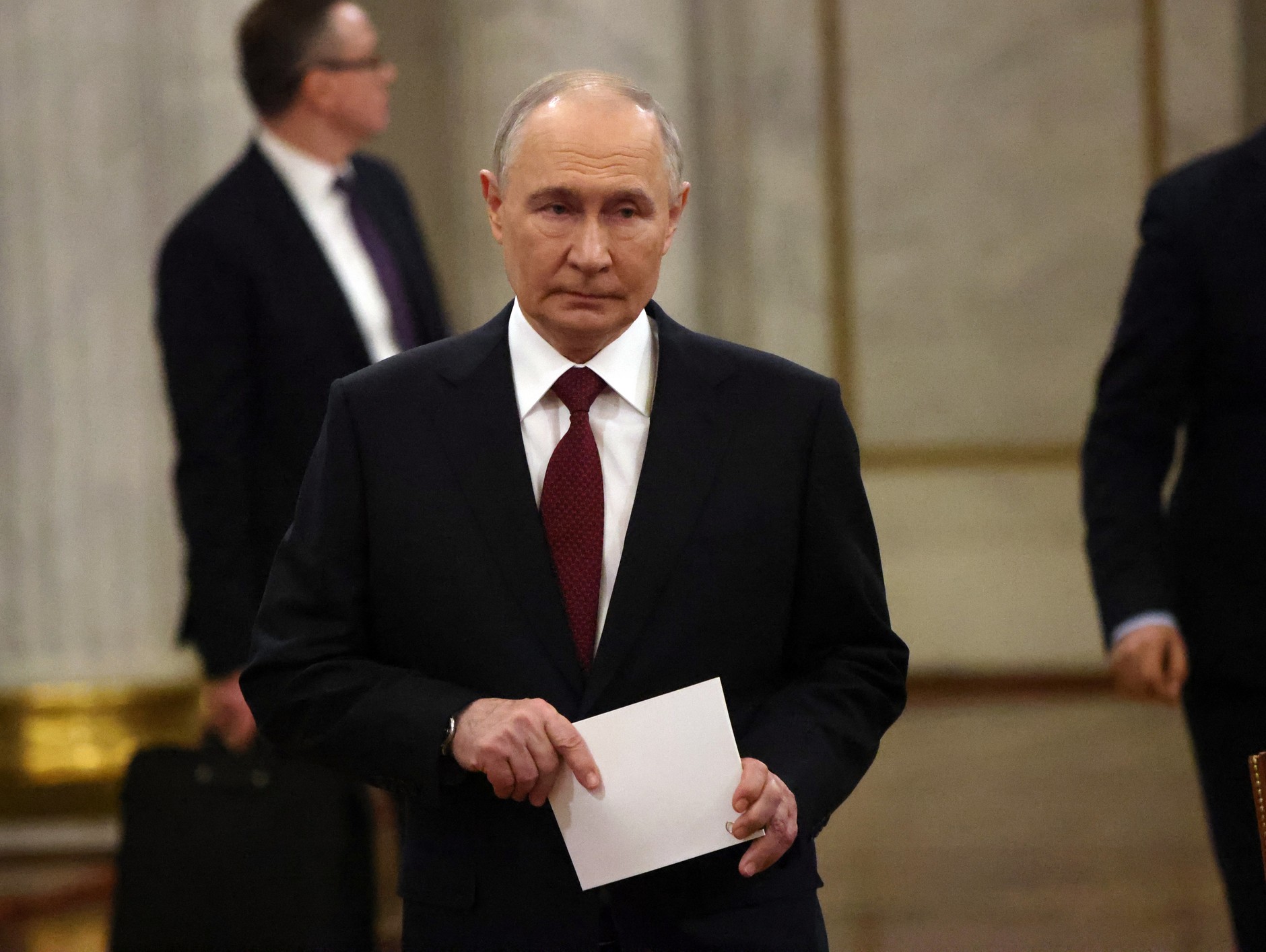
Russian President Vladimir Putin, Petersubrg, Russia, December 22, 2025.Contributor / Contributor / Getty Images
The deterioration of the recession exit rate was primarily due to the cumulative effects of the strengthening of the ruble, which threatens to further deteriorate the trade balance, as well as the expected slowdown in the growth of the global economy – especially the US economy.
No growth, no money
The Center for Strategic Research has previously warned that with such a restrictive monetary policy, the chances of avoiding a recession are minimal.
Even if it is formally avoided, the vast majority of forecasts predict long-term stagnation for Russia. When the budget impulse runs out or is limited, there is a real risk of returning to the stagnation scenario of 2014–2020, with an average growth rate of only 0.4%. annually.
Such a development of events is quite likely even if sanctions are eased, warned the chief economist of Vneshekonombank, Andrei Klepach, and the director of the Institute of Economic Forecasts of the Russian Federation, Aleksandr Shirov.
Without real economic growth, the budget's possibilities will remain very limited and the state will be left without the means to stimulate the economy with additional spending
— notes economist Sergei Aleksashenko.
In his opinion, the Russian economy is entering the new year trapped on three sides:
the war continues to drain its financial, material and human resources;
high interest rates will suffocate businesses (in addition, there will be a reduction in civil budget spending and a decline in demand);
sanctions limit access to modern technologies and equipment, reducing production potential and making it increasingly obsolete and less effective.
— In such a situation, it is difficult to imagine that the economy could develop, concludes Aleksashenko.
The end of the war does not guarantee improvement
Moreover, Alexashenko draws attention to the paradox that ending the war could increase, not reduce, the risk of recession in the short term.
A quick reduction in the size of the army would mean a decline in the income of hundreds of thousands of households living on military contracts and related benefits.
At the same time, even a slight reduction in arms production – today one of the main drivers of Russian industry – would translate into a decline in industrial production, hitting companies, regions and jobs heavily dependent on state orders.
As a result, domestic demand could weaken faster than the economy could find new sources of growth.
I’m Ashley Davis as an editor, I’m committed to upholding the highest standards of integrity and accuracy in every piece we publish. My work is driven by curiosity, a passion for truth, and a belief that journalism plays a crucial role in shaping public discourse. I strive to tell stories that not only inform but also inspire action and conversation.