Russia will use taxpayer money to continue funding the war in Ukraine. Higher taxes and stagnant economy in 2026


Russia, whose economy is increasingly affected by the costs of the war in Ukraine and international sanctions, will call on taxpayers' savings starting in 2026 to support the military campaign, according to an analysis by EFE. At the same time, key industries are struggling and the domestic market is increasingly dominated by Chinese companies.
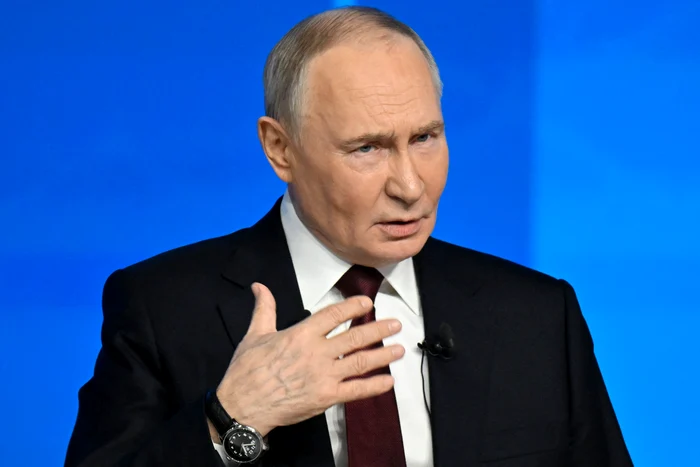
Putin decided to continue the war and postpone peace negotiations. PHOTO: AFP
The Russian Ministry of Finance recently announced an increase in the VAT rate from 20% to 22% starting next year, justifying the measure by the “strategic priority” of ensuring the financing of security and defense, as well as social support for the families of those involved in “special military operation” from Ukraine, as the Russians call the invasion from Ukraine.
Despite rising prices, falling investment and shrinking domestic demand, President Vladimir Putin has decided to continue the war and delay peace talks until the Kremlin's goals are met. Recently, in the State Council, Putin claimed that the population will understand and support the increase in taxes, as long as the state respects its social obligations and guarantees national security, reports Agerpres.
The energy industry and large state companies in crisis
Strategic sectors such as oil, gas, coal and metallurgy are facing major difficulties, as are large state corporations, including Rosatom, RusHydro and the railway company RZhD. Following the latest US sanctions on Rosneft and Lukoil, revenues from oil and gas exports fell 35% in November and could see a further 50% decline in December.
However, the authorities in Moscow cannot afford to save these companies through capital injections, due to high inflation and efforts to moderate it, in conditions where the investment climate has already been seriously affected.
“The dynamism of the economy at the moment is almost zero. It is like a car in neutral with the engine running, as is the case with the military industry, which is running at full power.” said economist Aleksandra Prokopenko, from Carnegie.
Russian Deputy Prime Minister Aleksandr Novak admitted this week that Russia will not emerge from economic stagnation before 2027. The Economy Ministry forecasts GDP growth of just 1% this year, compared to 4.1% in 2024.
Increased fiscal pressure on the population
In the context of the drastic decrease in budget revenues, the Kremlin chose to increase the fiscal burden instead of reducing spending. In addition to the VAT increase, income and profit taxes will be increased, tax breaks for the self-employed and most SMEs will be removed, and car taxes will increase, despite the difficulties in this sector.
Technology companies will be among the hardest hit, paying a double tax, from 7.6% to 15%. At the same time, the authorities continued confiscation of private assets, their value reaching approximately 50 billion dollars, almost 2% of GDP, following the nationalization of more than 100 assets from 2022.
Risk of stagflation and tensions between authorities
Economists warn that the new tax measures could trigger a chain reaction, with further declines in demand and increases in prices. The Russian opponent Igor Lipsiț believes that SMEs will be the most affected and that the measures will stimulate the underground economy.
At the same time, the strong appreciation of the ruble – by 45% this year – creates additional problems for the economy, with the risk of stagflation, i.e. economic stagnation combined with a significant increase in prices. Experts expect the dispute between Russia's Central Bank, which supports a tight monetary policy to fight inflation, and the business community, which is calling for a weaker ruble and lower interest rates to revive investment, to intensify.