“NATO support”. This is how the strongest army in Europe is created

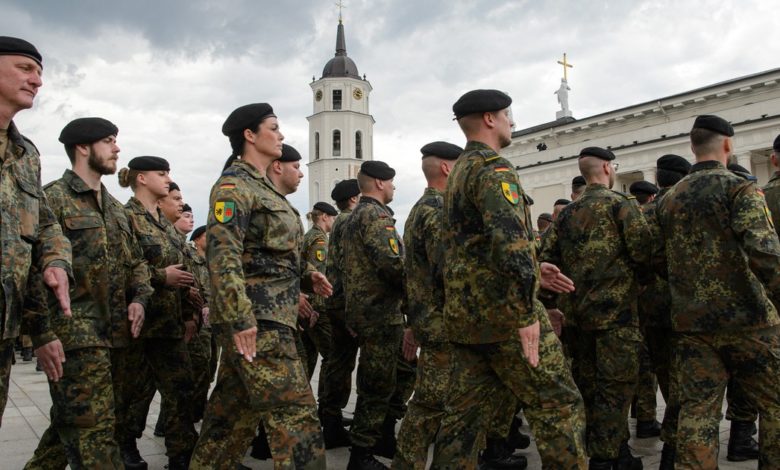
German armored brigade in Lithuania, which will have 5,000 by 2027. soldiers, it is The first permanent German unit arranged abroad since World War II.
It is also a clearest sign of an unusual return of the country, which after 1990 fully benefited from the peace dividend, protecting itself under the American umbrella, while his own army declined, and commercial ties with Russia tightened.
This time they were invited. On May 22, the locals cheered at the sight of how German tanks passed through the streets of Vilnius, the capital of Lithuania, once occupied by the Nazis. City buses displayed a tribute to fraternal ties connecting NATO allies.
Still, when the Bundeswehr orchestra played the “Preussens Gloria” march [“Chwała Prus”]some German dignitaries gathered at the inauguration of the 45th Armored Brigade felt a slight anxiety. Only the view of the radiant faces of Lithuanian counterparts allowed them to enjoy the spectacle.
The decision to send soldiers to Lithuania was made in 2023 as part of “Zeitenwende”, or “turning point” in the security policywhich was initiated by the then Chancellor Olaf Scholz after Russia's invasion of Ukraine. According to the Stockholm International Institute of Room research Fourth largest defense budget in the world.
This is not the end. New government – supported by a recent decision to alleviate the so -called German debt brake, i.e. a fiscal safety vest – plans to further increase defense expenditure. Indeed, the reinforcements are to become his primary mission.
NATO key pillar
Chancellor Friedrich Merz announces that he intends to make the Bundeswehra “The strongest conventional army in Europe”. He also signaled that Germany was striving for a new long -term purpose of defense expenditure in the amount of 3.5 percent. GDP plus 1.5 percent for related infrastructure, which at the current level of production would mean EUR 215 billion (PLN 912 billion) per year.
Like Lithuanians, almost all German allies are delighted with Berlin's late involvement in European security. The Germans themselves, although not without certain historical dilemmas, are also heading in this direction.
The Scholza fund largely “filled the holes”, as General Carsten Breuer, the head of the armed forces, put it, but there is still a lot to do. The upcoming wave of expenses will be aimed at strengthening the role of Germany as a “key pillar” of NATO. Priorities are strengthening of air defense, supplementing ammunition reserves and building the ability to precisely strokes over long distances.
The priorities of officials are clear. – Time is crucial – says German military general Alfons Mais, encouraging the German defense industry to focus on mass production. The subject experts are skeptical about building national or European industry at the expense of ready solutions from other countries, such as the USA, in the name of “strategic autonomy”. – If we encounter delays or problems with deliveries in the country, it is better to accept a wider approach and check who can provide us with the necessary equipment – says Mais.
Some are afraid that Germany They do not draw conclusions from Ukraine's experiencewhere drones were used, which made the battlefields under constant supervision. – Technology in Germany is amazing – says Nico Lange, a former official of the Ministry of Defense. “But politicians don't know how to use it,” he adds.
Overloaded with formalities
Nobody wants to war, gathering drones that quickly become outdated. Planners, however, must ensure that Germany does not remain excessively dependent on older systems. -We need a market-oriented industry, which introduces innovations, bears failures in one place, and is successful in another, using private capital-says Gundbert Schef, co-infidual general of Helsing, a start-ups dealing with land, air and sea systems based on artificial intelligence.
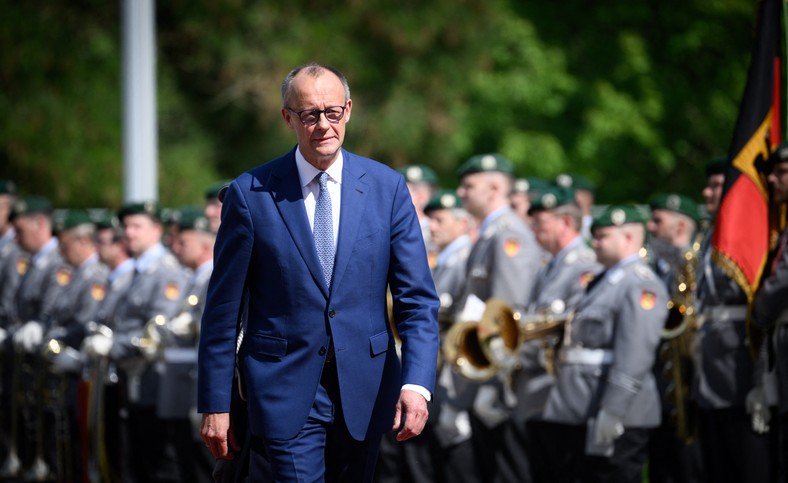
German Chancellor Friedrich Merz, Berlin, June 11, 2025.
Modernization of the Bundeswehr also means fight with slow bureaucracy in the field of planning and public procurement. When Merz proposed to change the debt brake, he said that he would do “everything necessary” to protect peace and freedom in Europe. However, the opening of chanterelles with money inevitably reduces the pressure on reforms – notes Claudia Major from Think Tank German Marshall Fund.
The German Federal Accounting Chamber recently called on to “far -reaching changes” in the Bundeswehra, which in her opinion became “overloaded” management. Many experts share this analysis. “Orders last too long,” Mais regrets. – Signing the contract is one thing, and providing equipment to soldiers is something completely different.
It is often heard that Germany is idealizing their processes, imposing troublesome requirements, such as ensuring that tanks are suitable for pregnant women. – Current solution at 80 percent It is better than a 100 % solution. In five years – says Matthias Wachter, head of security policy in the German industry federation. The German IRIS-T air defense system, which has proven itself in Ukraine, is still tested for domestic use.
The task of overcoming these obstacles rests with the Minister of Defense Borisie Pistorius, whose direct way of expressing him made him The most popular German politician. Despite this, not everyone is convinced that he has enough patience to seriously face the bureaucracy of the Bundeswehr.
– He is the best minister we have had for years – says Sara Nanni, a MP of the Green Party in the Bundestag Defense Committee. “But it can be somewhat superficial,” he adds. New Act on the impressive name “Planungs— und Beschaffungsbeschleunigungsgesetz” [ustawa o przyspieszeniu planowania i zamówień publicznych] It aims to alleviate some regulations. However, just adjusting the system may not be enough.
Attitude towards the army
Are Germany ready to prepare for the war, as Pistorius demanded? Scholz was afraid of renewal social divisions From the time of Covid-19 pandemic in a country that is still skeptical of military force. The former chancellor was cautious in his statements and hesitated to help Ukraine. Merz speaks in a sharper tone. The remains of an old attitude are still visible, for example in the form of a voluntary ban on accepting government funds for military research, which applies at dozens of universities.
The major is afraid that if Ukraine is forced to “suspend a weapon”, the impetus of recent years may be wasted, and appeals for diplomacy and relaxation in relations with Russia will gain momentum.
So far, perhaps because bypassing the debt brake allowed Germany to avoid choosing between reinforcements and social expenses, Voters mostly support changes. The attitude towards the army is also changing. Soldiers are amazed at the respect they enjoy in their everyday life. – Sometimes, when I'm on the street, people stop me to thank me for my service – just like in the USA! – confesses one of the cadets.
The more difficult test will come, however, when Germany begins a serious debate on the restoration of consumption to the army, which was suspended during the reign of Angela Merkel in 2011. It is difficult to achieve the number of soldiers over 180,000, which significantly differs from the current goal of 203 thousand. Given the obligations to NATO, Breuer believes that by 2029 Germany will need 100,000. additional soldiers, including reservists.
For now, Merza's government hopes to achieve this goal through compulsory surveys for 18-year-old men (extending surveys to women would require a change of constitution). It will give at least time to rebuild the crumbling barracks and employ military instructors that a larger army needs. However, almost no one believes that it will be possible to avoid a compulsion element. “I am absolutely convinced that this debate will take place,” says Mais. According to public surveys, most Germans are in favor of restoring consumption to the army. Support is the lowest, which is not a surprise among young people.
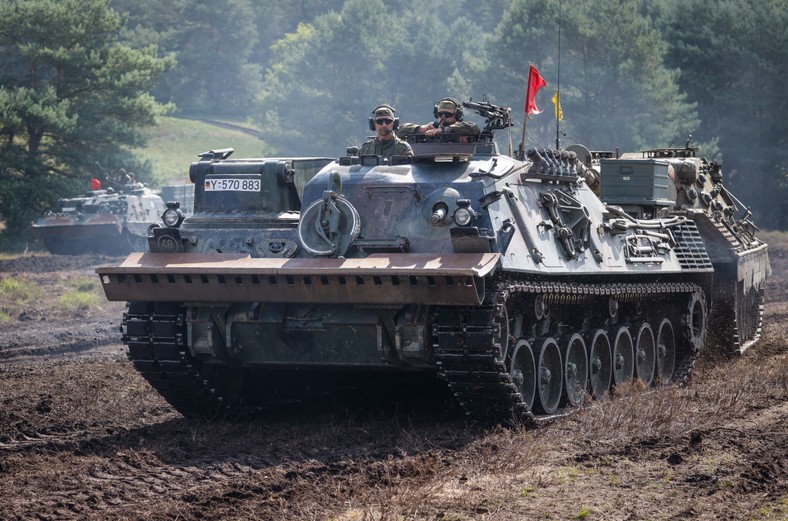
Exercises of the German army, Osterholz-Scharmbeck, June 28, 2025.
Long way
The diverse problems of Germany found expression during the recent event of Zeitenwende on Tour in Gorlitz, a city in eastern Germany, located at the border with Poland, where almost half of the voters support the far -right, pro -Russian party alternative to Germany. The former defense official Lange conducted a discussion about arms against a controversial audience.
Some with anger blamed the NATO extension for the war in Ukraine or made comments against weapons producers. Others opposed these opinions. Andre, an employee of a hospital who came from Dresden to support the idea of re -armament, claims that this issue divides his colleagues in a 50:50 ratio.
“The government should do this from the very beginning,” says Lange. He has been preparing his appeals for three years. It is a tedious work, especially since Germany is currently asked to sacrifice to other countries. In Vilnius, Merz said that “Lithuania's security is also our safety.”
This clear statement regarding his country's obligations towards NATO also means difficult requirements for ordinary Germans. Perhaps only now this message is starting to reach the recipients.