The world has gone crazy about Advent calendars. “It was too much”

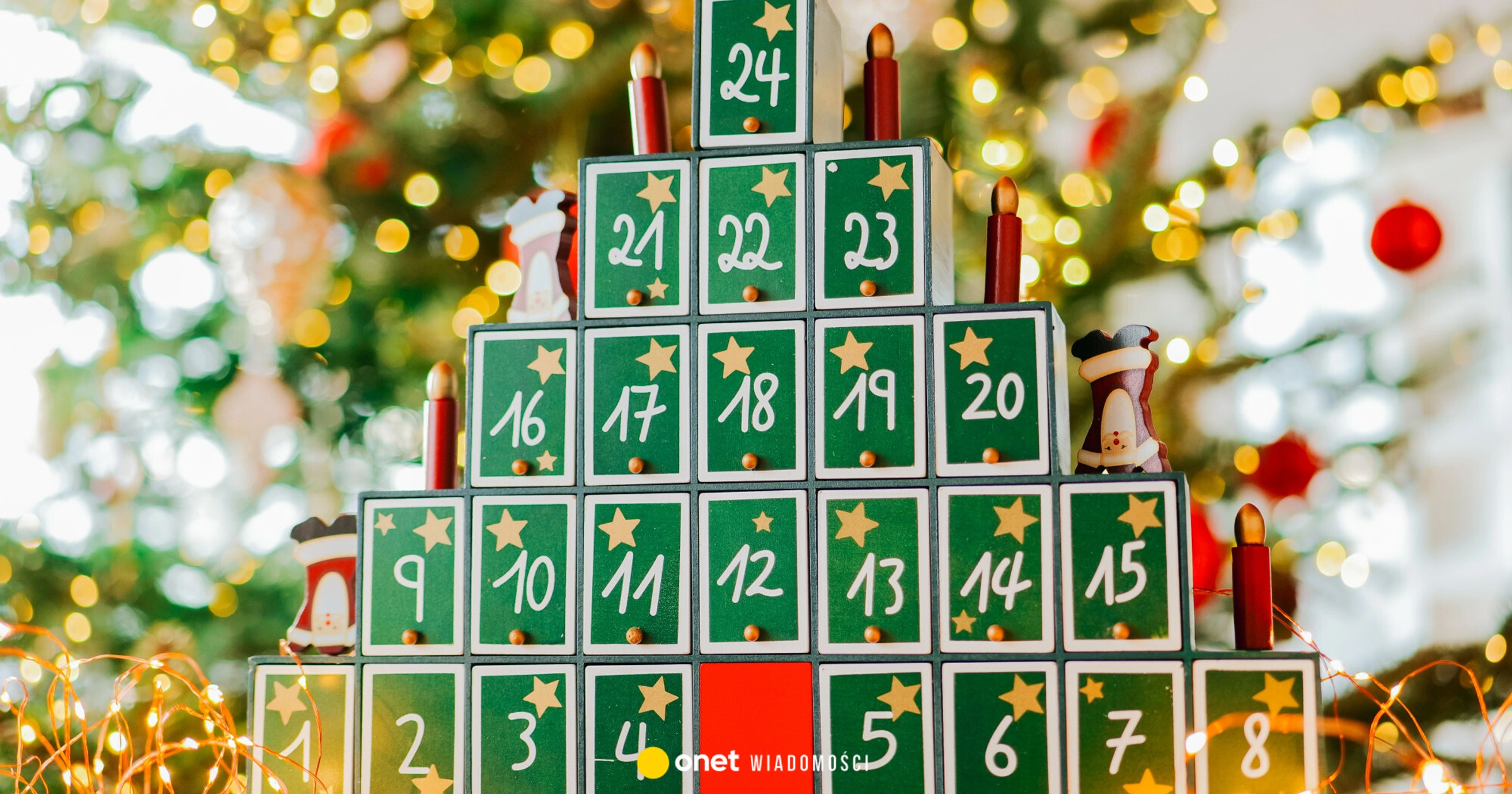
We have 24 days from the beginning of December to Christmas. Nevertheless, in Christian culture, the Gregorian calendar alone is not enough to count down this specific time. The Advent calendar comes into play. Sweet, salty, with tasks, with scents, only for children or only for adults. If someone has a lot of money but is poor at counting time, they can even buy themselves an Advent calendar from Chrontex, which includes 24 watches with a total value of EUR 2.7 million. They probably show the good time, but are they an adequate attribute of the centuries-old Christian tradition?
The development of the situation is dynamic – one day Mary gives birth to Jesus in Bethlehem, and 2025 years later, Polish influencer Andziaks releases her third Advent calendar worth PLN 899. Once upon a time: myrrh, frankincense and gold. Today: Spicy Orange hand cream, Christmas Tree shower gel and gingerbread soy candle.
The market offers calendars with sweets from E.Wedel and Wawel, cosmetics from OnlyBio and Sylveco, or teas from Herbapol.
According to Dataintelo, a company that creates commercial reports and market forecasts, the global advent calendar market reached a value of USD 1.87 billion in 2024. American. The forecasts for the Advent industry are extremely positive. Dataintelo estimates that the market will grow by over 8% over the next eight years. This means that waiting for Christmas will be more and more expensive for the average Kowalski, Smith or Müller. One impatient German is responsible for the commercialization of Advent.
The article continues below the video
German business
“How long until Christmas?”, “When will Santa Claus come?”, “Is it still long until Christmas?” — little Gerhard Lange from the German town of Maulbronn, located on the border with France, tormented his mother already at the end of the 19th century. To sweeten her son's waiting time until Christmas, the woman baked 24 meringue cookies and sewed them to a cardboard box. Was it the forerunner of the first Advent calendar? NO.
Scientists date descriptions of rituals related to the countdown to Christmas as far back as the 15th century. Historical Advent traditions include activities such as: adding a blade of straw to the manger day after day so that the newborn will be warm when he comes into the world, or adding a rung to the ladder so that Jesus can descend from heaven to earth.
However, Gerhard's mother's cookies are not without significance. They became so deeply embedded in the boy's memory, as a pre-Christmas injection of dopamine and endorphins, that in adulthood the man decided to make the family tradition famous and turned it into a business. He was a bookseller and publisher by profession. Around 1900, he joined Friedrich Reichhold and transformed his company into the “Lithography Plant Reichhold & Lang GmbH” based in Munich. In 1903, the first commercial Advent calendar left their printing house. And where do we stand today?
The offer of Advent calendars includes: fishing lures, eye shadows, Asian powdered soups, acrylic paints, sports challenges, capybara key chains, mineral stones with healing properties, Minecraft figurines, logic puzzles, whiskey, soy candles, dog treats, loose tea, outdoor survival kit, sensory toys and balls. bath.
Tired? The market will still hold! We also have ones with: natural perfumes, online games, Belgian chocolate, toys for adults, vouchers, clothes for dolls, a set of DIY tools, energy drinks, Korean cosmetics, honey from our own apiary and calligraphy pens.
Hardly anyone would pay attention to the one created by Gerhard Lang today. Two sheets of paper – one decorated with quotes from poems and 24 picture boxes painted on them. The second one had drawings that had to be cut out and glued to empty spaces. There weren't even any windows. Sounds like boring. But not for everyone!
Thousands of historical Advent calendars
At Anna Amann, Advent lasts all year round. A research employee of the Art Collection of the Diocese of Regensburg (Kunstsammlung Bistum Regensburg), responsible for the religious folk art department, has under her supervision over 2,000 works of art. historical advent calendars. The oldest one in the diocesan collection comes from 1910 and was created by the Reichhold i Lang publishing house. But Amann also has ones from the GDR and the turn of the millennium.
— As a child, I celebrated Christmas traditionally, with my family. I would never have thought that Christmas would become my job – says Anna Amann and adds – Advent calendars found me. I took over the collection from Dr. Esther Gajek, who started creating this collection. She also came across this topic by accident. She once met a relative of Gerhard Lang and bought all the calendars from him. Fluke!
The surprise effect
Advent is the one time of year when receiving or giving gifts every day is the norm. In addition, there is the surprise effect – we do not know what is hidden behind the calendar windows, and endurance training so as not to open all of them at once. Emotions run high, demand grows, and the event repeats itself every year. Prime time for consumerism. Especially since Christmas is a time of love, gratitude and community, and it has long been known that these feelings are best expressed by offering a broadly understood “product”. Could there be anything better for materialism?
— Man is a herd animal, so he tries to fit into the applicable norms. And since buying and giving gifts is the norm, it's no wonder that companies take advantage of it. It would be stupid not to do it, says Dr. Ingo Balderjahn from the University of Potsdam, specializing in business economics, marketing and consumer behavior, author of the book “The Will to Give Up. Why Conscious Consumption Leads to Happiness and is Beneficial for the Climate”.
— People don't buy Advent calendars because of the products. They buy them because they want to experience a sense of happiness. And they will probably find it in these 24 windows, but it is hedonistic happiness, i.e. short-lived. As a rule, however, people look for eudaimonistic happiness – the kind that is felt at the level of the heart and soul. And this will be achieved, for example, through development, fulfillment of one's life mission or a sense of fulfillment. Opening all the Advent calendars in the world won't change anything.
The Advent calendar is a nice touchGettyImages
Cat in a bag
Özlem Roegels, known on Instagram as @elanhelo, is followed by almost half a million people. He has been testing various products on the Internet for ten years, especially Advent calendars. He considers himself a happy person. Before professional testing, things were different.
Özlem does not come from a wealthy family, she tried to pass her high school exams several times and had problems with self-acceptance for a long time. She bought her first Advent calendar at the age of 22. It cost 50 euros and contained nail polishes. Today, he estimates his Advent budget at approximately PLN 20,000. euro. In her opinion, an averagely good calendar costs 80 euros. The one with better chocolates is about 20 euros. Anything below this price can be skipped.
Influencer approximately 80 percent she buys the calendars herself and gets the rest in PR packages. Her online specialization is “unboxing”, i.e. opening and checking products. What sets her apart from other internet creators is her honesty – as she says.
– If something is bad, I say so. It doesn't matter whether I bought it or received it, says Özlem.
Due to her unique expertise and experience in the calendar industry, the 34-year-old provides marketing consulting for companies. In January, he summarizes the previous year with them, and in March he helps them plan products for the next Advent. And God forbid it has anything to do with the Christian faith. All that matters is supply and demand.
— Usually, in the spring, companies know which products they will use to make miniatures and which ones will be a potential waste because they won't sell. The latter are, for example, eye pencils in some fancy colors. Either someone will buy them for summer festival make-up, or – whether they want it or not, they will get them in the Advent calendar. The most important thing is that the product has a market, explains Özlem.
— What do you do with all the products you unpack from the calendars? – I'm asking.
— I either give it to those in need, or I run competitions on my profile and someone can win them. The surprise effect remains because she then composes such a package herself.
– Is there anything else that can surprise you?
— One sex toy calendar featured a dildo with a reindeer head from Frozen. This was too much.
For Dr. Balderjahn's unboxing is the worst thing that could happen to Advent calendars. – Knowing that we know what is inside such a calendar reduces even the hedonistic experience of happiness – he sums up. For Özlem Roegels, testing calendars is a chance for her viewers to avoid disappointment and save money. — I do this so that others don't buy a pig in a poke and lose money. Besides, people like to see people who are where they would like to be, says the influencer.
A tradition for generations
Jane Sorgnitt from the profile @leb.einfach (“live simply”) decided this year to reverse the Advent shopping tradition and get rid of 24 things by Christmas. An old leather bag, a keyboard pad, an oversized T-shirt, a rolled carpet and a mirror from the living room had already left her house.
— I heard the saying once that “everything you own owns you,” and I completely agree with that, says Jane. — From the moment the children appeared – I have a four-year-old and a two-year-old – our house began to fill to the brim. I started my crusade against consumerism over a year ago. The first feeling of getting rid of things was very liberating. I felt that each thing I said goodbye to gave me more space to breathe freshly.
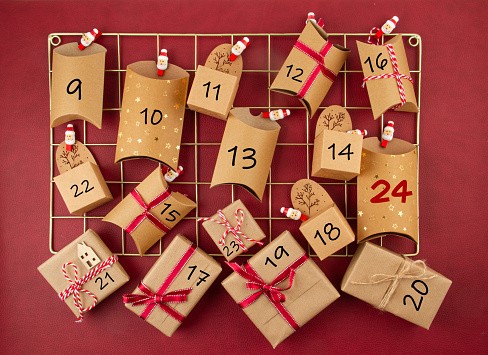
Nevertheless, Jane prepared a handmade calendar for her children this year. She put a cookie, a coloring book, a marker, and pajamas bought second-hand into the bags.
— It wasn't necessary for me, but my son said that all children in kindergarten have an Advent calendar and he wants one too. My husband also grew up in a home where pre-Christmas calendars were a tradition, so we decided that he would prepare a DIY one for the children. [“Do It Yourself”, czyli “Zrób To Sam”]. My daughter probably doesn't understand much of it yet, but I would feel sorry for her if she just sat next to me and didn't get anything. Moreover, what you make with your own hands is the least harmful to the planet and stays in your memory for longer.
According to Ingo Balderjahn, it is the childhood period that is significant for whether we develop attachment to a tradition or not. — If a child receives an Advent calendar from an early age, he or she will associate this item with positive feelings that, at best, connect him or her with the person giving the gift. Such positive connotations later translate into our purchasing decisions, the doctor explains to me.
— Is that why some adults buy their own Advent calendars if they don't get them? – I inquire.
— Yes, the only question is whether consumerism hasn't sent them off the scale.
— Have you given someone such a calendar this year?
— No, but my wife and I got one from our son. There are stories for every day of Advent. We take turns reading every day.
– And you didn't buy anything for your son?
— His wife wanted to give him one as a gift, but he said he had already bought it for himself.