Vladimir Putin on the war in Ukraine. Five hours of propaganda and questions


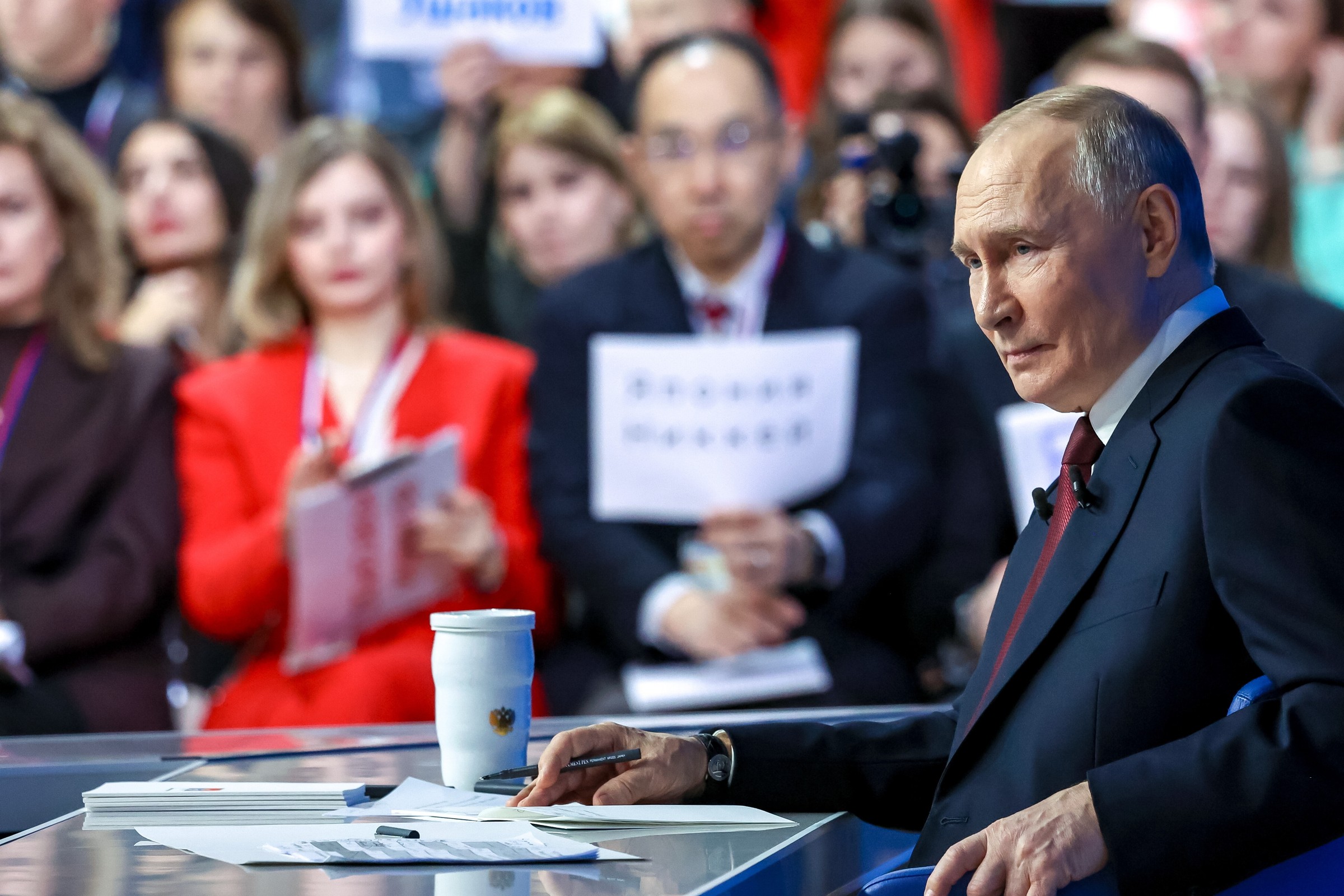
With US President Donald Trump pushing for an elusive end-of-year peace deal, keeping his partners in Brussels and Ukraine in a state of uncertainty, the geopolitical stakes this year have been higher than usual. To ensure consistency of the message, Friday's press conference was, as is tradition, carefully planned, and the questions – according to the Kremlin there were about 3 million of them – were scrupulously checked.
Still, a few comments seemed to escape censorship (see bonus section below), offering a glimpse of sincerity.
Here are 5 key takeaways from this year's marathon conference call.
(Still) on the warpath
It has come a long way since the Kremlin banned the word “war” following its full-scale invasion of Ukraine in February 2022 under threat of criminal prosecution.
“War or peace?” the co-host asked a relaxed Putin as the event began shortly after noon local time. That question set the tone for the nearly five hours that followed, during which the war in Ukraine remained the main topic.
Using questions from military correspondents, veterans and even the wife of a deceased soldier, Putin made it clear that he believed Russia's war was going according to plan and any problems were the result of “excessive bureaucracy.”
At a time when various polls show many Russians eagerly await some version of peace, Putin is redoubling his efforts to unite the country in a common war, Moscow-based political analyst Andrei Kolesnikov told POLITICO. The message is that “victory in the form of peace on Russia's terms is imminent and the public is united in support” for the war, he said.
Peace on Russia's terms
Viewers could be forgiven for thinking they had traveled back in time to February 2022, when Putin outlined his reasons for invading Ukraine.
Putin, in an attempt to remain on good terms with Trump, appears to have made it clear that Moscow is “ready and willing” to negotiate a deal on Ukraine. However, his later statements suggest quite the opposite. He referred to the “regime in Kiev” that came to power in a “coup” and said that Russia was fighting “neo-Nazism.” He also suggested that Moscow demands that Kiev give up its ambition to join NATO and withdraw from eastern Ukraine.
As always, Putin addressed the “root causes” of the war, citing NATO expansion as justification for his invasion of Ukraine.
To Europe and NATO: do not interfere
While praising China and Belarus for their close relations with Moscow, Putin expressed anger towards Europe and NATO.
He almost apologized for calling European leaders “little pigs” earlier this week during a meeting with the defense minister, saying the words “fell out” of his mouth. However, this did not stop him from calling them “robbers” for wanting to use frozen Russian assets to help Ukraine.
Putin's main target, however, was NATO Secretary General Mark Rutte, who last week warned Europeans to prepare for a war on the scale of “their grandparents and great-grandparents.” — I really want to ask: listen, what are you saying about preparations for war with Russia? Putin scolded. — Can you even read? Read the US National Security Strategy.
Answering a question from the BBC's Steve Rosenberg about the possibility of military escalation, Putin promised: “There will be no new special military operations if you treat us with respect and take our interests into account.”
To the Russians: Bow down
Not everything was about foreign policy. Putin also took time to discuss Russians' financial concerns amid an economic slowdown and high inflation as the Kremlin drowns the defense sector in cash.
Listing the statistics, he emphasized that there was no reason to worry, praising the “thoughtful actions” taken by domestic financial institutions to stabilize the economy. At the same time, he claimed that Russians were en masse volunteering for war. — They include very young boys, university students who take a sabbatical to sign a contract [z armią] and take part in combat operations, he said.
In fact, Russia has suffered around one million casualties in the war, and those mobilized in the fall of 2022 have not yet been released, suggesting that authorities are struggling to replenish the ranks.
However, Putin “is not worried about the costs of continuing the 'special military operation,' whether financial, human or psychological,” Kolesnikov said.
Anti-LGBTQ+ as a national glue
Although the war took up most of the airtime, Putin interspersed his responses with various references to another favorite topic: “traditional values.”
He warned other countries that they risked having their assets confiscated by Europe because of their conservative policies. — Tomorrow someone may not like the policy regarding the LGBT community, he said. — In Muslim and Islamic countries, there are many very strict laws protecting traditional values, which are our common traditional values.
And when the 23-year-old student used the opportunity to propose to his girlfriend on air, Putin praised the young man for starting a relationship with his partner in his teens. — There is a good tradition in the Caucasus of marrying off children at a young age. We should follow their example, he said.
Putin concluded at another point that what unites all those fighting for Russia on the front are “common values.”
Bonus: true or false?
For viewers, the most exciting part of the scene was a large screen displaying text messages sent by ordinary Russians.
Some of them fit perfectly with the overall tone of the event: “How can I help make Russia an empire?” – said one of the messages.
Others, however, not necessarily. “[To] “It's not a conference, it's a circus,” said a message that briefly appeared on the screen. “Vladimir Vladimirovich, it's Friday, can we open a beer?” said another.
It is unclear whether the Kremlin is intentionally allowing such news to appear to give the event an appearance of legality. Or maybe some Russians are just lucky…