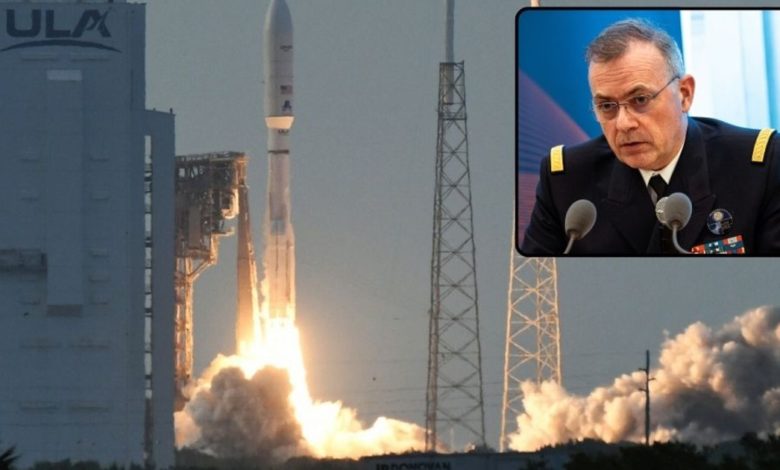
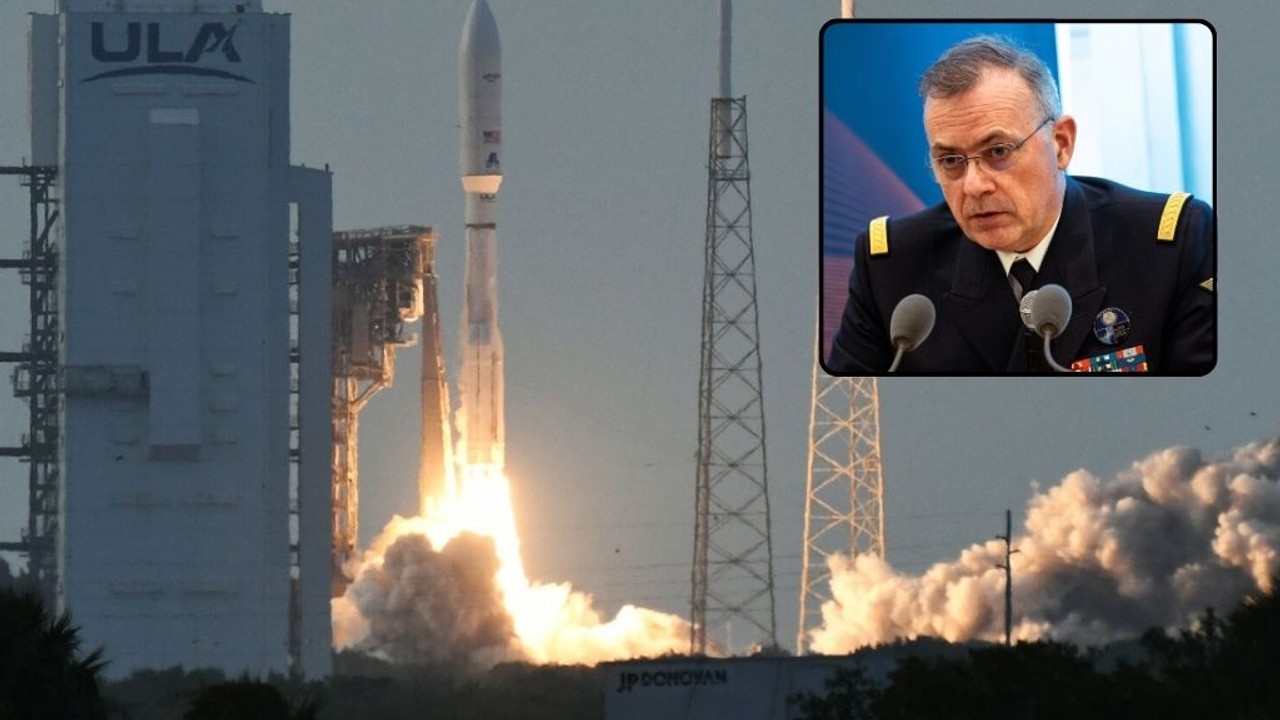
– There can be no European sovereignty without space in space. Today, it is necessary and even urgent, the awakening of Europeans to start working – says Admiral Pierre Vandier, the Chief NATO commander for transformation (Allied Command Transformation, ACT). – Americans themselves call Europeans to a form of emancipation, maturity and improvement in many issues, including [sferze działań w] space space. This is a huge opportunity – he adds.
The war of Russia with Ukraine drew attention to the importance of space resources for communication on the battlefield and the collection of intelligence. It also showed the painful dependence of Europe on a very limited number of American companies – mainly SpaceX Muska. The competitive Iris² system will not be launched before 2030.
At the same time, you can see more and more that Space becomes a possible battlefield.
At the beginning of this month, the American command of the Space Command, referring to China and Russia, described the cosmos as “a very controversial strategic environment”. She added that the help of allies would be crucial for achieving the advantage in this area. NATO Secretary General Mark Rutte also expressed fear that Moscow is seeking to arrange nuclear weapons in space.
– We see today that many players introduce space weapons there – says Vandier, mentioning orbital weapons – bombs placed in orbit, which can fall without detecting them by early warning systems – as well as about weapons for disturbing, piercing or removing satellites from the orbit.
– This means that we need to observe the actions of others much more carefully and be resistant to [podejmowane przez nich] attempts to destabilize – he adds.
New architecture, new business model
Fast militarization of space requires Europeans to rethink the business model of their enterprises – says Vandier. In space, the army is based on commercial infrastructure, and most satellites and constellations have a double application, which means that they can be used for both civil and military purposes.
The NATO commander believes that in order to remain immunity, countries can no longer rely on large satellites in the geostationary orbit, but also need spare satellite constellations in the low Earth's orbit. Satellites in low orbit are cheaper – they cost from 100,000 up to 150 thousand hole. (from 379 to 568 thousand PLN) each compared to $ 300-400 million. (PLN 1.1-1.5 billion) for a single geostationary satellite-lists Vandier. They can also be launched more often and at lower costs.
Although Europeans are competitive in the field of geostation satellites thanks to such companies as Arianegroup, the so -called New Space market [sektor kosmiczny charakteryzujący się rozwojem i komercjalizacją usług kosmicznych przez prywatne firmy]covering relatively new enterprises, is dominated mainly by SpaceX.
– The economic model chosen by Europeans is based on geostation satellites. Today the question arises: did Europeans not be at the point where they should change this model? From an economic point of view, if they do not do it, they will be excluded – says Vandier.
– Today Europeans are far from the center of the market. This is a huge obstacle, because when it comes to the sovereignty of the continent, it is mostly American offer – both military and commercial – provides it with the necessary services – he says.
Continuation of the material under the video
Some European start-ups are trying to enter the New Space market, but with limited success. On March 30, the first orbital rocket launched from continental Europe started – it was a Spectrum rocket from the German company Isar Aerospace. However, it crashed less than a minute after the start. Last month, the Norwegian defense company Kongsberg fired its first satellite, but via SpaceX.
Vandier has ideas what Europeans can do to stay in the game. He recently presented the European Commission of the European Defense Act. In his opinion, “it would create opportunities for the emergence of new technologies in the field of defense by establishing financial, regulatory and tax conditions that would encourage young entrepreneurs to develop double application technology for Europe.”
The military also supports the Appeal of the United States issued to Europeans to create a space market modeled on American. It allows the United States space command to use commercial technologies to recognize the situation in space and collect intelligence on the battlefield.
“Active role” of NATO
According to Vandier, NATO plays an increasingly active role in space, but a lot of work before the alliance – consisting in, even in to properly divide the tasks between allies.
– We equip ourselves with tools needed to understand and strategic maneuvering, in particular through the awareness of the specifics of space. We will be able to see, understand and coordinate the actions, and then inform 32 allies: “Here's what is happening, that's what happened.” This is what we call attribute – he says.
NATO as an alliance can then decide to take remedies. – It will give us strength: the reaction of France itself or the United States would not have the same scope or political significance – says Vandier. According to him, in addition to the United States and France, NATO's main space powers are Great Britain, Italy, Norway, Canada and Germany.
In 2019, NATO countries recognized space as an operating domain. However, this year's updated goals in terms of ability do not take into account this space as much as other areas – land, air and sea. According to Vandier NATO, he must first understand what individual countries can do and what is needed before setting specific goals in this area to the alliance.
– Countries will either exchange for each other's skills or ask NATO to acquire them in the form of services. Discussions on this subject will be very interesting in the coming years as part of the next round of NATO defense planning process – he says.
However, he does not expect a lot of space to be devoted at the June peak of NATO leaders in The Hague.
– The main topic will be 5 percent. He said, referring to the demand of US President Donald Trump that allies would allocate such a part of GDP to defense. – It would be nice if there was a statement regarding space, but I don't think we would be at this stage – he adds.
I’m Ashley Davis as an editor, I’m committed to upholding the highest standards of integrity and accuracy in every piece we publish. My work is driven by curiosity, a passion for truth, and a belief that journalism plays a crucial role in shaping public discourse. I strive to tell stories that not only inform but also inspire action and conversation.