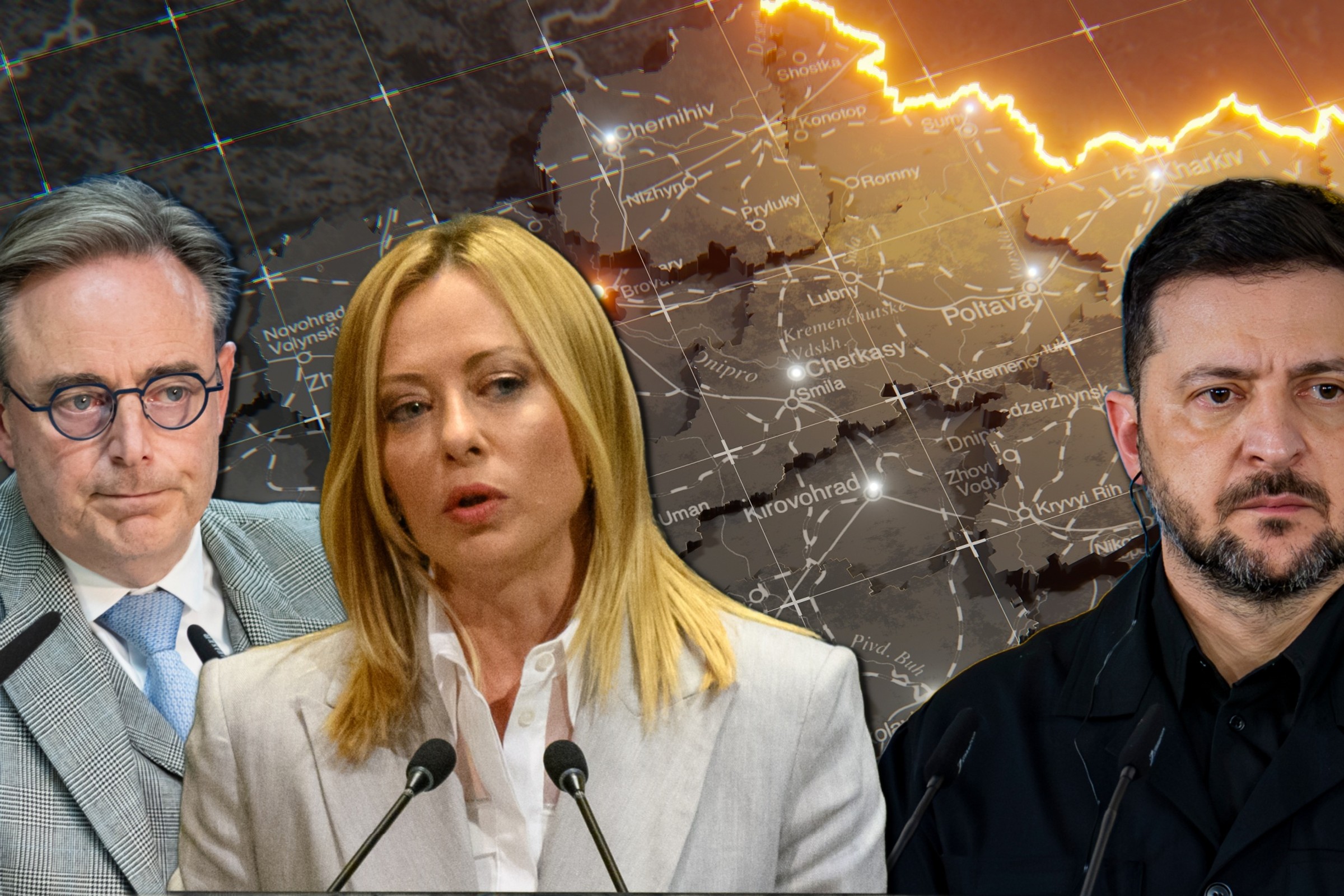
The change in position by Italy, the third most populous and voting country in the EU, less than a week before a key meeting of EU leaders in Brussels, undermines the European Commission's hopes of finalizing an agreement on a plan to use frozen Russian assets.
The European Commission is pressing EU member states to reach an agreement at the European Council summit on December 18-19. Only this can ensure that billions of euros of Russian funds held in the Euroclear bank in Belgium can be used to support the war-ravaged economy of Kiev.
The Belgian government is blocking this step for fear that if Russia recovers the money, it will have to repay the entire amount. So far, however, he has been alone in his opposition. This has changed. Italy has disrupted the current order – together with Belgium, Malta and Bulgaria, it has prepared a document calling on the European Commission to explore other options for supporting Ukraine, without using frozen Russian assets.
The four countries said they “invite the Commission and the Council to further explore and discuss other options in line with EU and international law (…) posing significantly lower risks [odwetu Rosji]”. They mentioned an EU lending facility or 'bridging arrangements'.
Plan B
In this way, they referred to the EU's plan B — it assumes the issuance of common EU debt to finance Ukraine in the coming years. However, this idea has its drawbacks. Critics note that it will increase the high debt of Italy and France. For this it requires unanimity – so it can be vetoed by the Kremlin-friendly Hungarian Prime Minister Viktor Orban.
The four countries will not be able to create a minority blocking EU actions, even if pro-Russian Hungary and Slovakia join them. However, their public criticism of the idea of using frozen Russian assets undermines the European Commission's hopes of reaching a political agreement next week.
Although Italy's right-wing Prime Minister Giorgia Meloni has always supported sanctions against Russia, the government coalition he leads is divided over support for Ukraine. Far-right Deputy Prime Minister Matteo Salvini has adopted a Russia-friendly stance and supported US President Donald Trump's plan to end the war in Ukraine.
A step back
The four countries mentioned went their criticism a step further – they were skeptical about the European Commission's use of its emergency powers to change the current rules for imposing sanctions and maintain the freezing of Russia's assets in the long term.
Despite voting for this move – in order to preserve EU unity – these countries said that are cautious about further use of Russian assets.
“This vote in no way prejudges the decision on the possible use of frozen Russian assets, which must be taken at the leadership level,” the representatives of these countries wrote in a statement.
The legal mechanism enabling the long-term freezing of funds is intended to reduce the likelihood that pro-Kremlin countries in Europe, such as Hungary and Slovakia, will return the frozen funds to Russia.
EU officials say it weakens the Kremlin's chances of releasing its assets as part of a post-war peace agreement and thus strengthens the EU's plan to use the money.
However, the representatives of Belgium, Italy, Malta and Bulgaria wrote that the legal clause in question “has very far-reaching legal, financial, procedural and institutional consequencesthat may extend far beyond this particular case.