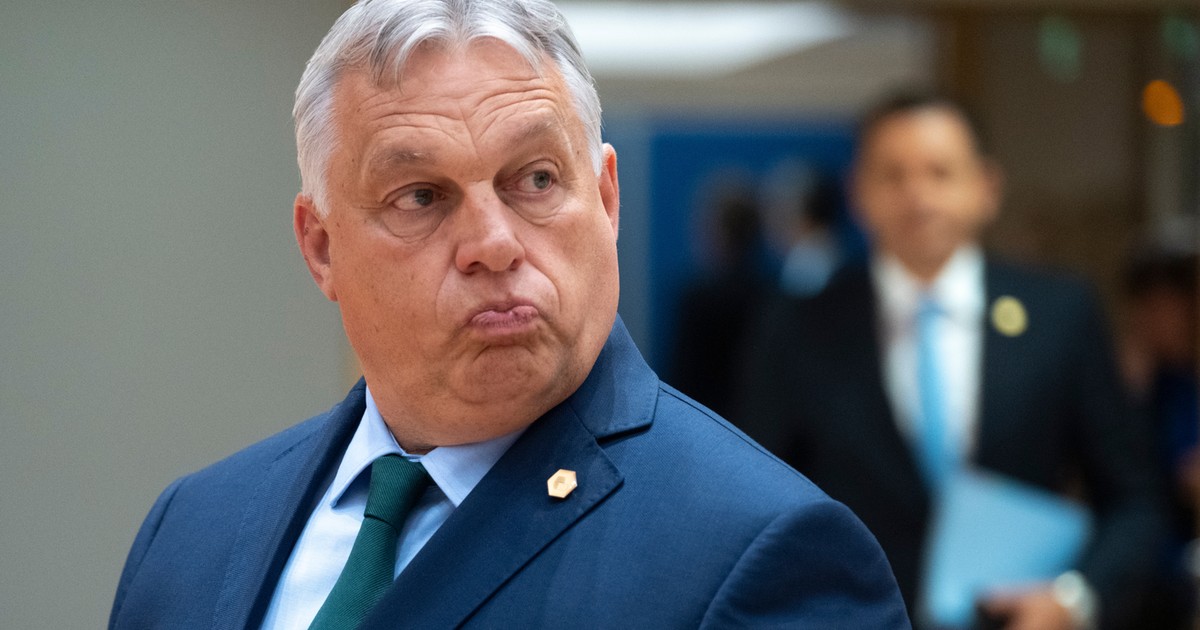
Bloomberg reminds that Orban has been one of the longest-serving leaders in the European Union for years, but in recent months his party has been losing support. In some polls, the opposition TISHA party is in first place.
Read also: Donald Tusk comments on Viktor Orban's visit to Putin. Strong words are spoken
The rest of the text below the video
According to the agency's reports, it is the growing risk of electoral defeat that prompts the politician to analyze alternative paths to remaining at the helm of the state.
Inspirations from Turkey and Russia, but also risky consequences
As Bloomberg points out, in November Orban reportedly expressed interest in the advantages of the presidential system after visiting the White House, where he met US President Donald Trump. According to analysts, his comments about “taking into account” such a political model could have been a signal of an internal discussion about possible changes in the political system.
Read also: Karol Nawrocki will not meet with Viktor Orban. There is a reaction from Ukraine
The agency also suggests that the examples of Turkey and Russia – where the transition to a strong presidency gave leaders broad prerogatives – can be seen as potential role models.
A source close to the Hungarian government cited by the agency claims that the head of Fidesz allows for the possibility of assuming the office of president and carrying out constitutional changes to strengthen the position of the head of state. Such a scenario would mean a serious transformation of the current parliamentary system.
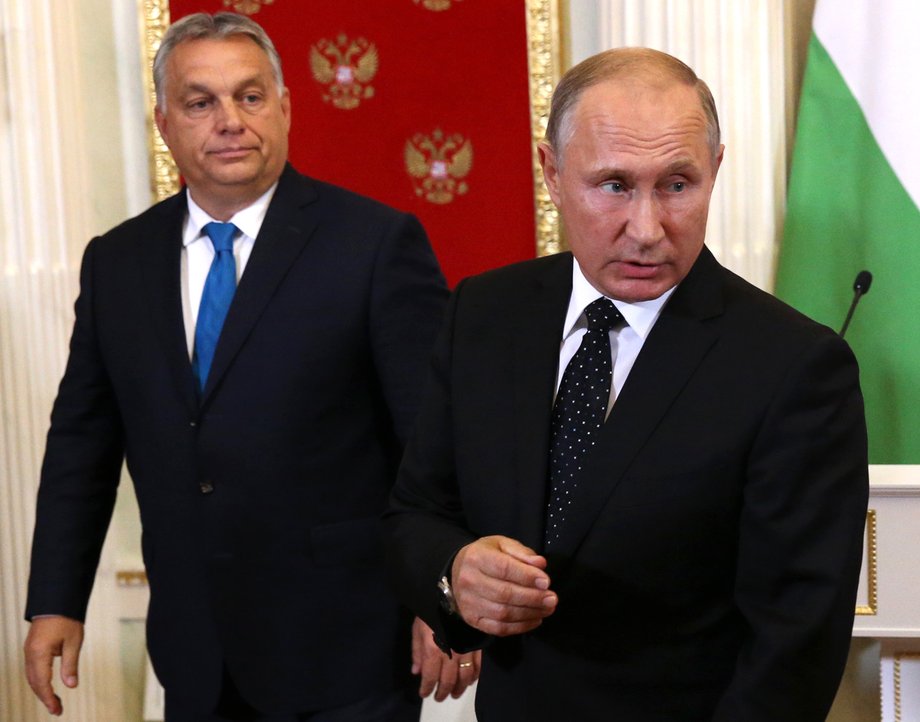
Prime Minister of Hungary Viktor Orban and President of Russia Vladimir Putin
|
Mikhail Svetlov / Contributor / Getty Images
Bloomberg notes that Orban's takeover of the presidency could take various forms. If Fidesz wins in April next year, the prime minister could transfer government duties to a trusted colleague, such as Minister Janos Lazar, taking over the office of head of state himself. However, if the ruling party were to lose, Orban – as president equipped with expanded powers – could limit the new government's ability to re-establish rapprochement with the European Union.
However, Bloomberg's source emphasizes that such a move would be risky, especially if the public perceived it as an attempt to circumvent the democratic will of voters.
Time is a key factor for Orban in Hungary. The government vehemently denies this
In Hungary, it is the parliament that elects the president, which – as Bloomberg notes – makes the issue of time decisive for the success of any plans. If Fidesz does not guarantee a strong victory in the elections, Orban would have to use his current parliamentary majority before April to be elected head of state. The problem is that the term of office of the current president, Tamas Sulyok, lasts until 2029 – his resignation would therefore have to be politically forced.
Daniel Hegedus, director for Central Europe at the German Marshall Fund, estimates that a possible transition to the presidential system could take place as early as early 2026. In his opinion, this would be a form of an “emergency plan” that would secure the current system of government. However, the expert emphasizes that such a step would involve high political and social risk.
Government spokesman Zoltan Kovacs commented on the media reports on Thursday, describing the whole matter as “leftist fake news” on the X platform..