When fasting becomes a culinary frenzy. The authentic Romanian Lenten delicacies that conquer you irremediably


Lent can prove a tough test for foodies. An ordeal of the gluttonous and a battle with one's own culinary passions, a withdrawal from meals with meaty delights. Well, the monks' recipes and in general Romanian fasting gastronomy is equally delicious.
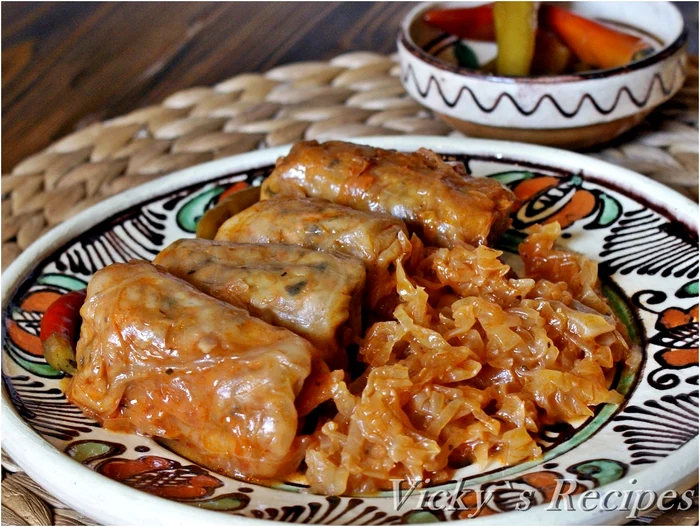
Fast food is a real madness PHOTO gustos.ro
We are in the midst of Christmas. That is, the 41 days in which the Virgin Mary prepared for the birth of Jesus Christ. And any Romanian with an iota of Christian faith in his soul doesn't even think about putting his mouth on meat, dairy and other deceptive ingredients of the spirit.
For gourmands, especially when the wives stick to the fasting tradition, between November 15 and Christmas Eve is a real ordeal. A heavy touchstone in which cravings for a slan can appear out of the blue, or even for a borscht of risotto, well seasoned with leustean. What's more, fasting can put any veteran eater into withdrawal. Those trained in fasting, but especially in authentic Romanian gastronomy, do not have any kind of problem. On the contrary, fasting comes with new gastronomic challenges, with an infusion of aromas and tastes that make you forget yourself after two or three bites. You might be surprised, but the Romanian fasting cuisine, that old peasant and monastic one, turns out to be much more delicious than the fried one. And the examples are available to anyone. We propose three recipes to tell your grandchildren or non-fasters.
The monastic delicacy that makes a mockery of any dish
How could we start the too short journey through the Romanian fasting gastronomy than with the monastic sarmaua, that authentic something that can turn you into a vegetarian overnight. Everyone knows that the sarma is a Turkish invention that we have imported through so many centuries of trade, war and vassalage. Well, the Romanians only took over the name and the idea, but they dissected the sarmaua and turned it into a new, native dish.
The Romanian sarmaua is actually called “găluscă” and I christened it with pork sausage and croup. And to end it all with the Turkish sarma, the fasting sarma was born in the monastery kitchens. And not just any fasting wire, but an absolute delight that we wouldn't make fun of anywhere in the world. Radu Anton Roman and other great Romanian gastronomy enthusiasts somehow managed to get hold of the recipe for the sarmals or rather the monastic “dumplings”. There are several options here as well. First we will present the simple, sober, direct recipe. In short, a head of sauerkraut is used to wrap sarmales and more.
Attention, if the cabbage is too salty, we must leave it in water to desalt. We change the water at some interval. Then we prepare for the filling six chopped onions, half a kilogram of groats (maize or before Columbus, wheat or buckwheat), four grated carrots, grated celery, pepper paste, tomato juice, salt, pepper and a sprig of thyme. If we have it on hand, don't hesitate to use some leeks. We start by preparing the cabbage for wrapping. We cut the spines, arrange the sheets. What remains of the cabbage is finely chopped and used later.
Wash the croup well, even several times until the water remains clear. Afterwards we beat it with the filling. Sauté the onion with the carrot, celery and leek in oil. Attention, we do not burn the vegetables, rather we stew them. Then add tomato juice and pepper paste, sprinkle salt and pepper and mix well. We leave it for three minutes at most and take it off the heat. We mix with all the cereals and fresh greens if we have them. The composition is ready. We are preparing the big clay pot to receive the little ones.
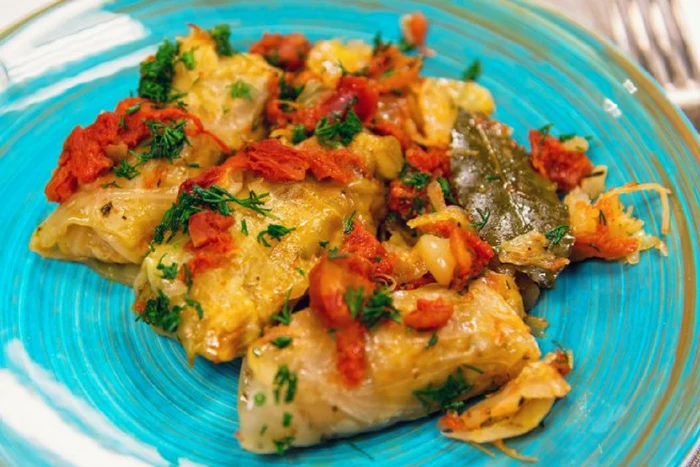
Fast food PHOTO bucataras.ro
We put the finely chopped cabbage, the one left over from preparing the sarmal sheets, at the bottom of the pot with the sprig of thyme. Add a little more oil and shape the sarmales. There are plenty of tutorials on the internet on how to wrap the wire. Do as you can. Once formed, put the sarmales in the pot. On top we put a layer of finely chopped cabbage and a sprig of thyme. For added taste, instead of water, add a concentrated vegetable broth, enough to cover the sarmales well. Put it in the oven, on a roll if you have one, and let it simmer for about three hours.
There is another variant of monastic sarmales, presented by the late Radu Anton Roman in his book “Cooking, wines and Romanian customs”. A variant that, if you are not strong, will get you sick. I don't think many people have had the chance to taste something like this. The same ingredients are used as in the previous recipe, with the exception that you can put plain rice instead of croup. In addition, walnuts and prunes are added to the composition. What an aroma, what a taste. The preparation of these sarmals differs slightly in approach.
For example, finely chop two out of three onions, fry them in oil and then add rice, water, salt, pepper and let them boil. Separately, saute the remaining onion with paprika and a few peppercorns. Once the onion becomes translucent, add the tomato juice. In parallel, after the rice has been cooked and the water has subsided, add the prunes and walnut kernels. Make a clear difference between onions with broth and rice, plum and walnut waves. The latter represents the filling, and the onion broth, the cooking juice. At the bottom of the pot, put finely chopped cabbage with grated carrot. I add myself[ sarmalele bine formate. Deasupra se pune încă un strat de varză murată cu cimbru și morcov ras. Peste se toarnă bulionul. Se dau la cuptor pentru o oră. Nu are rost să explicăm ce gust au.
Atunci când cartofii sunt mai buni ca niciodată
Trecând de la rețetele astea mai bătrânești către experiențe culinare din secolul al XIX lea încoace, dar tot din mediul mănăstiresc și gospodăresc țărănesc, ajungem și la un preparat care poate crea dependență până în zilele de frupt. Este vorba despre un soi de mâncărică de cartofi absolut delicioasă. Cartoful a pătruns cu adevărat în gospodăria țărănească abia prin secolul al XIX lea, dar a fost adoptat cu dragoste și meșteșug de gospodinele noastre.
Inventivitatea a jucat rolul cheie, mai ales că țărăncile erau constrânse de foamea bărbatului postitor venit cu treburi de pe la pădure sau de la animale. În astfel de momente de restriște casnică, a luat naștere rețeta de cartofi căliți cu ceapă. O mâncare aburindă, servită cu mămăliguță așișderea. Maria Cristea Șoimu a explicat această rețetă în cartea sa „Rețete de Post și Sărbători Creștine”.
Așa cum mărturisește autoarea pentru acest preparat se folosesc cartofi, cepe tocate, sare, piper, câțiva căței de usturoi și pătrunjel tocat. Proporțiile diferă în funcție de ce cantitate vrem să gătim. Să zicem la un kilogram jumătate de cartofi, se folosesc trei căței de usturoi și trei cepe tocate. Cartofii se spală bine și se fierb în apă cu sare, cam jumătate de oră. Cât sunt calzi, gospodina sau gospodarul trebuie să se căznească și să-i curețe, în ciuda disconfortului termic la degete. Ulterior se curăță ceapa, se taie rondele și se dă la călit ușor în ulei. Cartofii fierți, care, atenție, nu trebuie să se sfărâme, se taie felii. „Se scot rondelele de ceapă în farfurie, iar în ulei se pun feliile de cartofi cu usturoi tocat, boabe de piper și sare. Se rumenesc timp de 5-10 minute, se scot pe platou cu piperul și usturoiul, se amestecă atent cu ceapa, se decoreză cu pătrunjel verde tocat fin”, precizează Maria Cristea Șoimu în „Rețete de Post și Sărbători Creștine”. Vă dați seama ce aromă, ce bunătate, mai ales cu mămăliguță alături. Sunt și alte variante de cartofi cu ciuperci sau cartofi prăjiți cu usturoi.
„Te face de lingi cratița și pe dosul afumat”
Trecând la alte delicii autohtone mănăstirești, vechi de cine știe când, nu putem să nu ne oprim și asupra ghiveciului călugăresc. Tot Radu Anton Roman dezvăluie o rețetă absolut deliciosă de ghiveci călugăresc, culeasă tocmai din Vâlcea. Se folosesc tot felul de legume, care astăzi se găsesc din belșug în orice anotimp, datorită solariilor. Pe scurt, avem nevoie de ceapă, usturoi, morcovi, ardei, vinete, praz, conopidă, dovlecei, fasole verde, țelină și varză. Ulterior în viața românului au apărut și cartofii. Au fost băgați și ei rapid în oală. Întâi și întâi se călește ceapa cu morcovul.
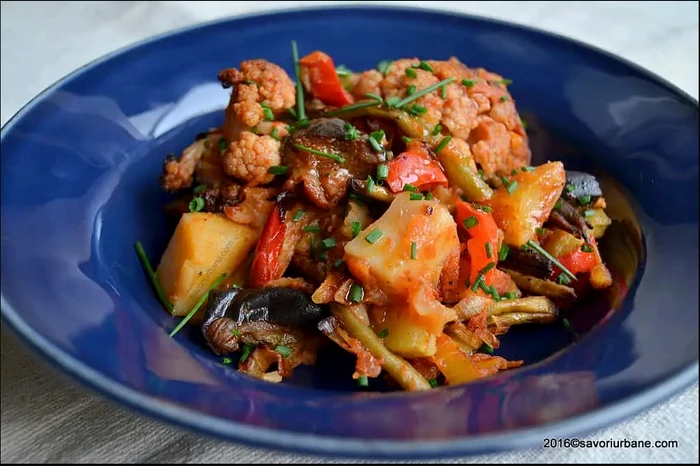
Ghiveci călugăresc FOTO savoriurbane.com
Apoi se adaugă cartofii tăiați cubulețe, alături de rondelele de praz. Se mai călesc un pic împreună și se aruncă și niște căței de usturoi, așa, de aromă. Nu uităm să punem un pic de sare și piper. Ulterior se trage de foc oala (ideal o oală de tuci, bătrânească) și se aruncă în joc toate celelalte legume tăiate rondele. Se amestecă bine, se mai pune nițică sare și piper. Atât. Se mai toarnă un păhărel de bulion deasupra dar și apă, pentru fiert. Mai apoi se dă la cuptor. După 60 de minute la foc mic, ghiveciul este gata. Ce nebunie! „Mâncărică cumpătata care, dacă e bine rânduită, te face de lingi cratița și pe dosul afumat și pupi și mâna care-a făcut-o, că-i sfințită”, scria Radu Anton Roman în „Bucate, vinuri si obiceiuri romanesti”.